UserCore: Turning Platform Complexity into Product Clarity
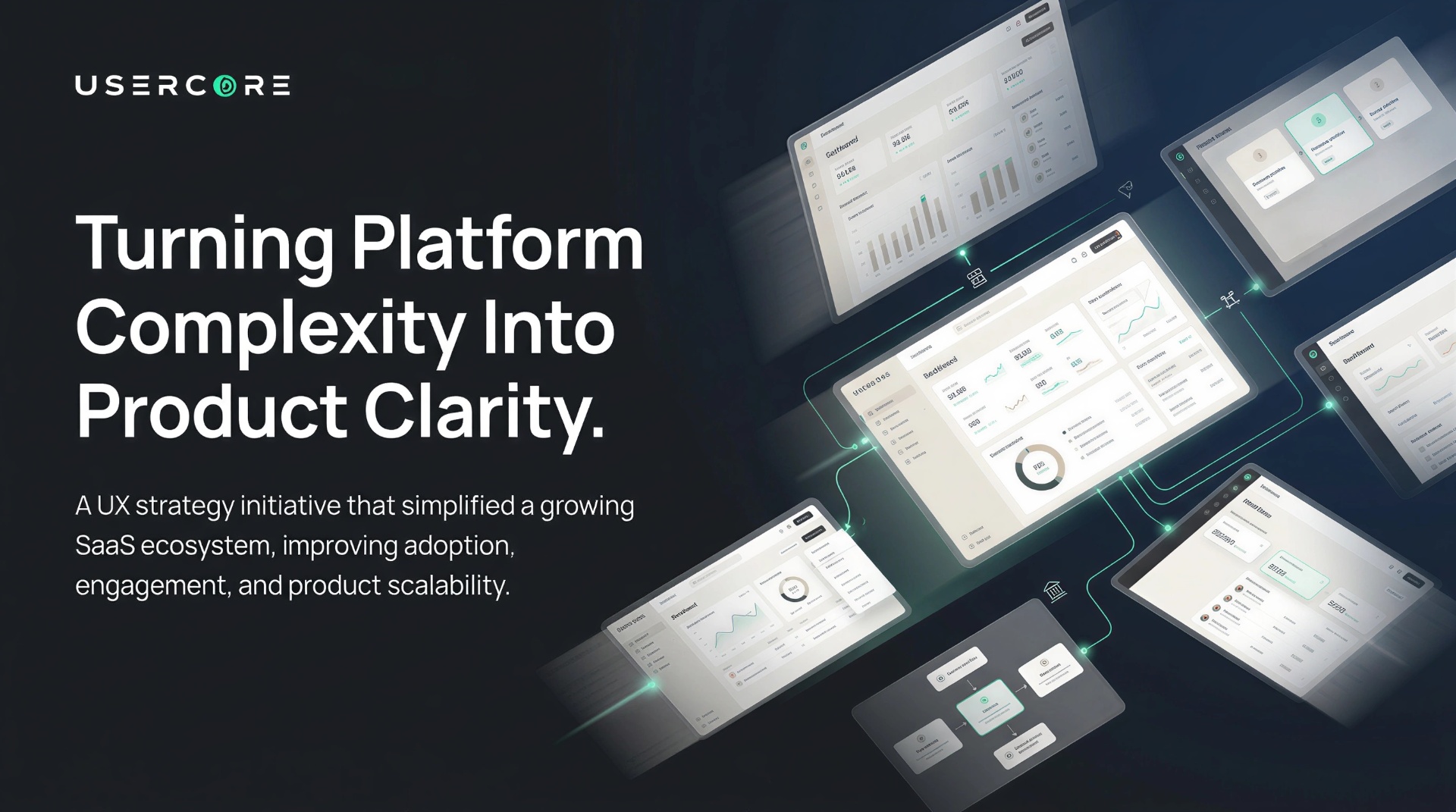
A UX strategy initiative that simplified a growing seven-platform SaaS ecosystem serving 10,000+ users, improving adoption, engagement, and product scalability. UserCore is a JRA client, renamed here to protect their confidentiality.
- Role
- Director, User Experience & Product Design
- Scope
- Enterprise SaaS Ecosystem
- Platforms
- 7 Connected Products
- Active Users
- 10,000+
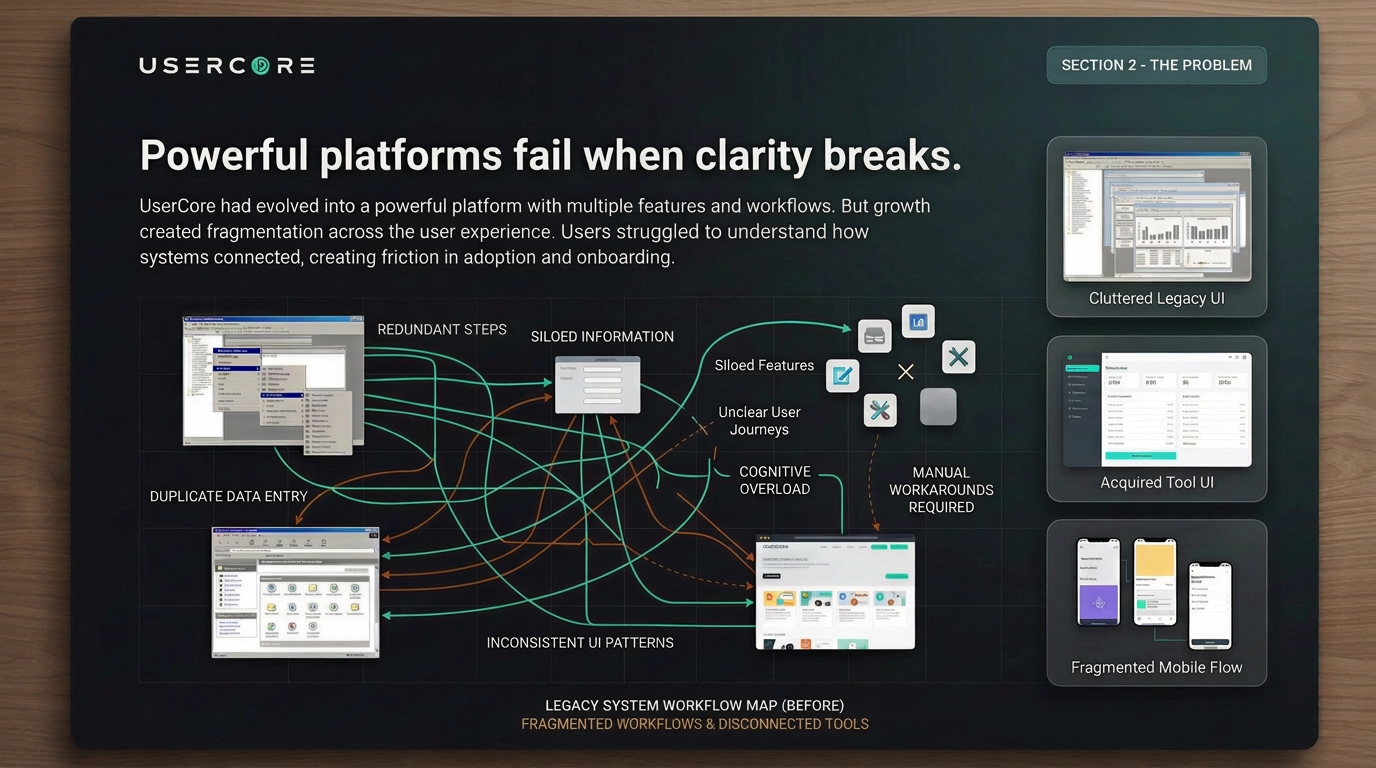
Powerful platforms fail when clarity breaks.
UserCore had evolved into a powerful platform with multiple features and workflows. But growth created fragmentation across the user experience. Users struggled to understand how systems connected, which created friction in adoption and onboarding.
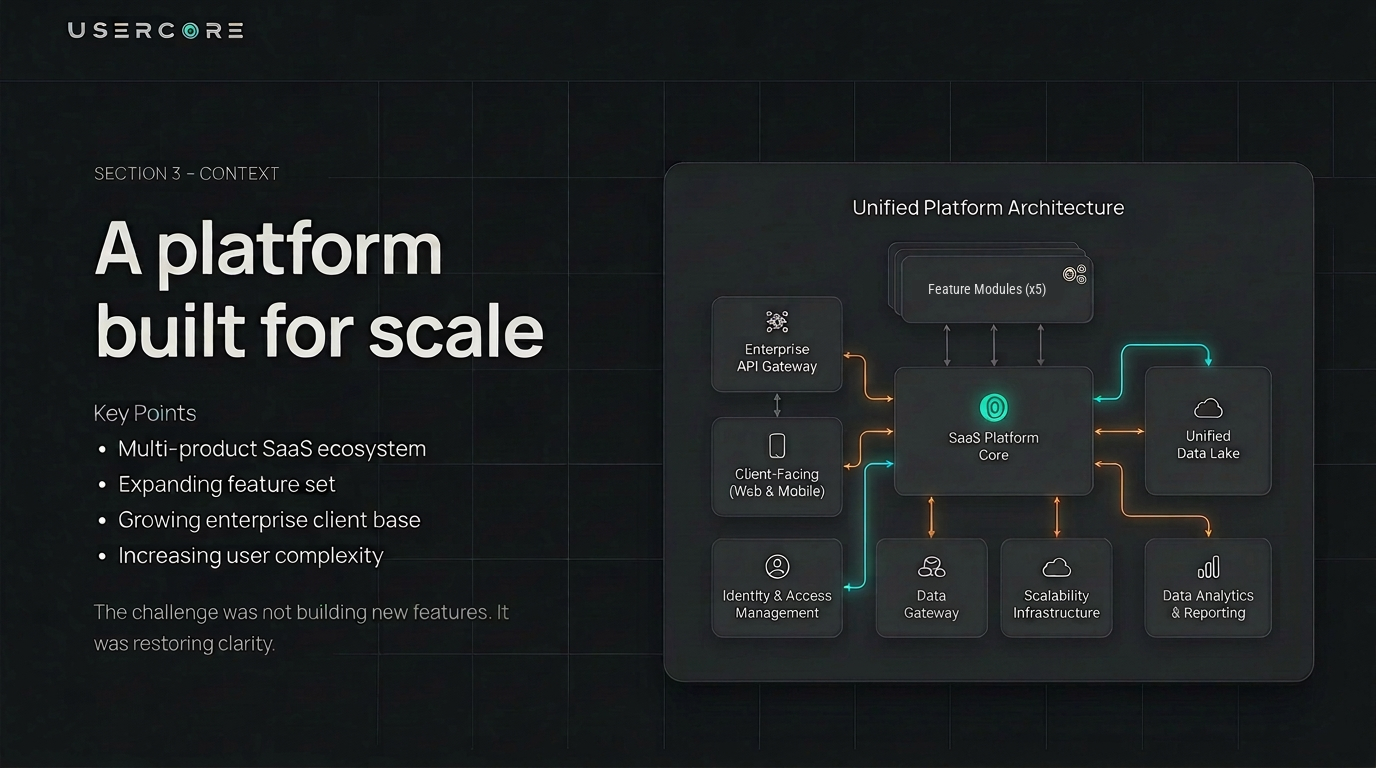
A platform built for scale.
A multi-product SaaS ecosystem with an expanding feature set, growing enterprise client base, and increasing user complexity. The challenge was not building new features, it was restoring clarity.

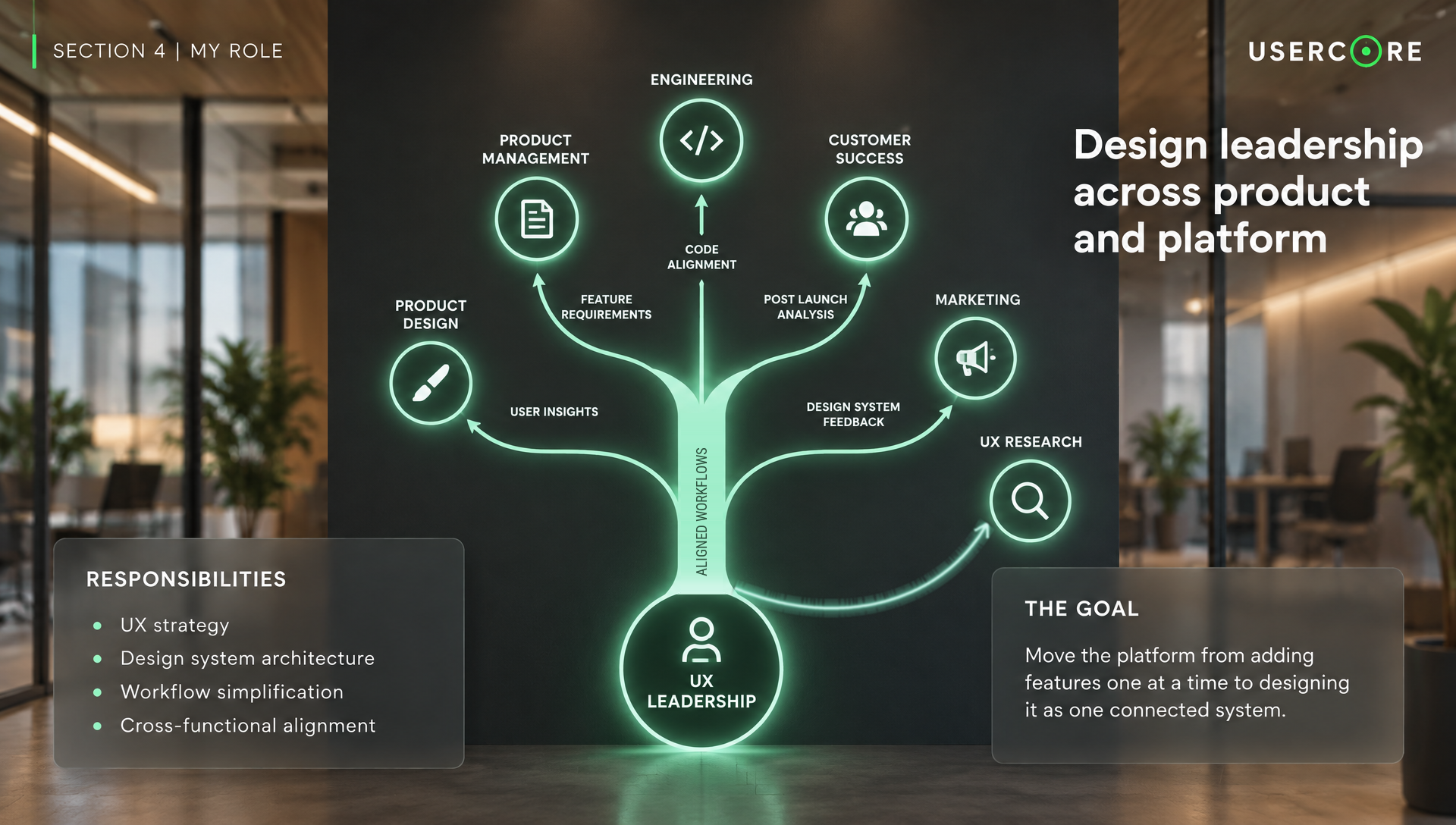
Design leadership across product and platform.
I led UX strategy, design system architecture, workflow simplification, and cross-functional alignment, moving the product from adding features one at a time to designing the platform as one connected system.
Why align product, design, and engineering early?
Early cross-functional collaboration reduced revision cycles, improved implementation quality, and accelerated delivery across multiple teams.
Understanding where clarity was breaking.
User journey mapping, UX pattern audits, workflow analysis, and product workshops surfaced the real gaps.
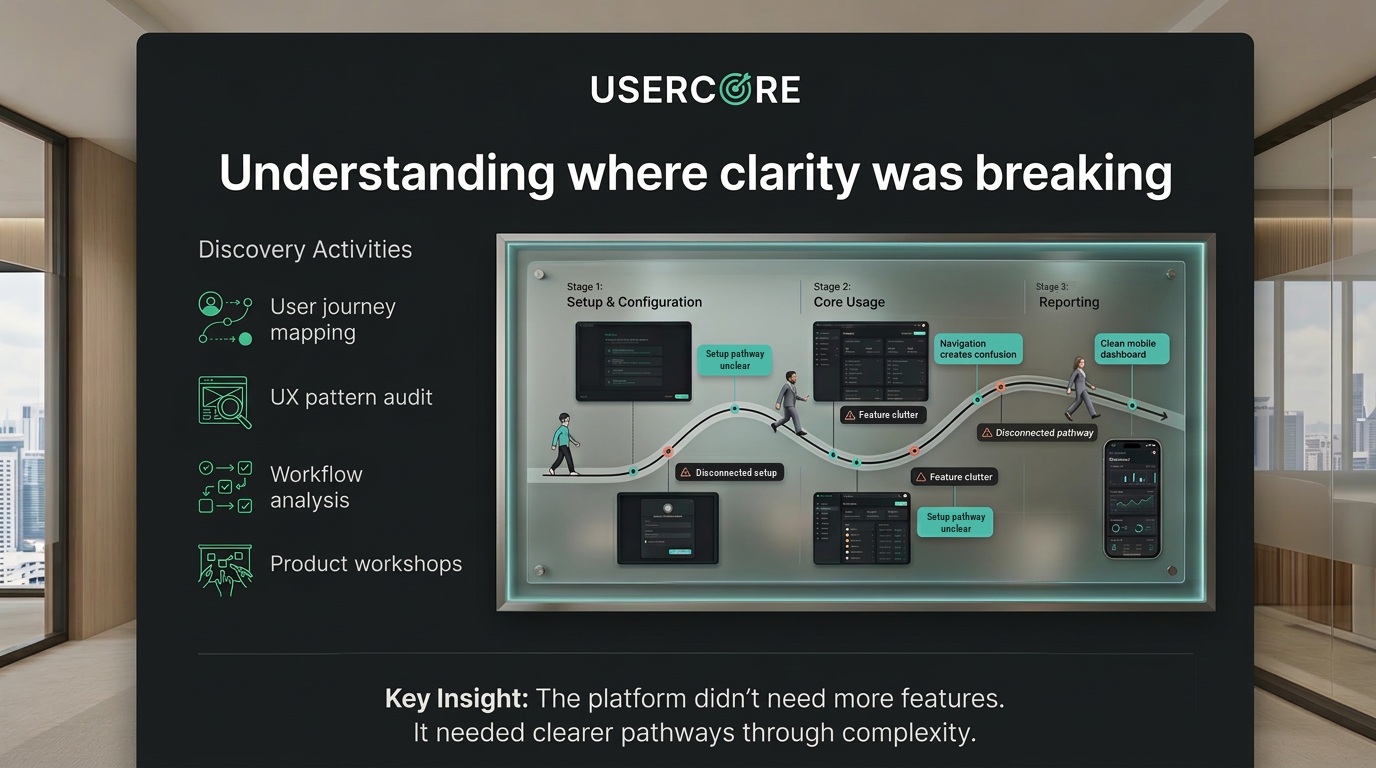
"The platform didn't need more features. It needed clearer pathways through complexity."
Turning research into platform strategy.
Discovery uncovered more than usability issues. It revealed structural challenges across the platform ecosystem. Rather than optimizing individual interfaces, the strategy focused on simplifying workflows, establishing consistent interaction patterns, and creating a scalable design foundation that could support seven interconnected enterprise products. Every decision was intended to reduce cognitive load, improve collaboration, and create a more cohesive experience for both users and internal teams.
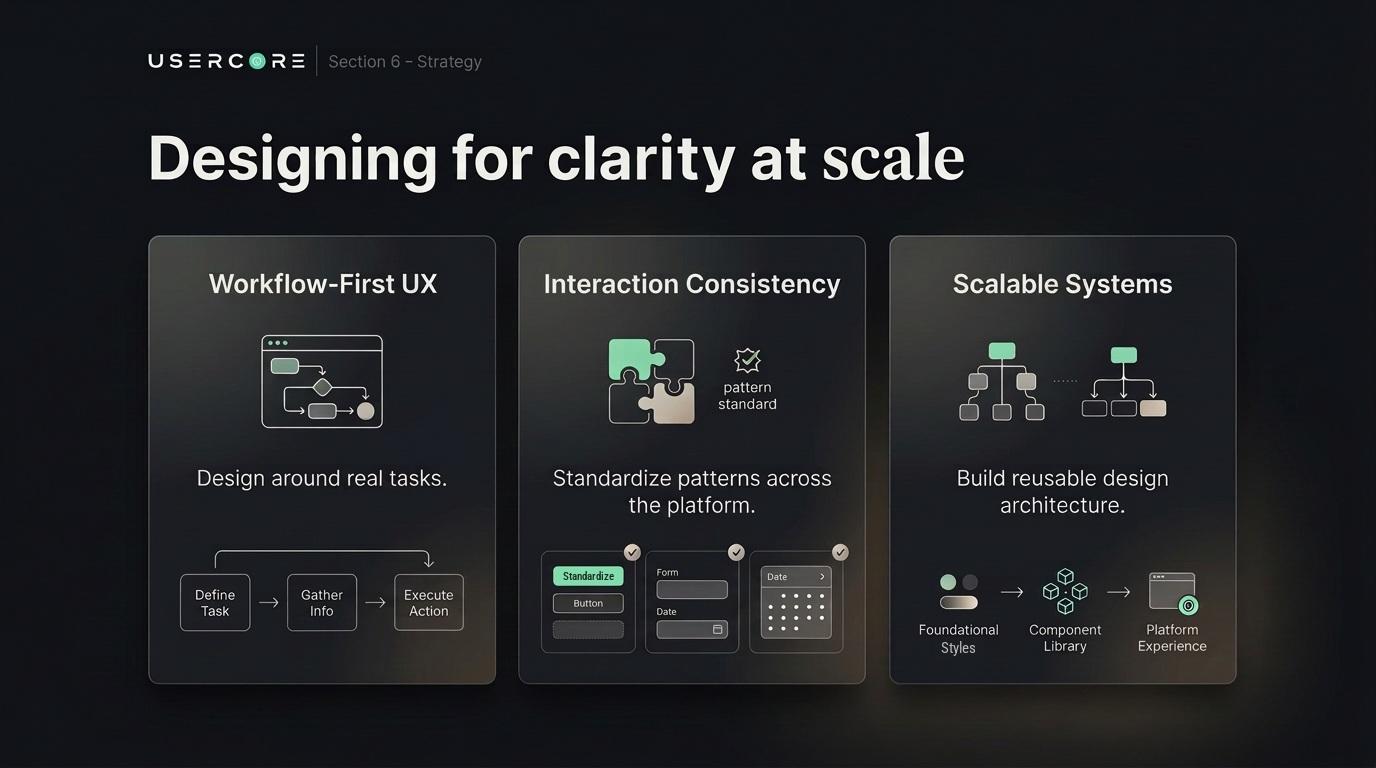
Why unify seven platforms?
Fragmented workflows created unnecessary complexity and inconsistent experiences. A unified product ecosystem improved usability while establishing a scalable foundation for future growth.
Why prioritize a shared design system?
Standardized components and interaction patterns accelerated delivery, reduced design debt, and created a more consistent experience across every platform.
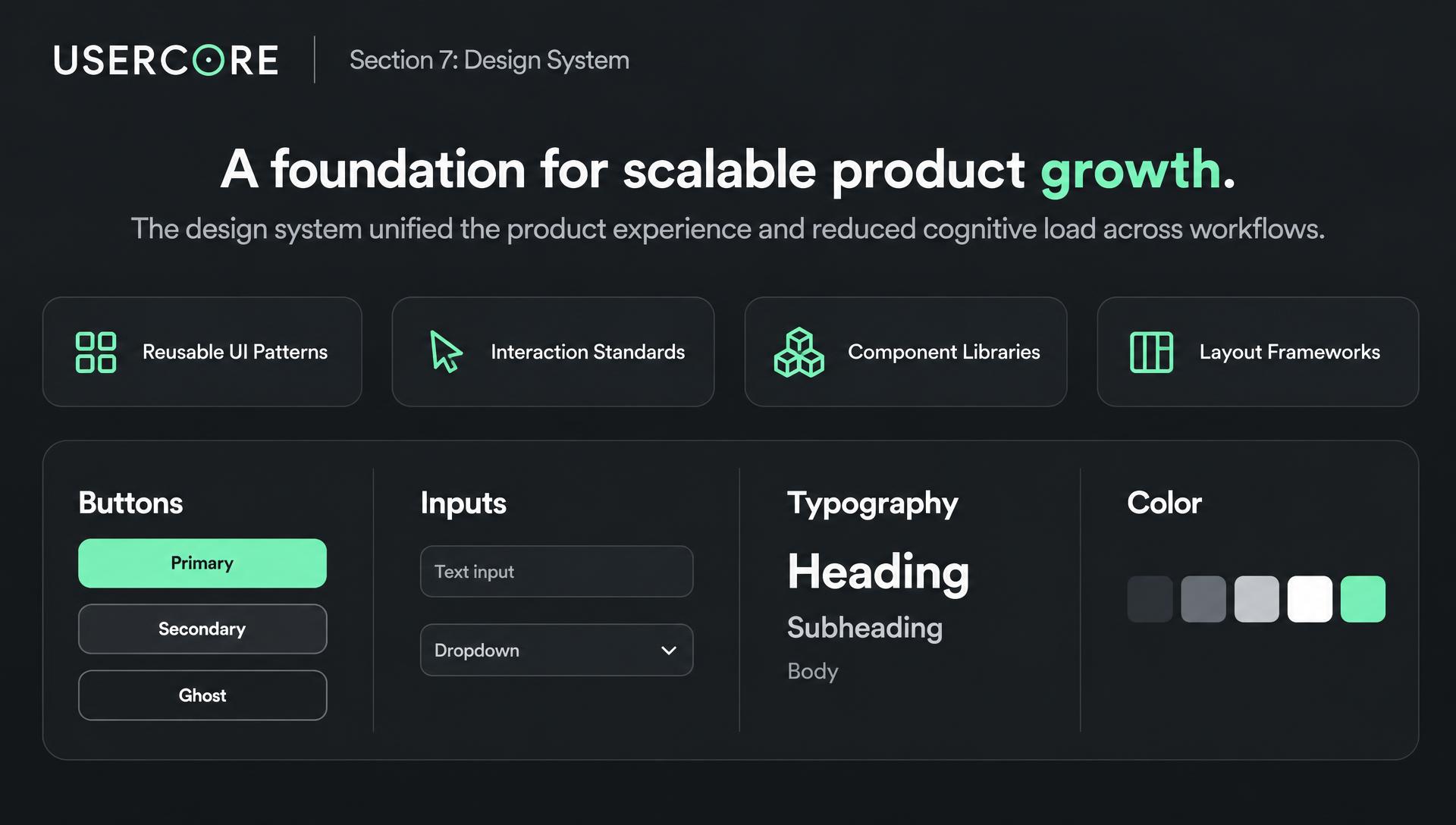
A foundation for scalable product growth.
Reusable UI patterns, interaction standards, component libraries, and layout frameworks unified the product experience and reduced cognitive load across workflows.
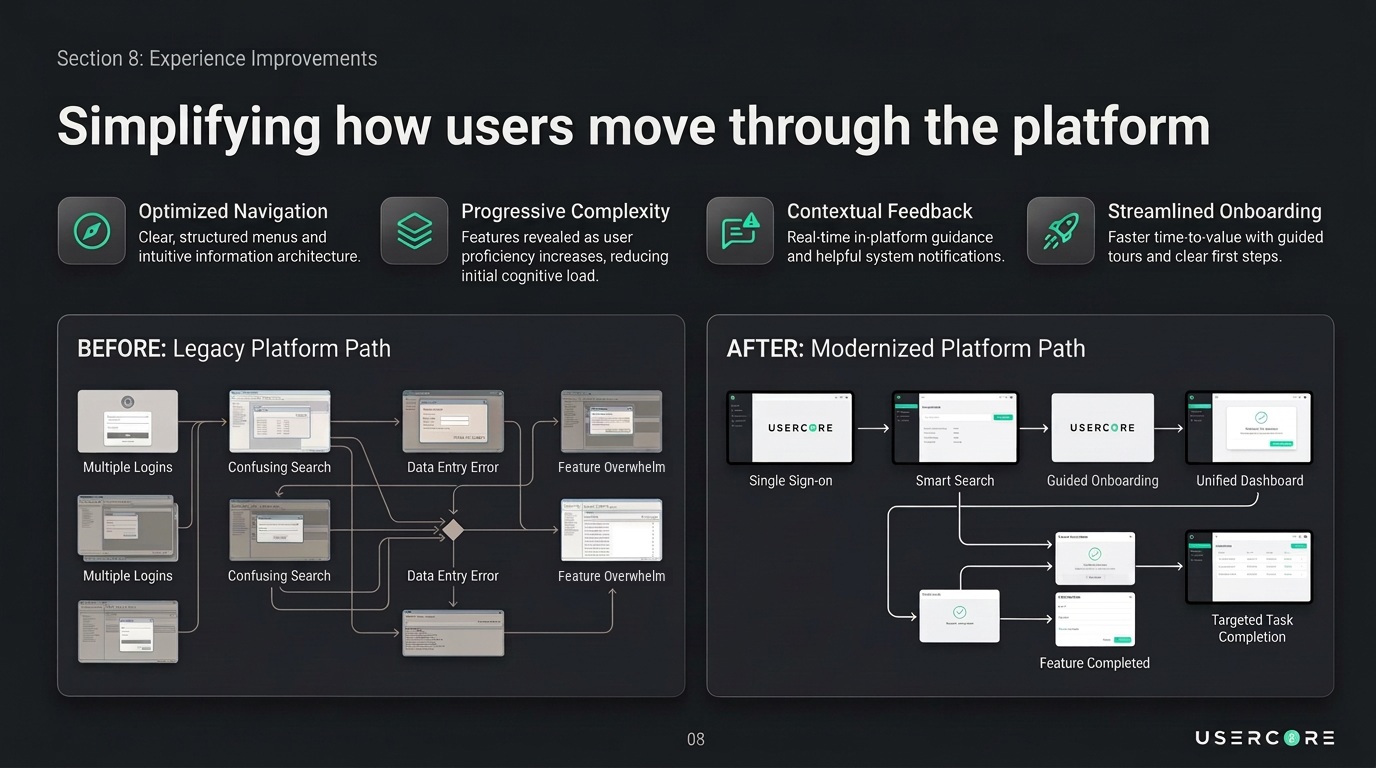
Simplifying how users move through the platform.
Optimized navigation, progressive complexity, contextual feedback, and streamlined onboarding replaced the fragmented legacy path with a modernized, guided flow.
Measured product impact.
Seven months in, more people were actively using the platform, coming back to it, and getting to key actions faster.
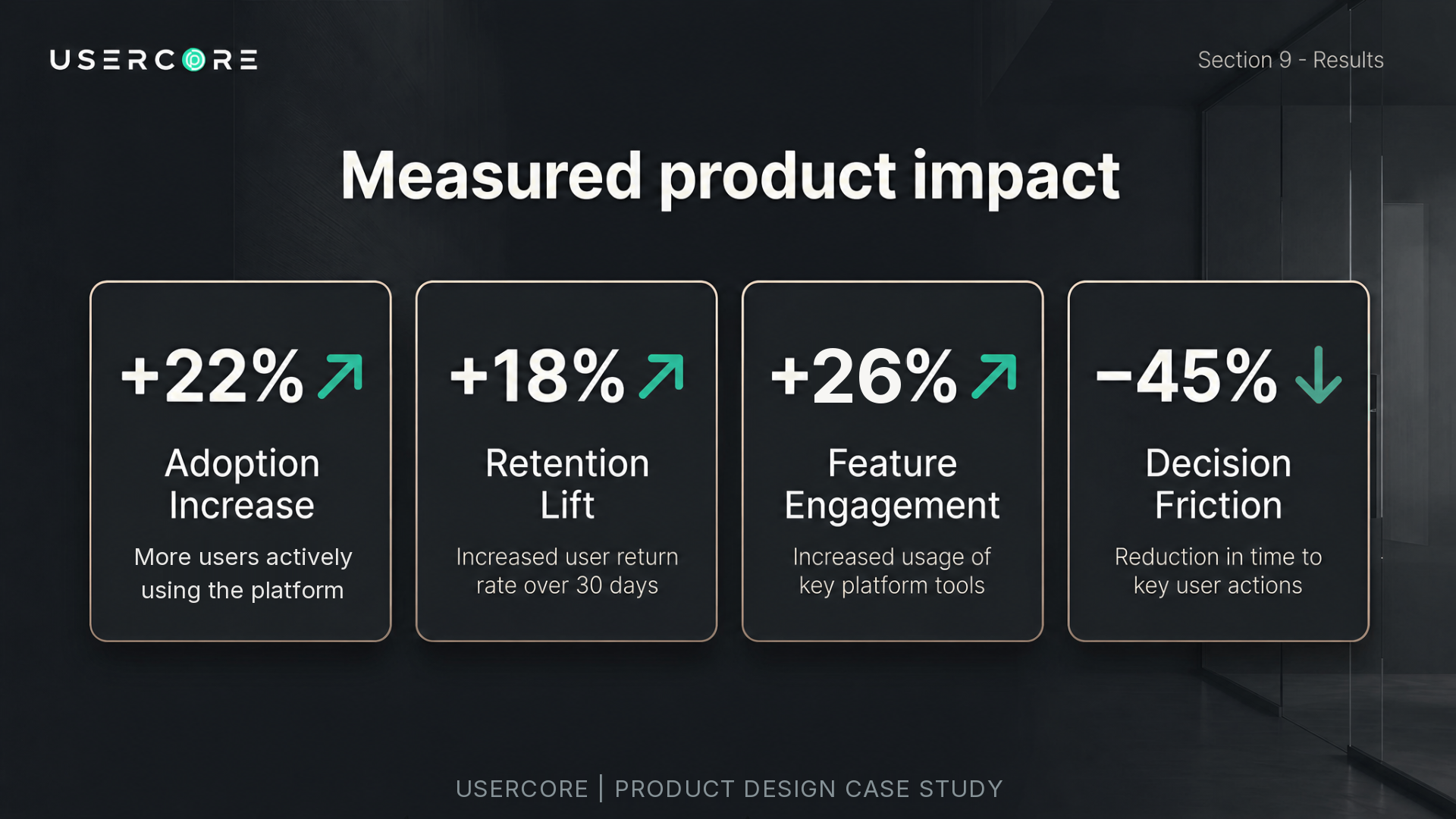
Metrics reflect outcomes tracked across a 7 month engagement, compared against pre-engagement baselines. The project was scheduled for 8 months and finished a month early after additional designers and engineers joined the team. Adoption is measured as the share of users actively using the platform. Retention is measured as 30 day return rate. Some labels have been generalized to protect client confidentiality.
- Enterprise Platforms
- 7 Connected Products
- Platform Adoption
- +22%
- 30 Day User Retention
- +18%
- Feature Engagement
- +26%
- Decision Friction
- −45% time to key actions
- Delivery
- 1 month ahead of an 8 month schedule
- Design System
- Unified Architecture
- Cross-functional Alignment
- Product • Design • Engineering
Complex platforms don't fail because of features. They fail when clarity breaks.
Rather than adding more functionality, the work focused on reducing complexity through a unified design system, standardized interaction patterns, and workflow-first experiences. The result was a platform that became easier to adopt, easier to maintain, and more scalable for both users and internal teams.
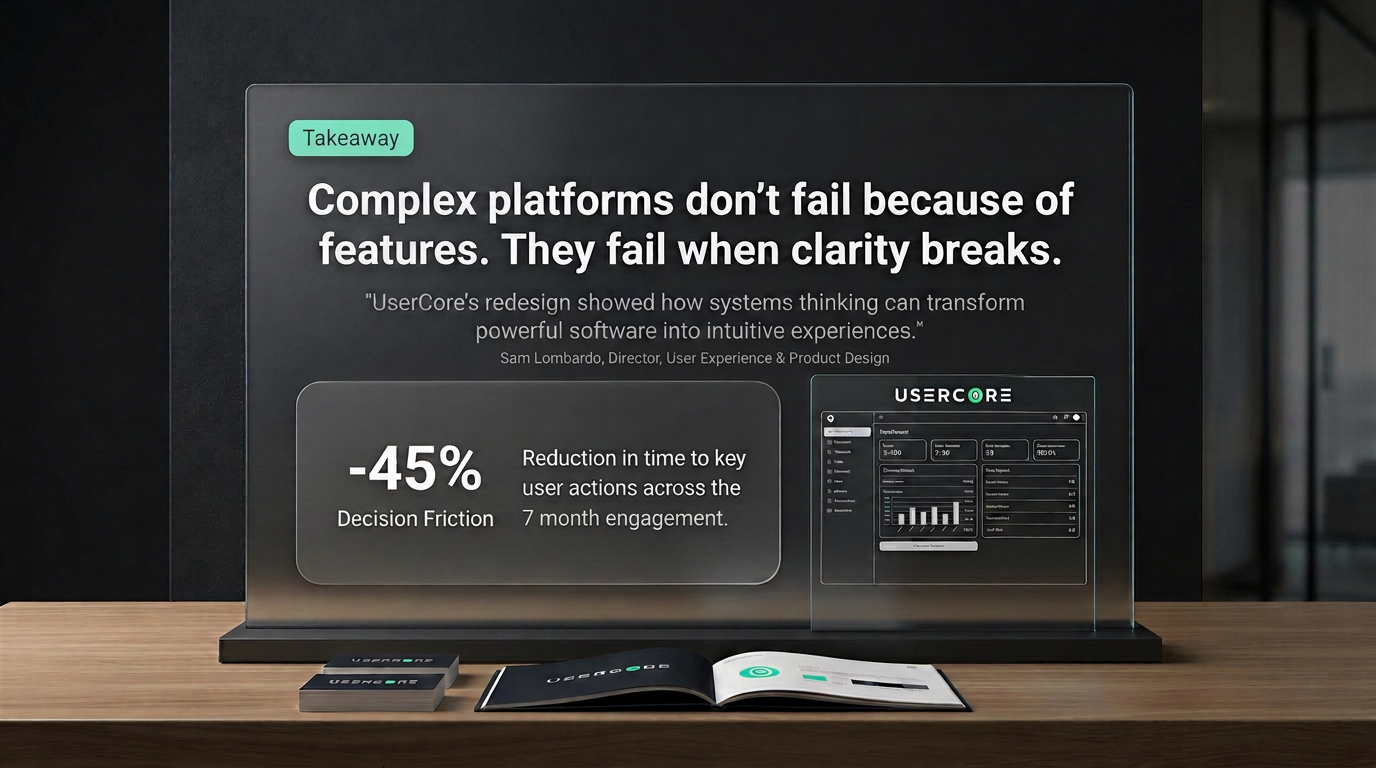
UserCore reinforced an important lesson: enterprise platforms rarely fail because they lack features. They struggle because complexity grows faster than clarity. By aligning product strategy, design systems, and cross-functional collaboration around real customer workflows, we transformed a fragmented ecosystem into a more scalable, understandable, and measurable product experience.