A FRAMEWORK FOR SCALING DESIGN ORGANIZATIONS
What 17+ Years of Building Teams Across Entertainment, Real Estate, and Enterprise SaaS Taught Me About Growing Design at Velocity
Every design leader eventually faces the same question: does the team get bigger, or does it get better organized, first? Across three very different industries, physical entertainment platforms, real estate technology, and enterprise SaaS, I've found the answer is always the same. Growth without structure just multiplies chaos. Structure without growth stalls the business. The two have to move together.
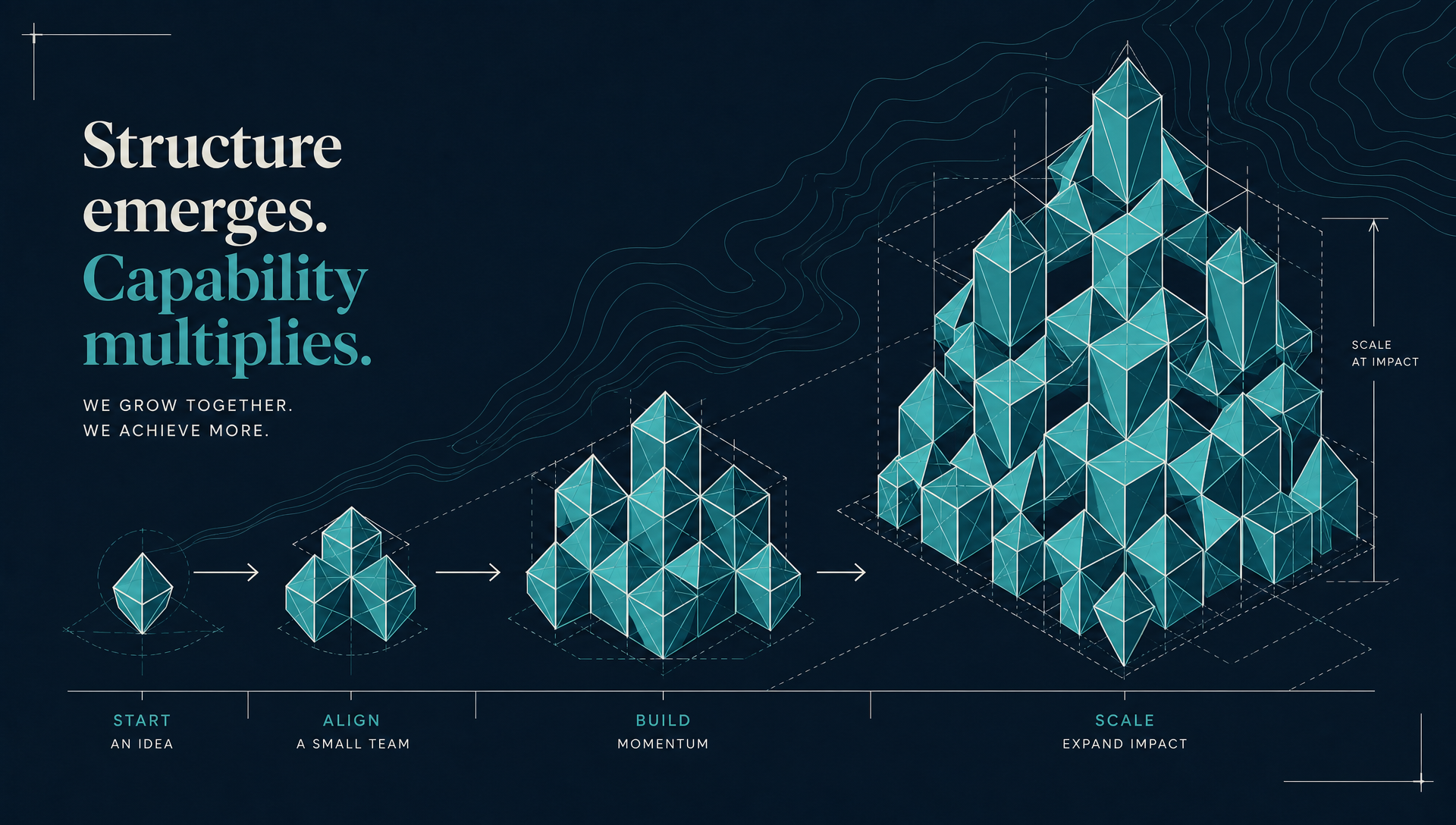
The same shape, at three different scales.
Designers grown per organization, 75+ design professionals led cumulatively.
Person multidisciplinary teams built and mentored at Falcon's Creative Group.
Design system directed at JRA, 10,000+ users, 22% increase in platform adoption.
Cross-functional org led at Demetree Global, platform scaled from 10,000 to 50,000+ users.
Governance, systems, then people.
Governance as Infrastructure, Not Bureaucracy
The instinct when a team is small is to skip process. The instinct when a team is growing is to over-correct with process. Neither works. Building decision frameworks that positioned design as a core engine for product velocity, not a downstream approval step, reduced time-to-decision by 35% at Demetree Global. Governance only works when it's designed to speed teams up, not slow them down. At Falcon's Creative Group, a 75-person team spread across physical build sites and remote design meant a single unclear approval could stall a multi-million dollar installation for days. That's what made governance personal for me; it wasn't theoretical, it was the gap between a decision and a crew standing idle.
Systems Before Headcount
Adding designers to a disorganized team just distributes the disorganization further. Standardizing multi-platform design systems across JRA's 7-platform ecosystem eliminated technical debt and cut design-to-development friction by 40%, before the team could scale sustainably on top of it. The system has to exist before the team that depends on it grows into it.
Culture Travels Through Structure, Not Slogans
Managing teams of 30 to 75+ across physically demanding, high-stakes environments taught me that culture isn't a values poster, it's whether the org chart, the critique rituals, and the decision rights actually match what you say you value. People believe the structure, not the mission statement.
Scaling is not a single project. It is a perpetual loop: build the governance, then the system, then the team. As the business grows, it will eventually outgrow these structures, creating new points of friction. Identifying where the three levers are straining, and cycling back to reinforce them, is the actual job of an executive design leader, not any single launch or redesign.
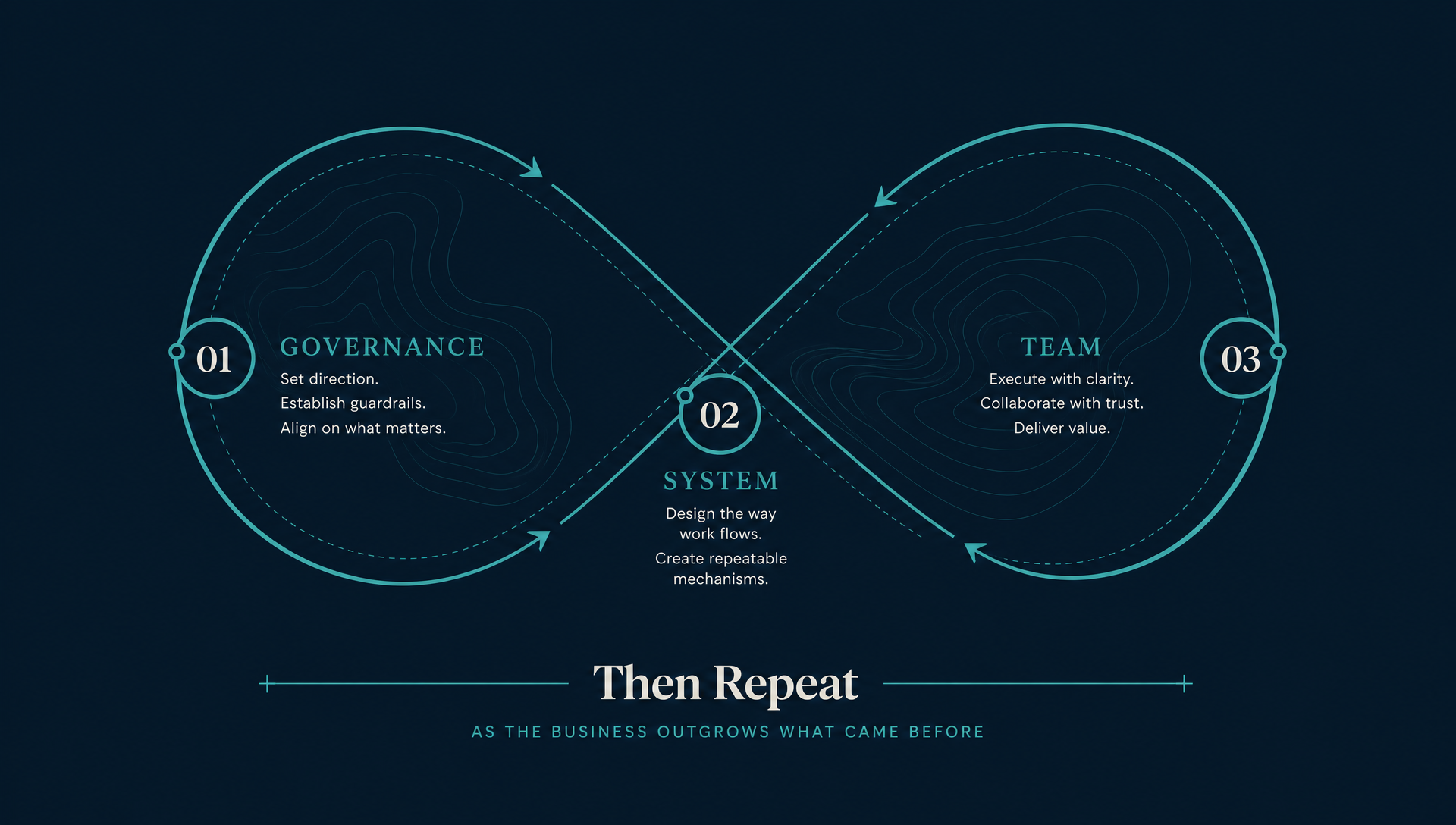
This is the lens I bring into any new organization: assess where governance, systems, and people are out of sync, then close the gap in that order. It's the same framework whether I'm founding a practice from zero or scaling one that already exists.