EVCYCLES: A CONCEPT FRAMEWORK FOR RECOVERING STALLED ENTERPRISE INITIATIVES
A self-directed concept project applying real enterprise recovery methodology, governance reset, stakeholder alignment, rapid structural triage, to a hypothetical stalled product platform.
View Deep Dive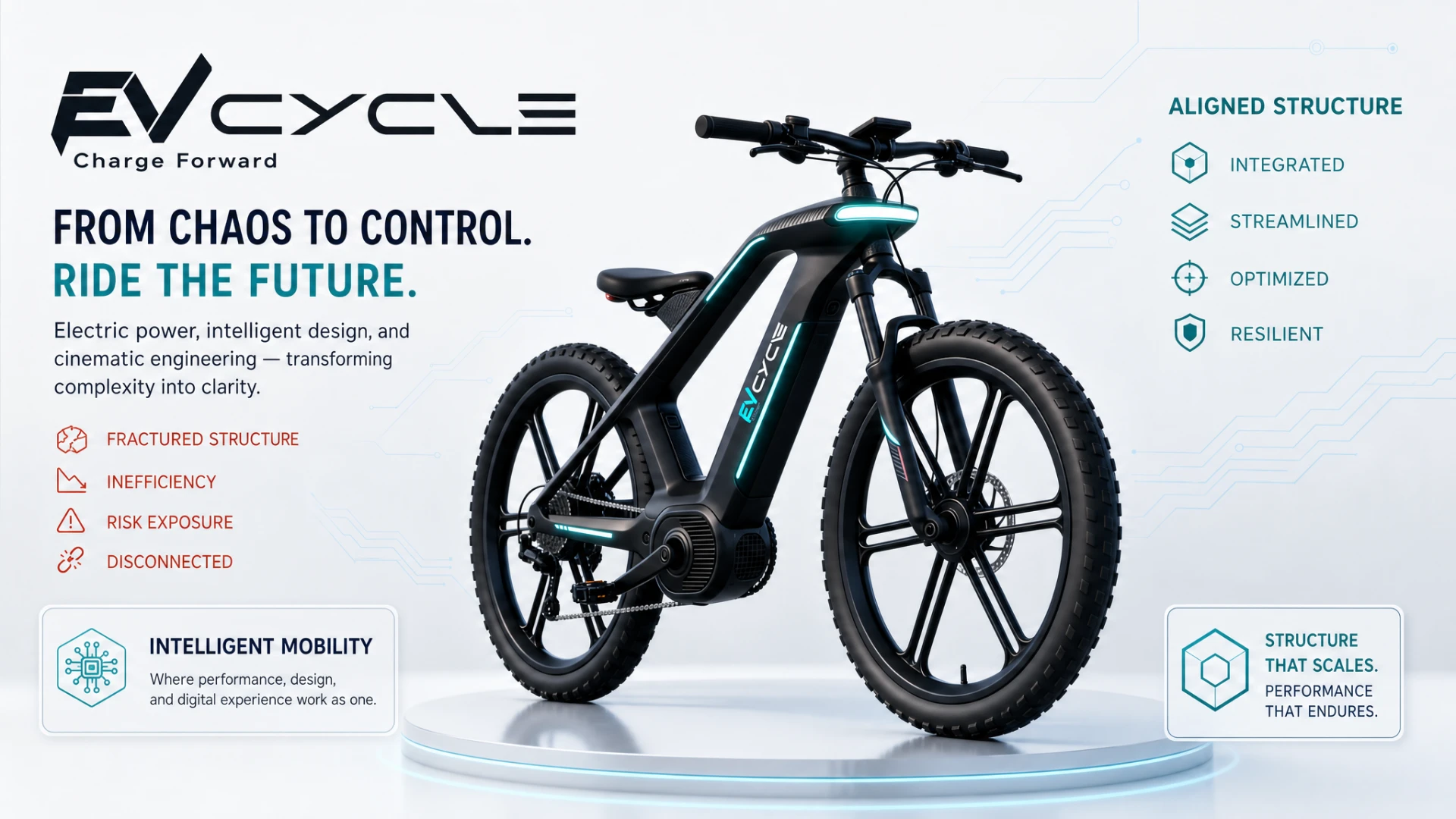
Enterprise initiatives rarely fail loudly.
Enterprise innovation initiatives stall from systemic friction, not from a lack of ambition. Unaligned stakeholder decision rights, competing definitions of done, and a widening chasm between strategy and execution slow a program one deferred choice at a time. By the time the status is rated red, the causes are months old and the cost is measured in budget, credibility, and leadership appetite for the next investment.
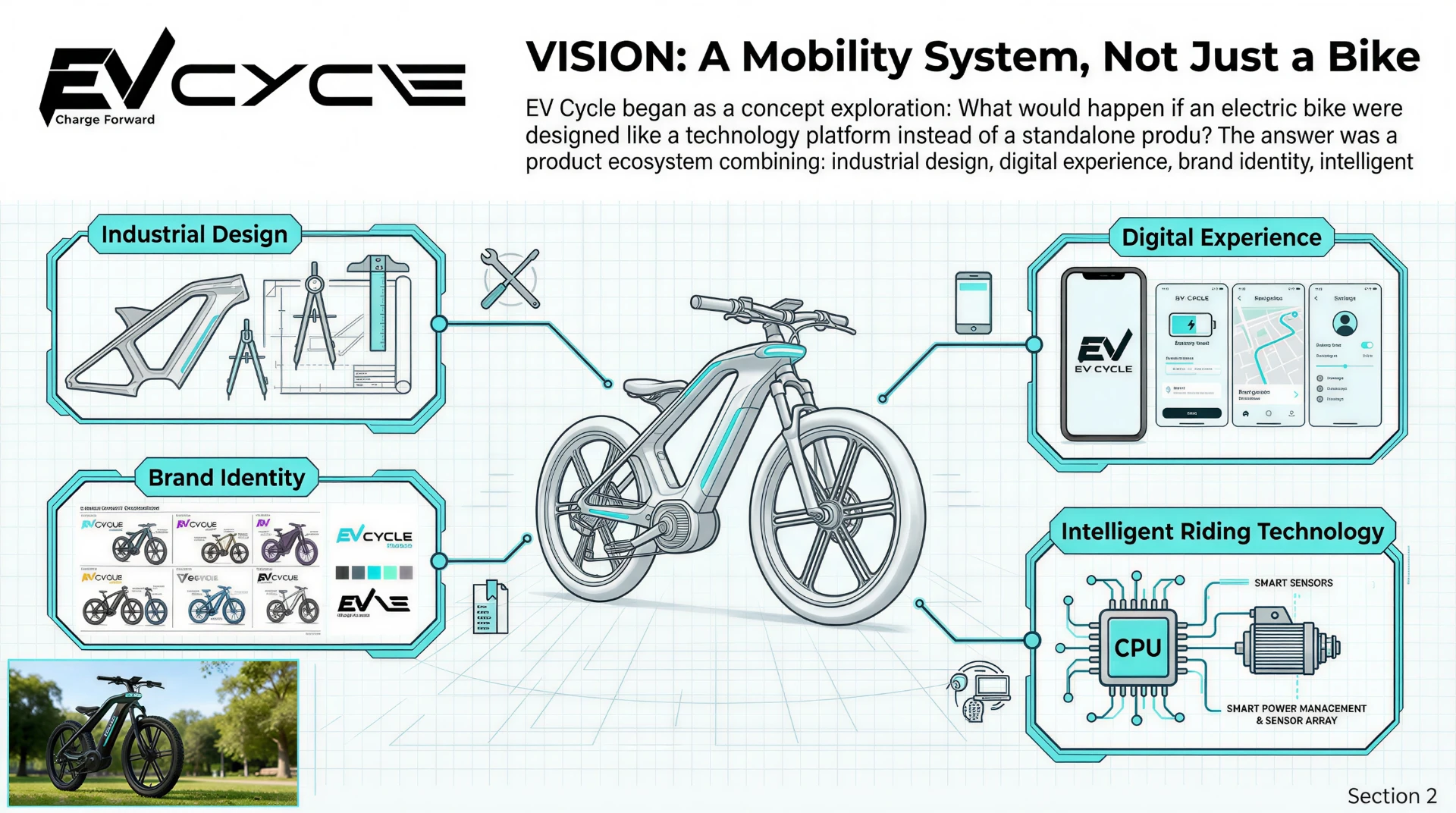
I used a self-directed concept, an electric bike platform called EVCycles, to model how enterprise programs recover from Red RAG status: treating the product as a technology platform rather than a standalone object, with industrial design, digital experience, brand identity, and intelligent riding technology built as one system. That reframing illustrates how a Red RAG status becomes a high-velocity market release.

Dissecting the Red RAG breakdown.
Siloed Product Architecture
Industrial design, digital software, and brand identity were each progressing on their own track, with no shared definition of the product. Every integration point became a negotiation, and every negotiation became a delay.
Indecision & Governance Deficit
Ambiguous decision matrices meant no one could close a question, so iteration loops repeated the same debate at higher cost. The program was not short on talent, it was short on authority to decide.
The Standalone Product Trap
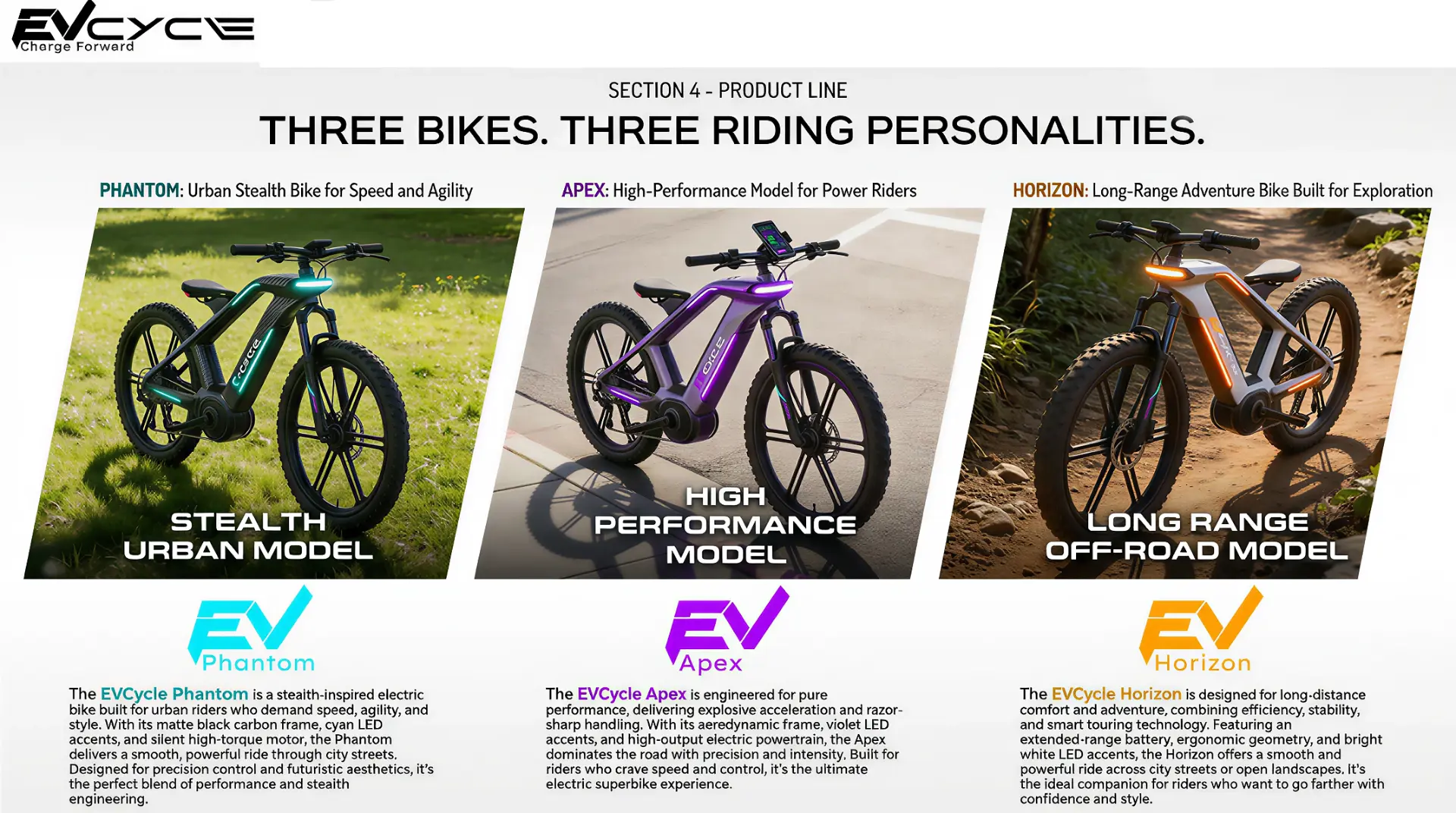
Phantom, Apex, and Horizon were being run as three isolated projects rather than tiers of one platform, tripling the design, engineering, and brand work required to reach a single market release.
Rapid triage, then systems restructuring.
Governance was streamlined to strict ownership boundaries with single-threaded accountability on every open item. Scope was realigned to what a release actually required, and everything else was staged for later.
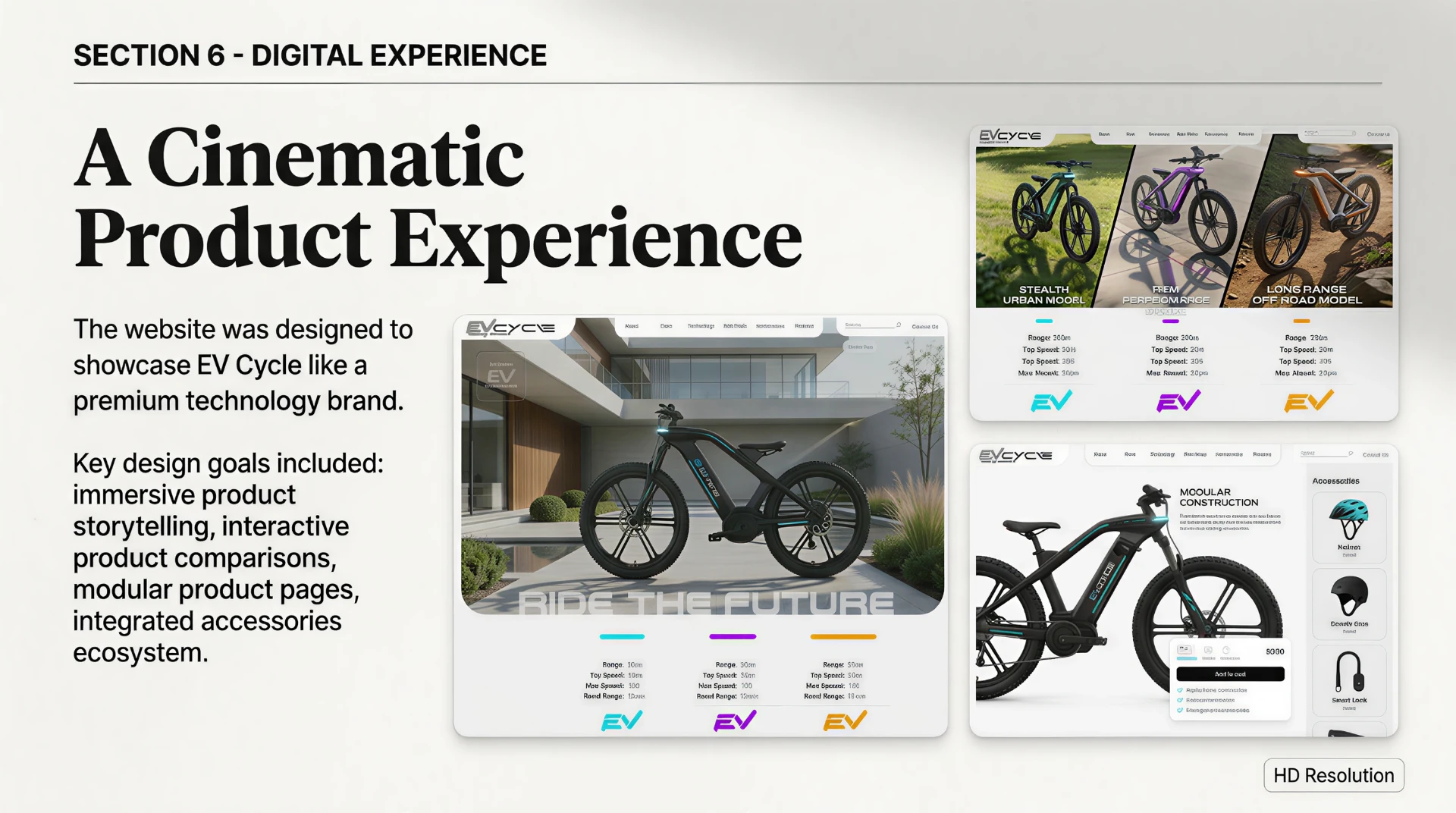
One page system, three product tiers.
The clearest proof that platform thinking had replaced project thinking was the web experience. Instead of three separate sites competing for definition, a single page architecture carried Phantom, Apex, and Horizon through shared templates for home, technology, ride modes, and merchandise, with only the tier signature changing.
The complete page system, one template set, three tier identities. Click any image to enlarge.
Home
One entry point positioning Phantom, Apex, and Horizon as tiers of a single platform.
Technology
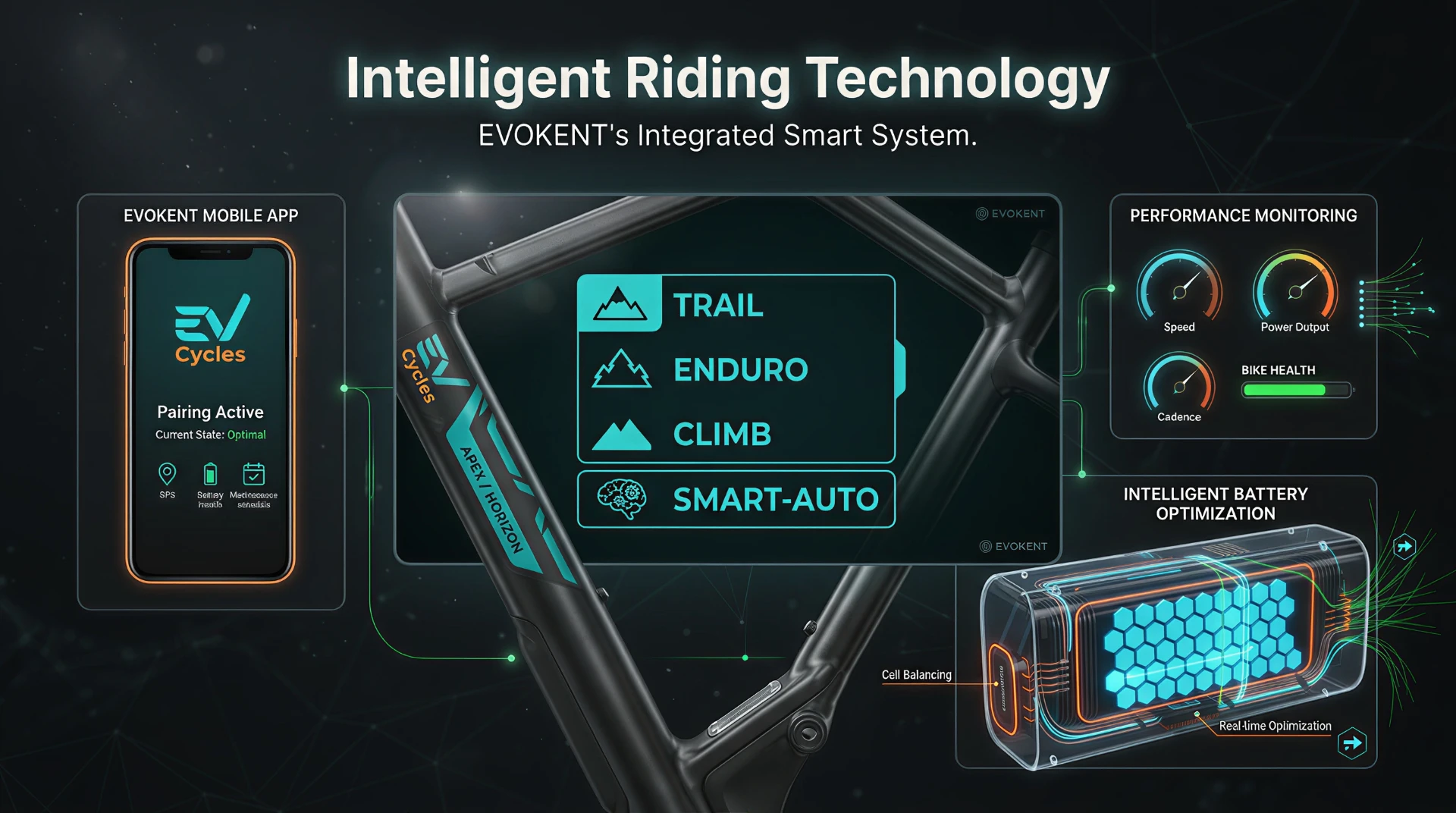
Motor, battery, carbon frame, suspension, and lighting documented as one shared technology model.
Ride Modes
Intelligent ride modes explained once, then mapped per tier instead of rewritten per project.
Merchandise
Accessories and apparel carrying the tier signatures, proving the identity system scales past the product.
Velocity restored, risk reduced, delivery accelerated.
Modeled outcomes demonstrating what this recovery framework is designed to achieve, not audited results from a live engagement.
Operational efficiency across the delivery organization.
Risk exposure after governance and scope realignment.
Agility gain in responding to scope and market change.
Resource optimization through platform consolidation.
Velocity Restoration
Design-to-engineering iteration cycles were cut by 45% once handoff gates and decision owners were in place.
Cross-Functional Alignment
A single source of truth was established across hardware, software, and brand guidelines, ending duplicate specification work.
Market-Ready Ecosystem
A fully realized mobility brand concept shipped with competitive tier differentiation and production readiness.
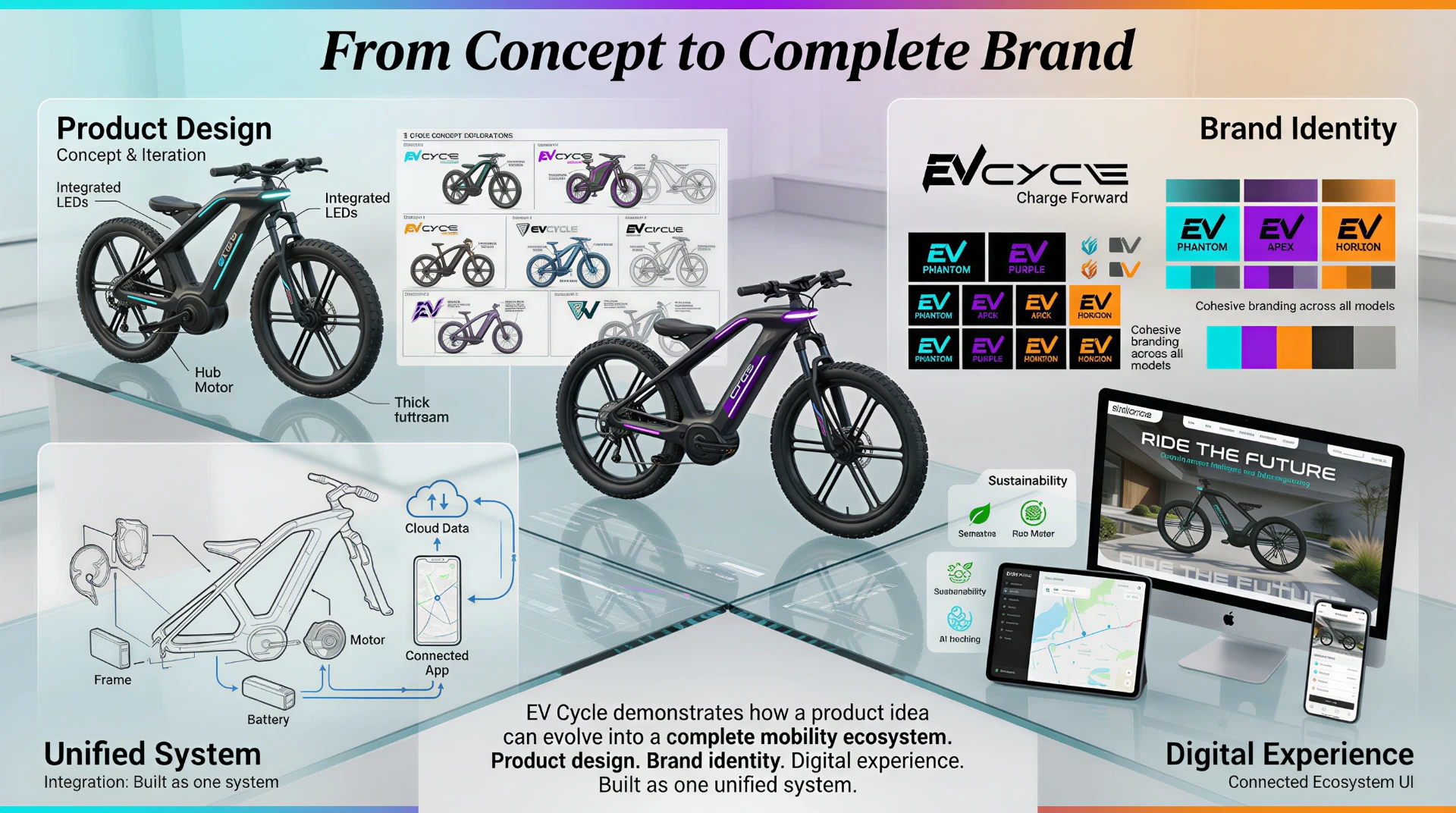
The lasting result was not the recovered quarter, it was the operating model left behind: named decision owners, gated handoffs, one platform instead of three projects, and an honest status signal leadership could trust. Recovery is a governance exercise before it is a delivery one.