EV Cycle: From a Napkin Sketch to a Complete Electric Bike Brand
A startup founder came to JRA with an idea for an electric bike and a sketch on a napkin. I led the design, branding, and marketing that turned it into three 3D modeled bikes, a full brand system, and a complete website.
View Deep Dive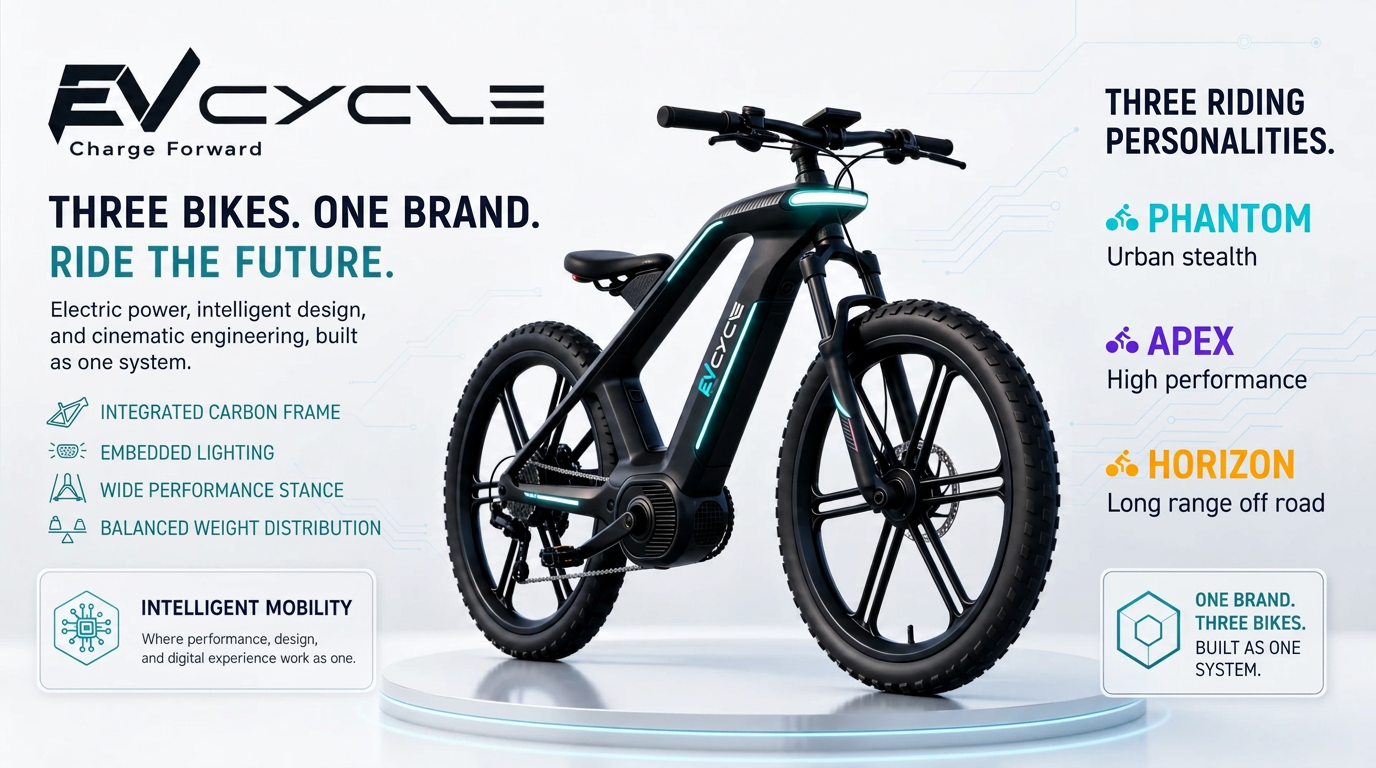
It started as a sketch on a napkin.
The founder had a clear vision for an electric bike company and nothing else yet. No product design, no brand, no marketing, no website. Everything had to be built from that first sketch, and it all had to feel like one company from day one.
As Director, User Experience & Product Design, I was in charge of the design, branding, and marketing for the project. I directed three teams, 22 people in total, taking the idea from a rough sketch to finished 3D bike models, a scalable brand identity, marketing assets, and a full website.
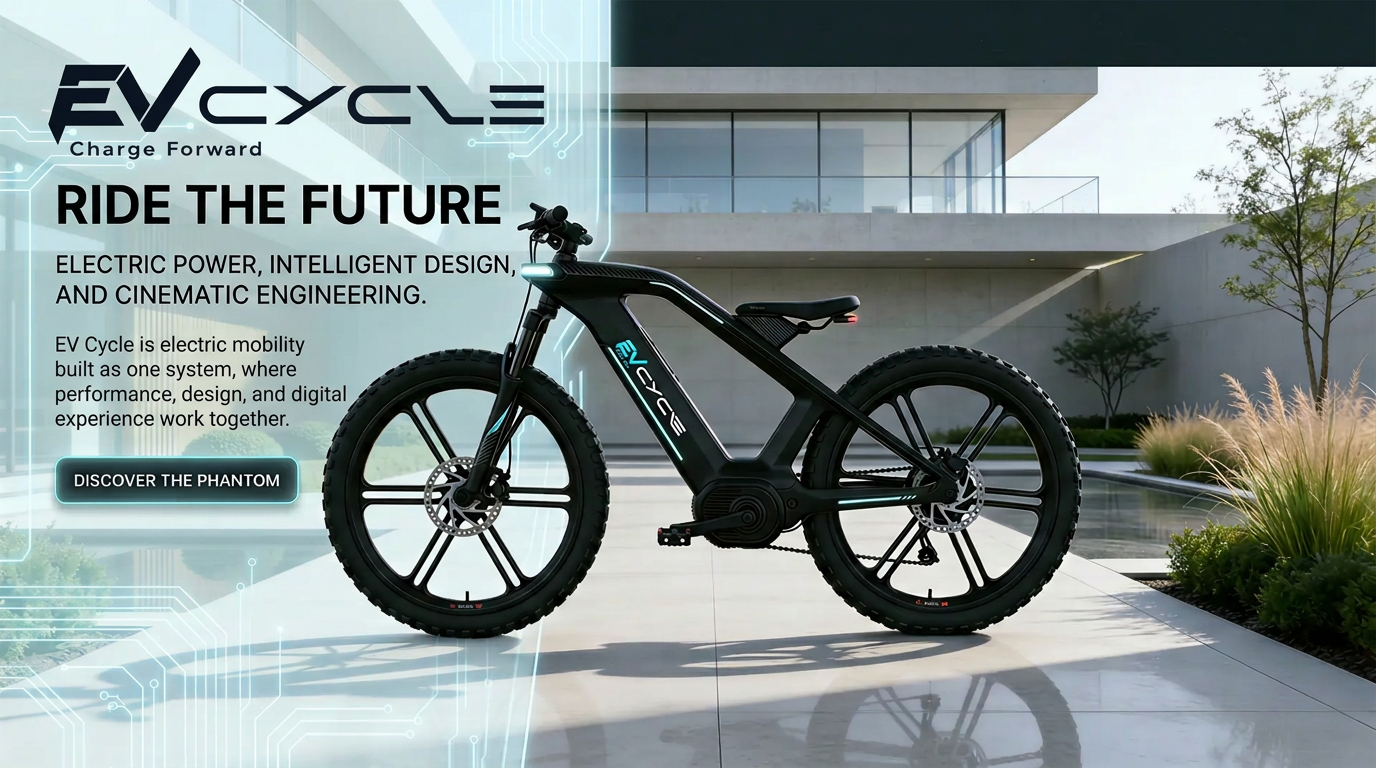
Three bikes, one brand, starting from zero.
From Sketch to Real Product
A napkin sketch is an idea, not a bike. The design team had to turn it into a frame, components, and proportions that looked premium and could actually be engineered.
Three Riders, One Family
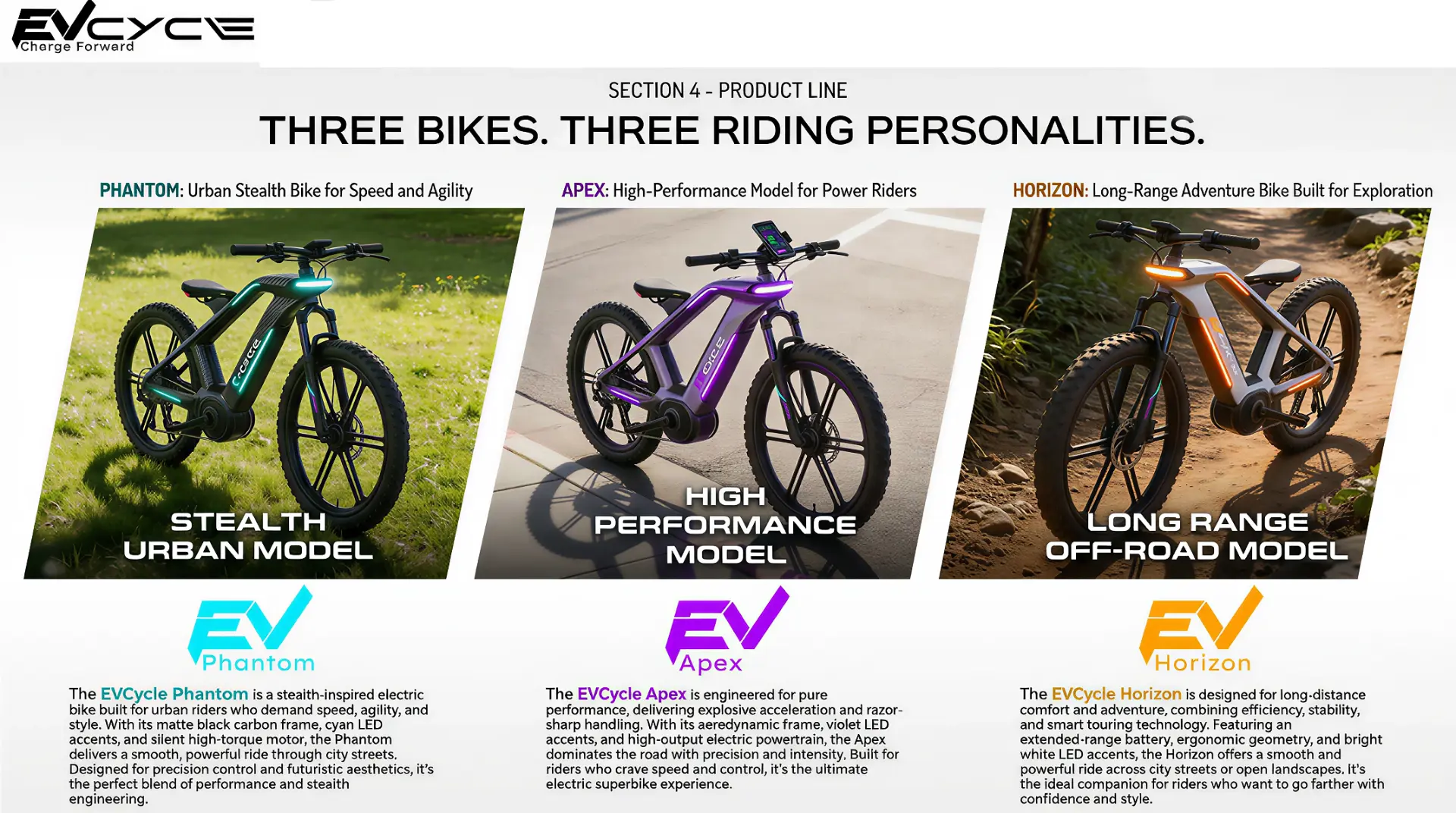
The founder wanted three models for three kinds of riders: urban, high performance, and long range off road. Each needed its own personality without splitting the brand into three separate companies.
Three Teams, One Direction
Design, branding, and marketing were moving at the same time across 22 people. Every decision about the bike affected the brand, and every brand decision affected the marketing, so all three had to stay connected.
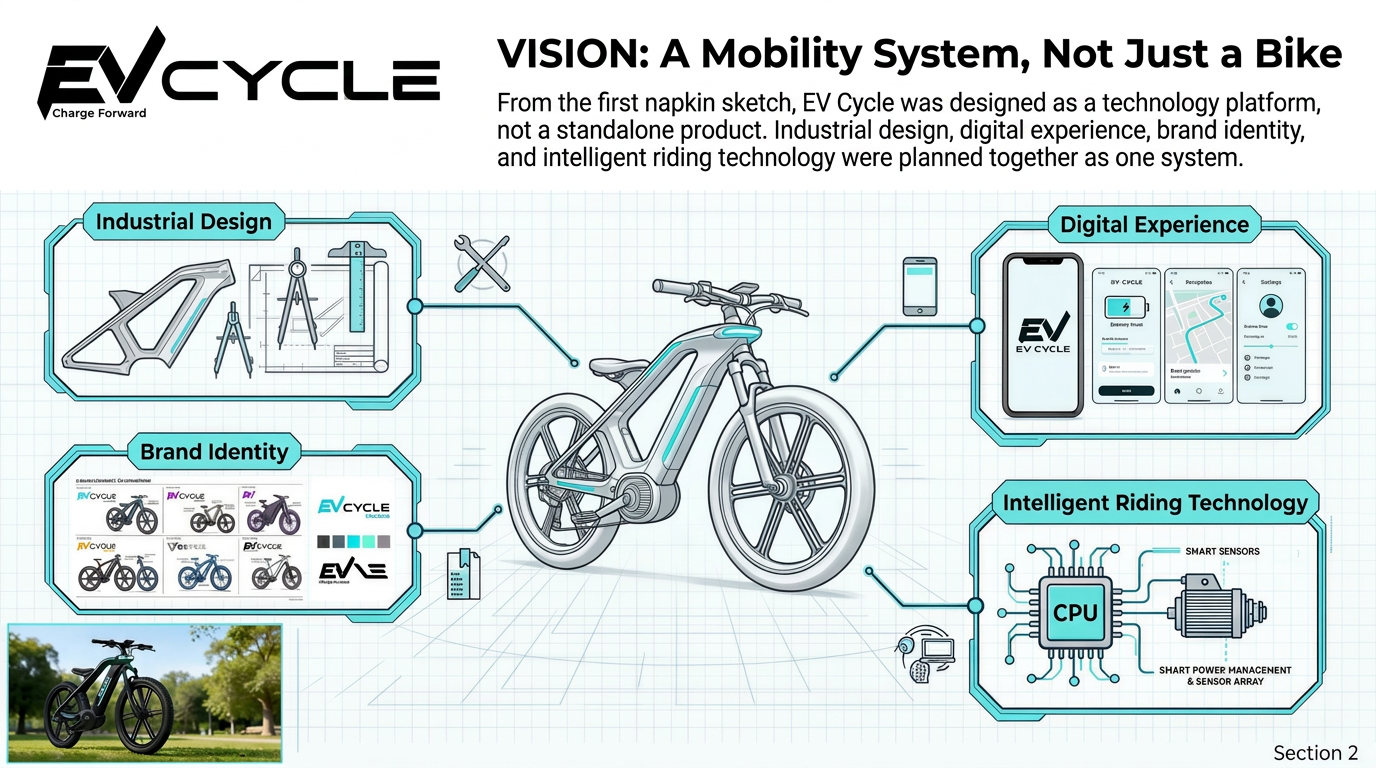
Design the bike, then build the brand around it.
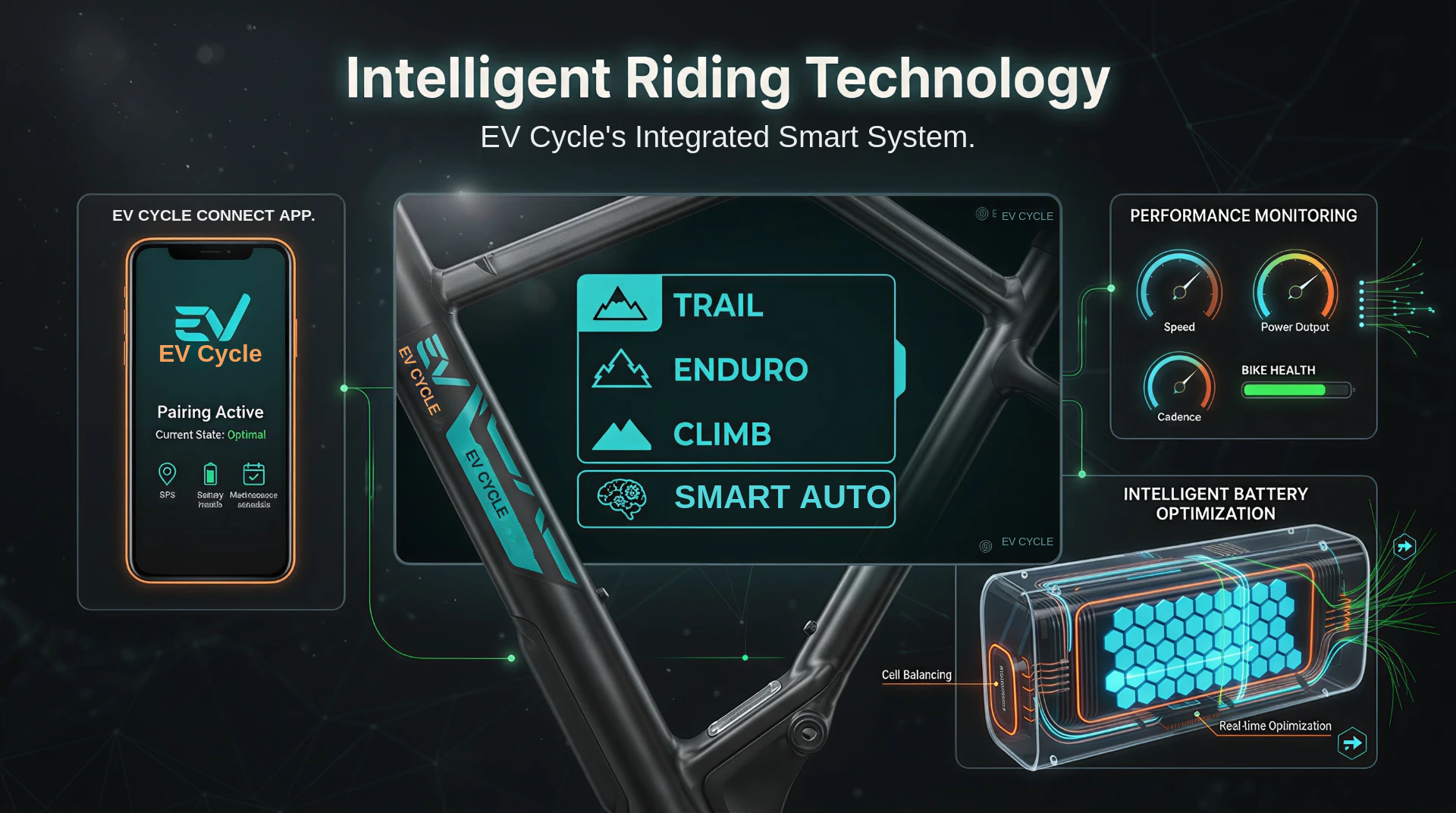
We started by treating EV Cycle as a full system, not just a bike: industrial design, brand identity, digital experience, and smart riding features planned together from the start. The design and concept team took the napkin sketch into 3D software and built the bike models from there.
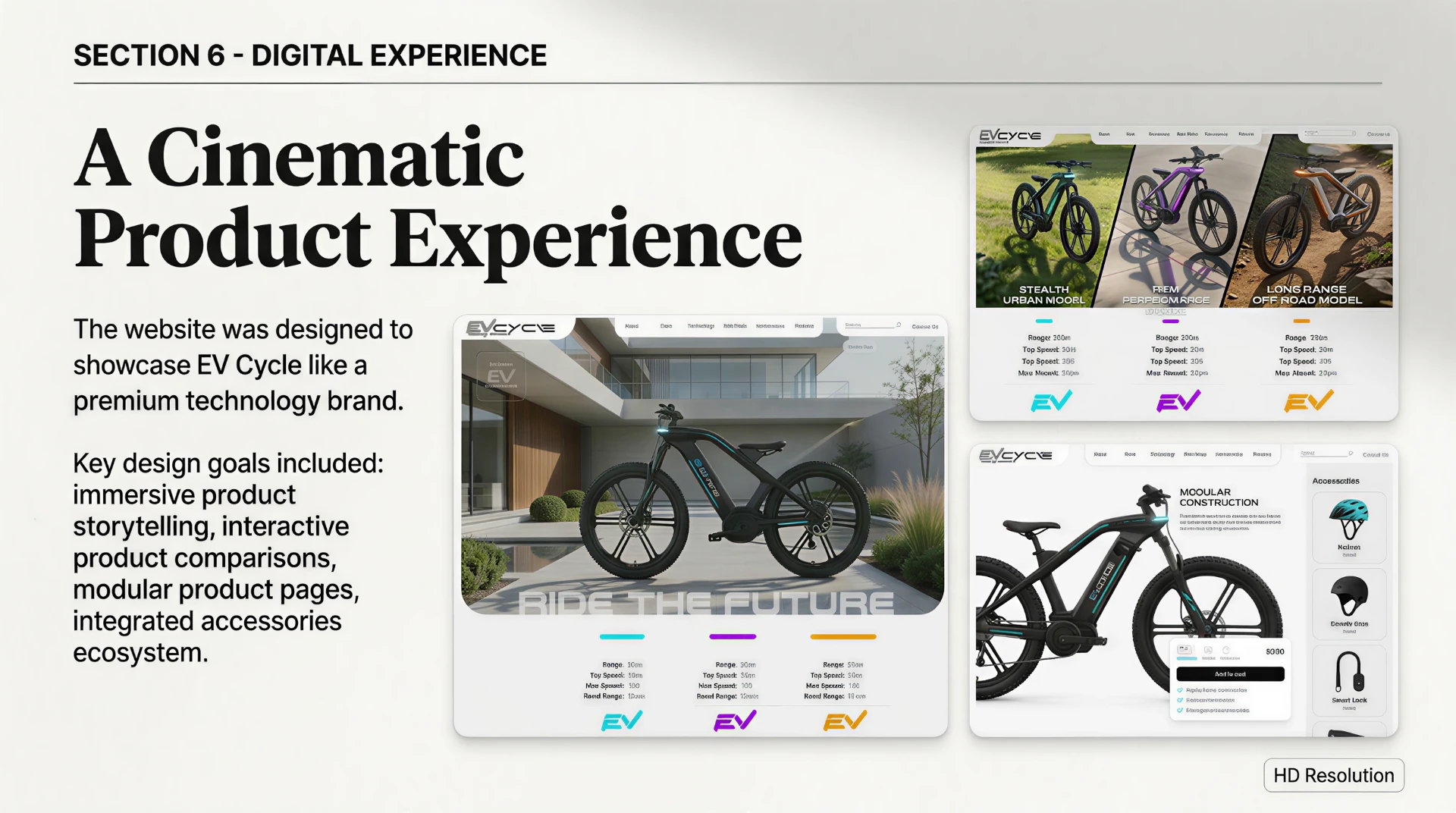
One page system, three product tiers.
Instead of building a separate site for each bike, we designed one set of page templates for home, technology, ride modes, and merchandise. Phantom, Apex, and Horizon all run through the same pages, with only the color signature changing. The site was fully designed and built, with launch pending on the client side.
The complete page system, one template set, three tier identities. Click any image to enlarge.
Home
One entry point positioning Phantom, Apex, and Horizon as tiers of a single platform.
Technology
Motor, battery, carbon frame, suspension, and lighting documented as one shared technology model.
Ride Modes
Intelligent ride modes explained once, then mapped to each bike instead of rewritten three times.
Merchandise
Accessories and apparel carrying the tier signatures, proving the identity system scales past the product.
From napkin sketch to a launch ready brand.
Electric bike models designed and built in 3D: Phantom, Apex, and Horizon.
People directed across three teams: design, branding, and marketing.
Website page templates shared by all three bikes.
Brand system carrying every bike, accessory, and screen.
Product Design
A napkin sketch turned into three fully modeled bikes sharing one frame architecture, each with its own riding personality.
Brand Identity
A scalable identity with a distinct color signature for each bike, applied across product, accessories, merchandise, and digital screens.
Marketing and Website
Marketing assets and a complete website built on one shared template system, ready for launch.
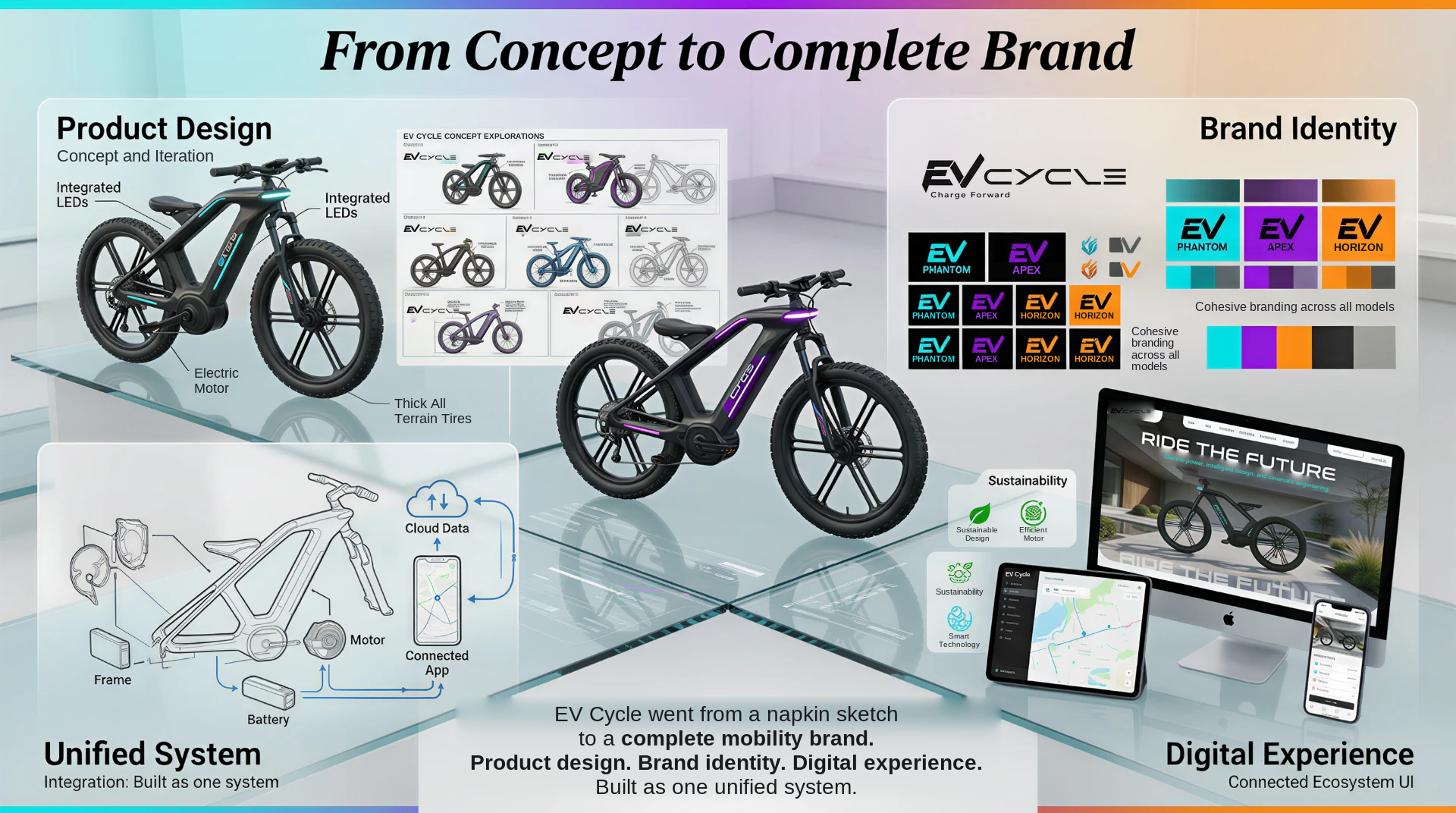
The founder walked in with a sketch on a napkin and walked out with a complete brand: three bikes, a visual identity, marketing, and a website, all built as one system. The hardest part wasn't any single piece. It was keeping three teams and 22 people building the same company at the same time.