Building ClarityOS: Designing an AI-Native Product Ecosystem
Two years of research, four products, one hub, and 380+ paying subscribers, designed and built solo.
Founded and built an AI-powered SaaS ecosystem from the ground up, transforming four connected product ideas into a unified platform for decision intelligence, execution, communication, and relationship management.
My Role: Founder, Product Design and AI Strategy
As founder, I owned product strategy, user experience architecture, AI interaction patterns, design system governance, onboarding strategy, product storytelling, and go-to-market execution.
I also worked across the technical stack, utilizing React, Tailwind CSS, Supabase, Stripe, Claude API, and AI-assisted prototyping tools, to move the product rapidly from raw concept to a live, production-ready SaaS platform.
The Problem: Clarity Breaks Across Modern Workflows
Every organization runs on clarity, or fails without it. After years leading design across themed entertainment, real estate, enterprise SaaS, and FinTech, I kept seeing the same breakdowns: unresolved decisions, miscommunication, unfinished commitments, and relationship context that quietly disappeared over time. Before building anything, I spent two years researching the problem, drawing on my own experience and conversations with executives, hiring managers, department leads, and employees. No single product on the market addressed the full system of how people think, decide, communicate, execute, and maintain important relationships.
- Stage 01Unresolved Decisions
- Stage 02Miscommunication
- Stage 03Lost Commitments
- Stage 04Relationship Decay
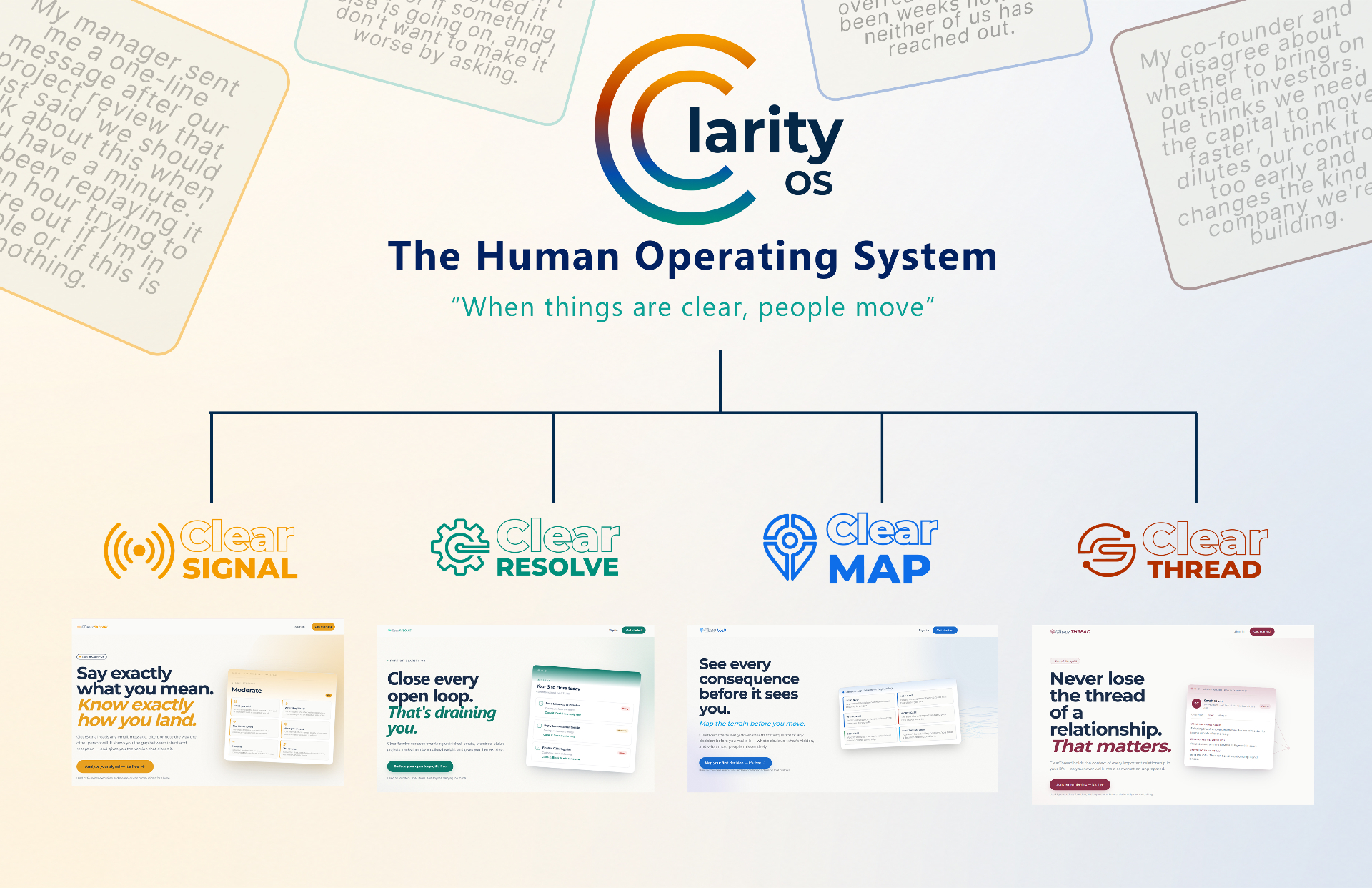
One Connected System for Human Clarity
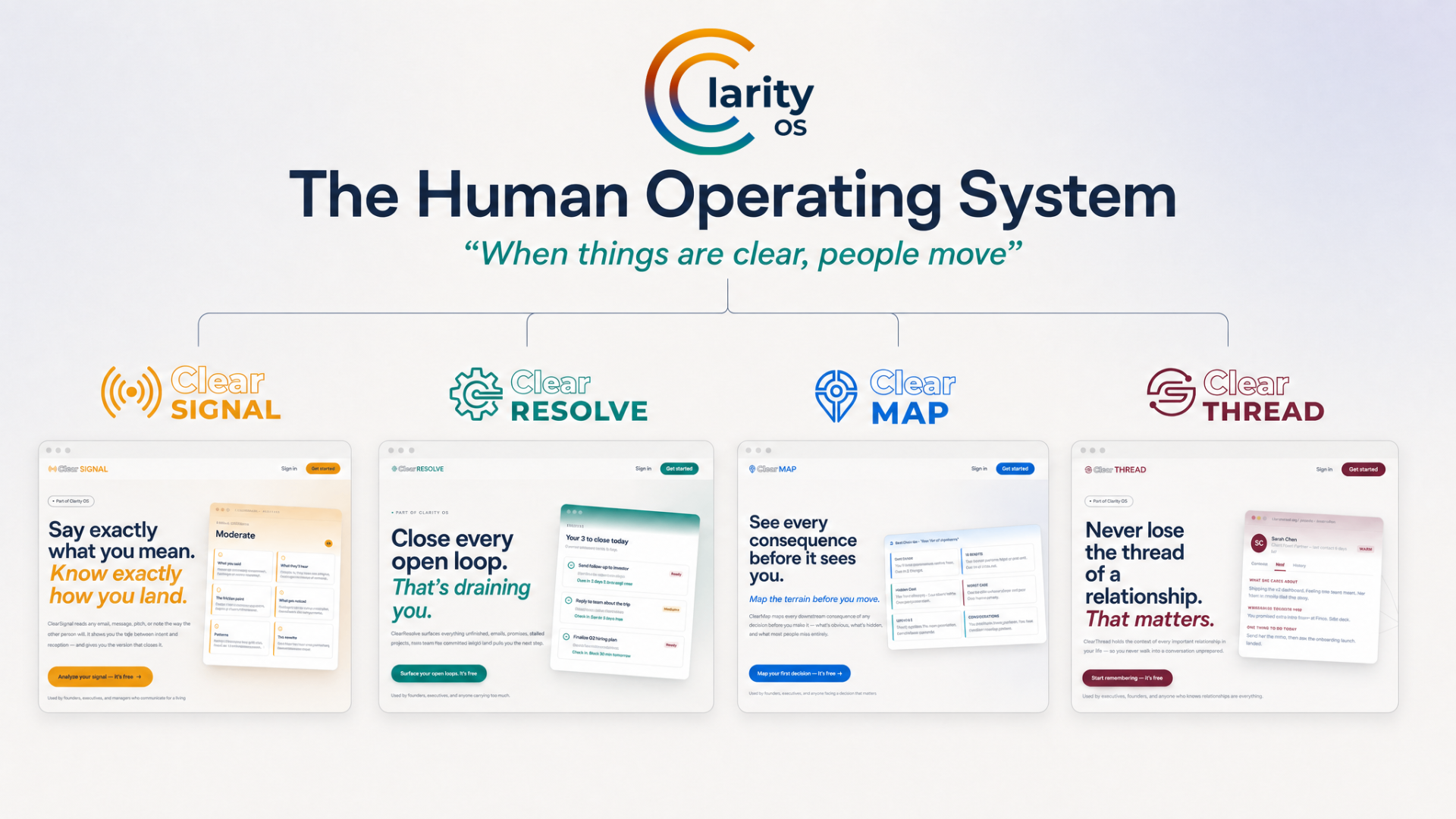
Rather than treating unresolved decisions, miscommunication, outstanding tasks, and relationships as separate isolated issues, I saw a strategic opportunity to design a connected ecosystem where every product reinforced the others.
Most AI tools build bigger databases or generate endless chat logs. My goal was to build structured frameworks that guide people from scattered information to clear action.
Why an Ecosystem, Not One AI Assistant
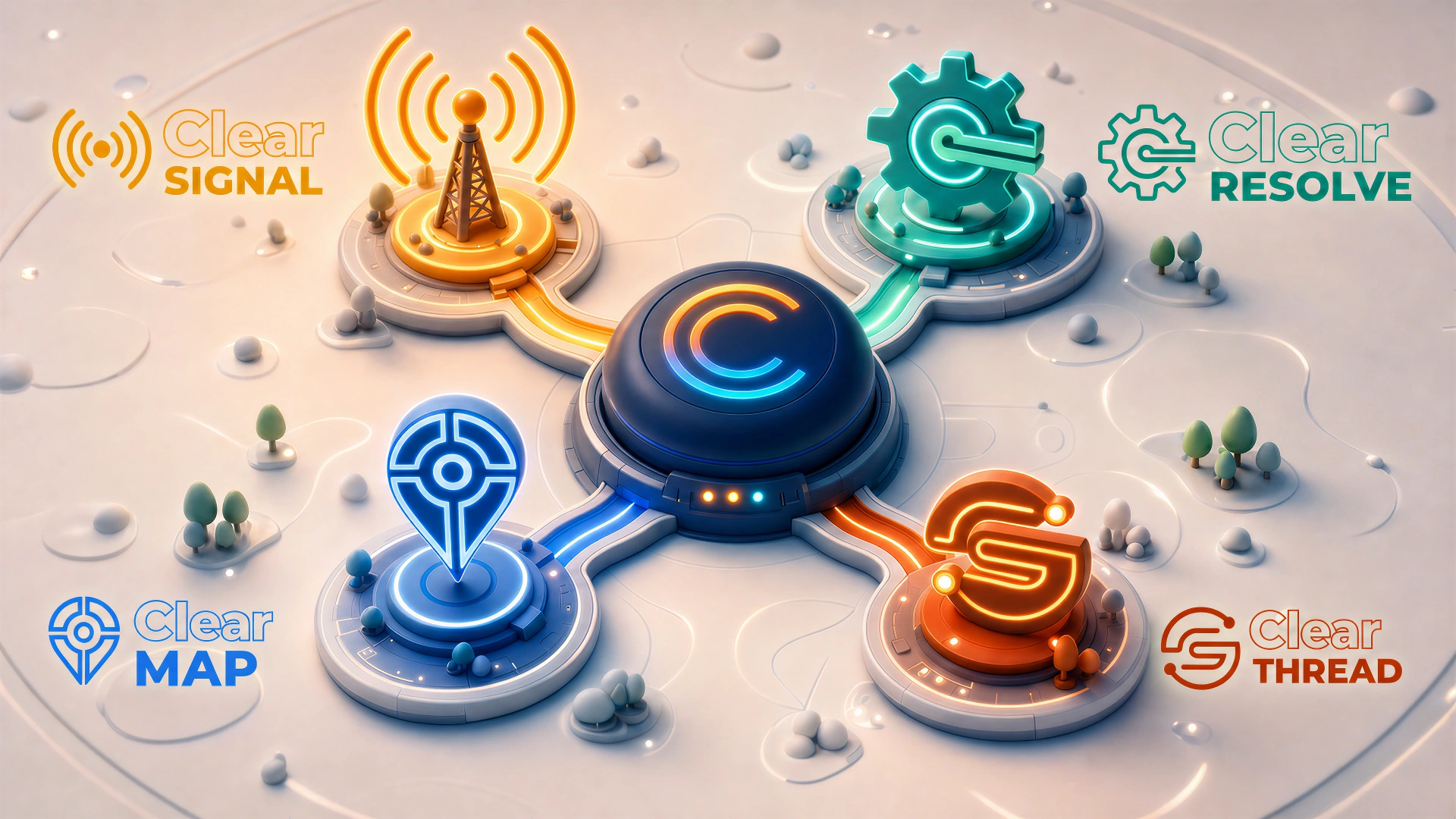
The strategic decision was to not build one large, generalized AI assistant. A single chatbot forces the user to do the hard work of writing prompts, parsing raw output, and figuring out what to do next. Instead, I built four focused apps, each aimed at a specific point where clarity breaks. They share the same database, design tokens, and user profiles, so each one becomes more useful when used with the others.
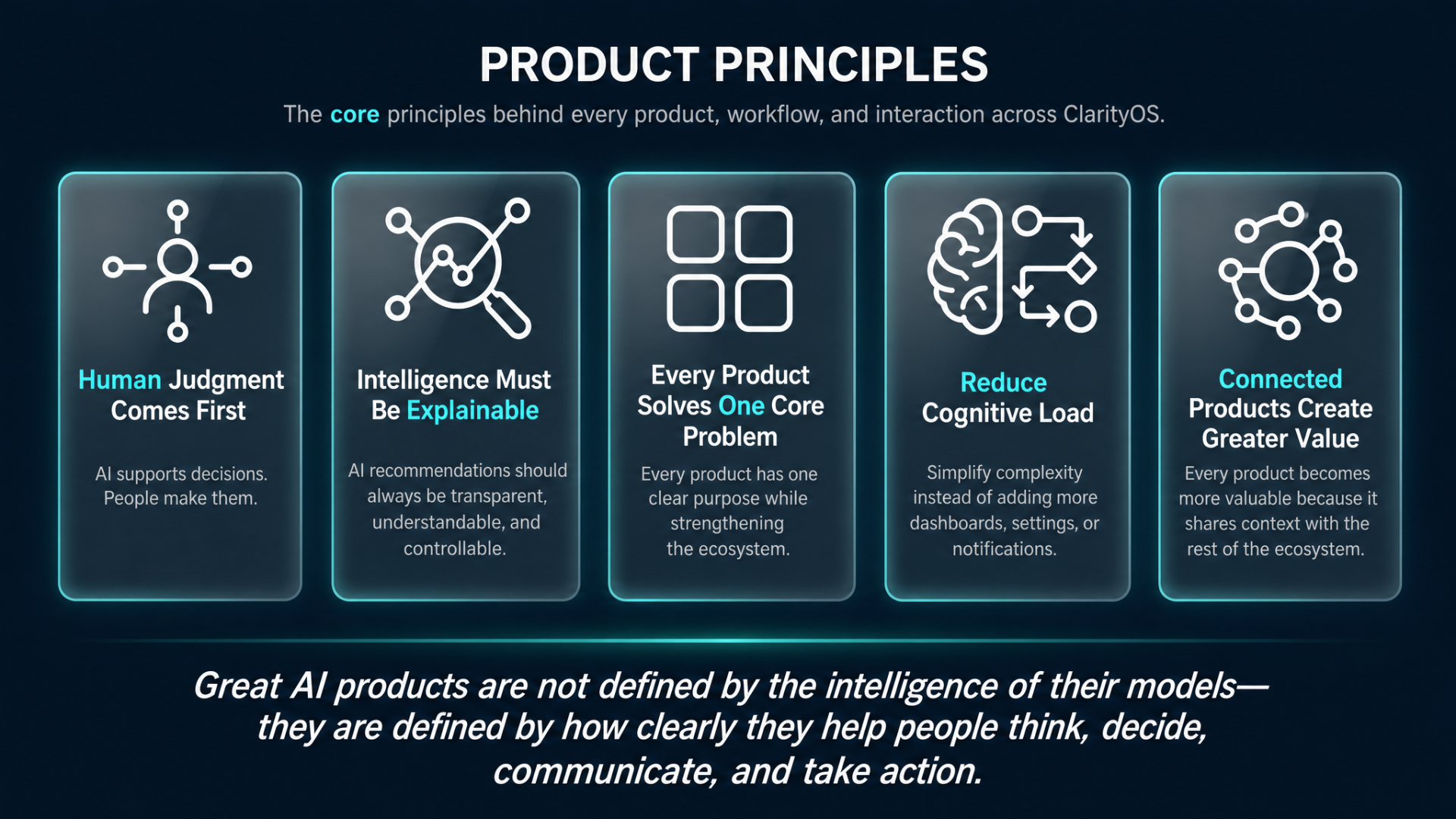
Ecosystem Product Principles
Five core principles guided every single workflow, technical architecture layer, and interactive design pattern across the ClarityOS platform to ensure it remained focused on helping people think clearly rather than simply adding AI noise.
Four Interlocking Intelligence Platforms
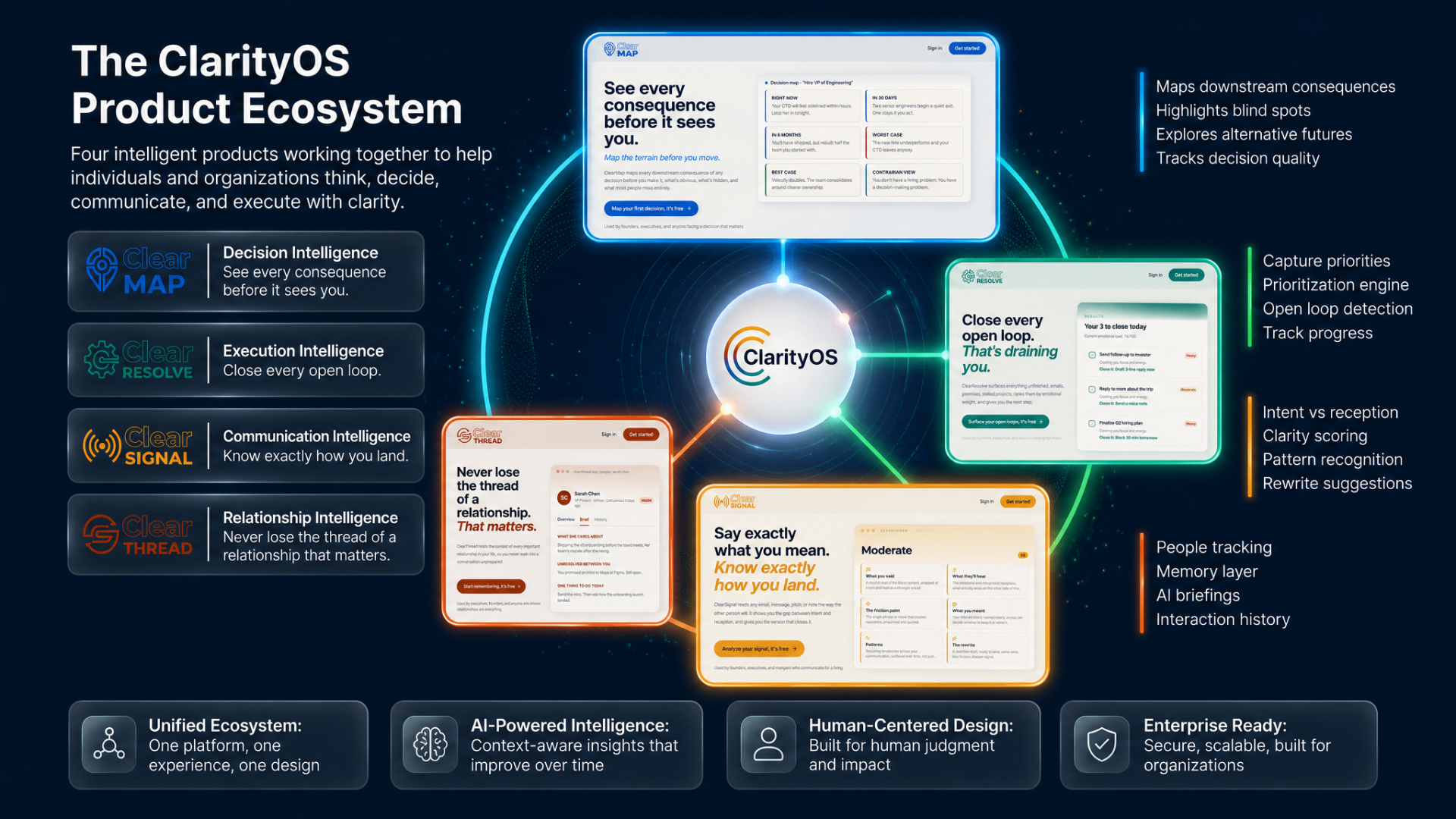
ClearMap
Organizes complex details, maps downstream consequences, identifies critical operational blind spots, and tracks long-term decision health.
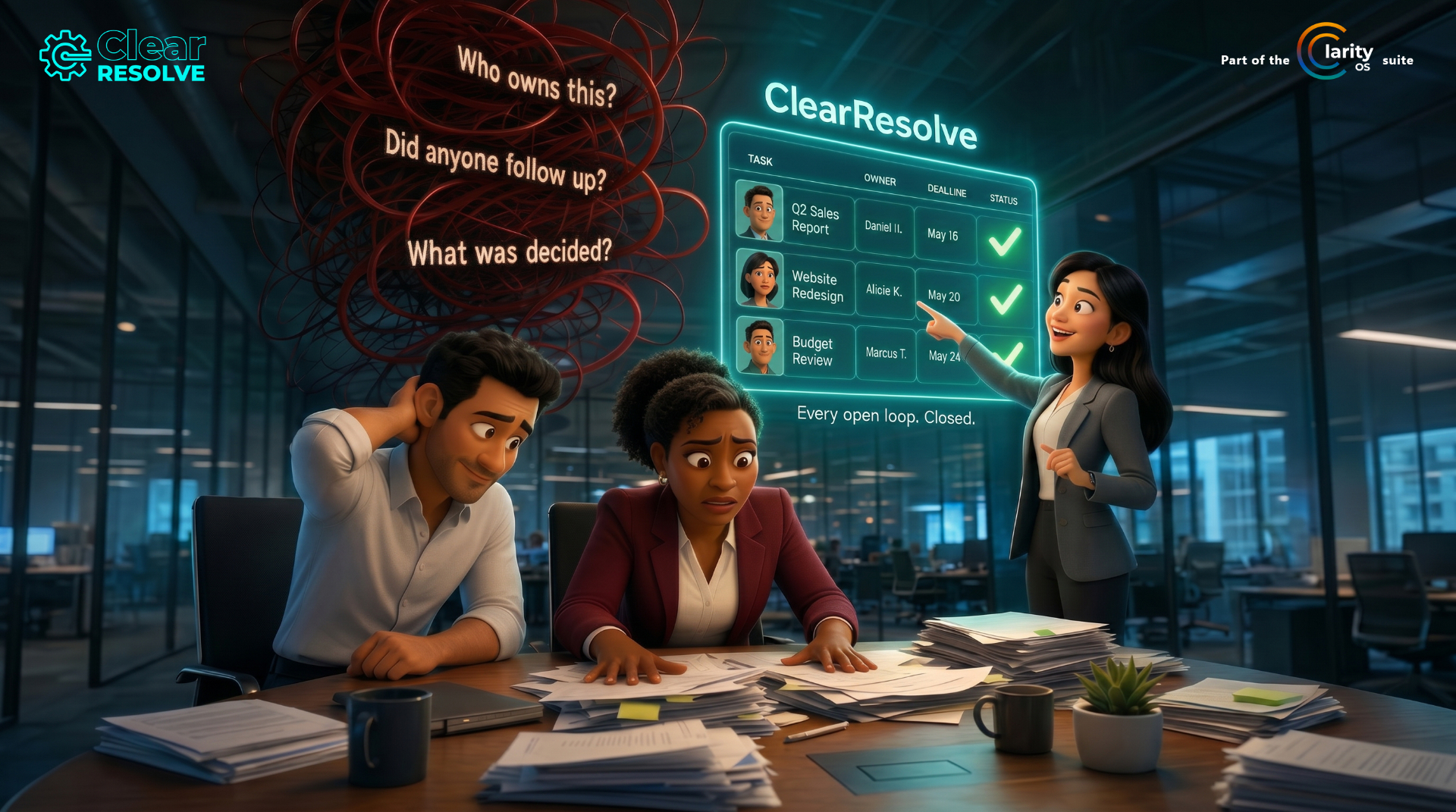
ClearResolve
Captures and surfaces priorities, uncovers open loops, ranks emotional and functional weight, and drives commitments cleanly to close.
ClearSignal
Analyzes literal text intent vs reception, offers real-time rewrite options, and scores messages for objective clarity before sending.
ClearThread
Tracks real context memory, contextual history, active promises, and delivers intelligent, actionable relationship briefings.
Designing AI That Builds Human Trust
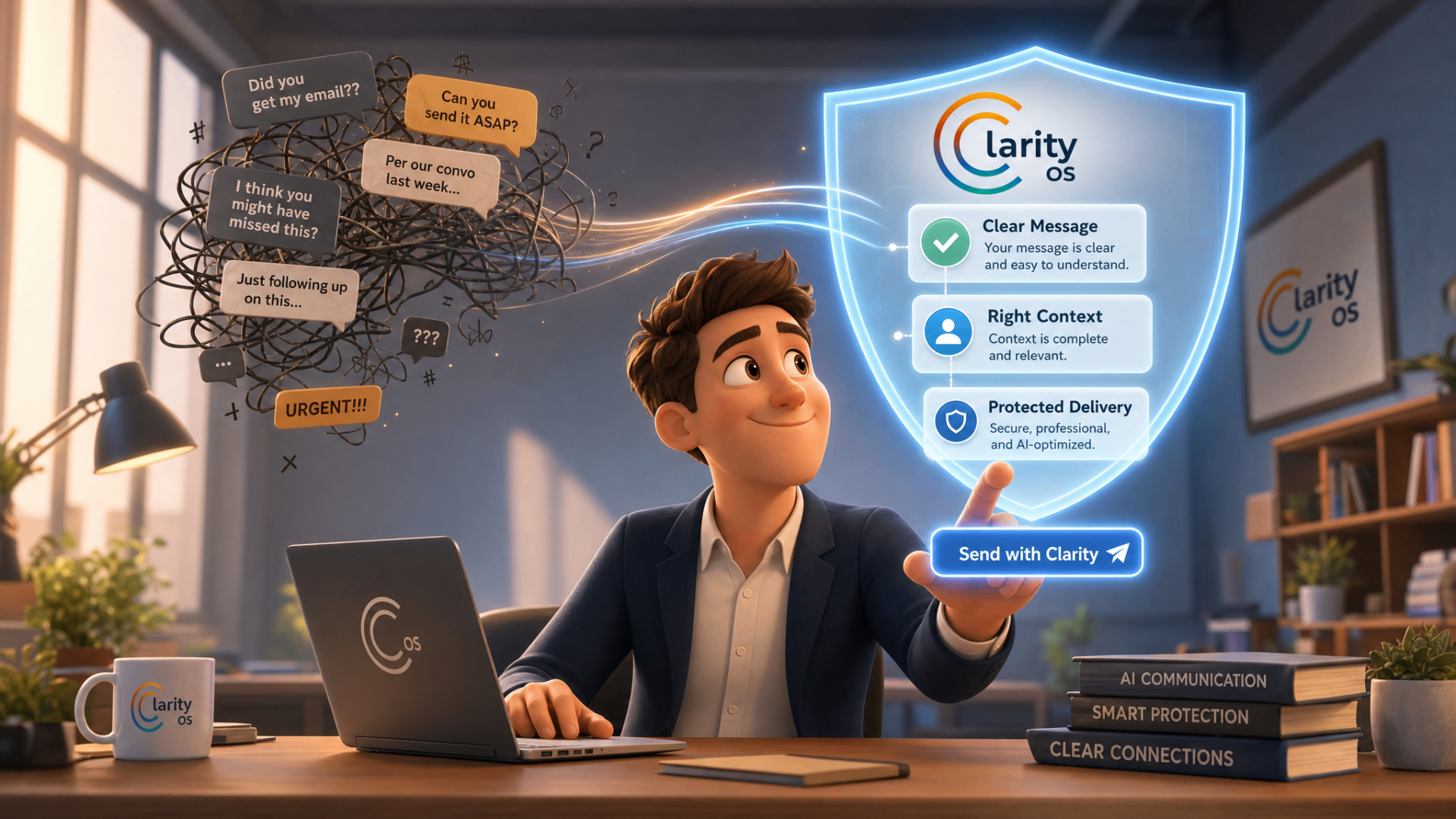
The central interaction challenge when designing AI-native systems was making machine intelligence feel entirely trustworthy, objective, and useful, without overwhelming the user.
Instead of presenting intelligence as a black box that spits out random answers, I architected clear visible reasoning paths. In ClarityOS, AI proposes options, highlights systemic risks, and suggests structured next steps, but the person using it always stays in control.
Designing One System Across Four Products
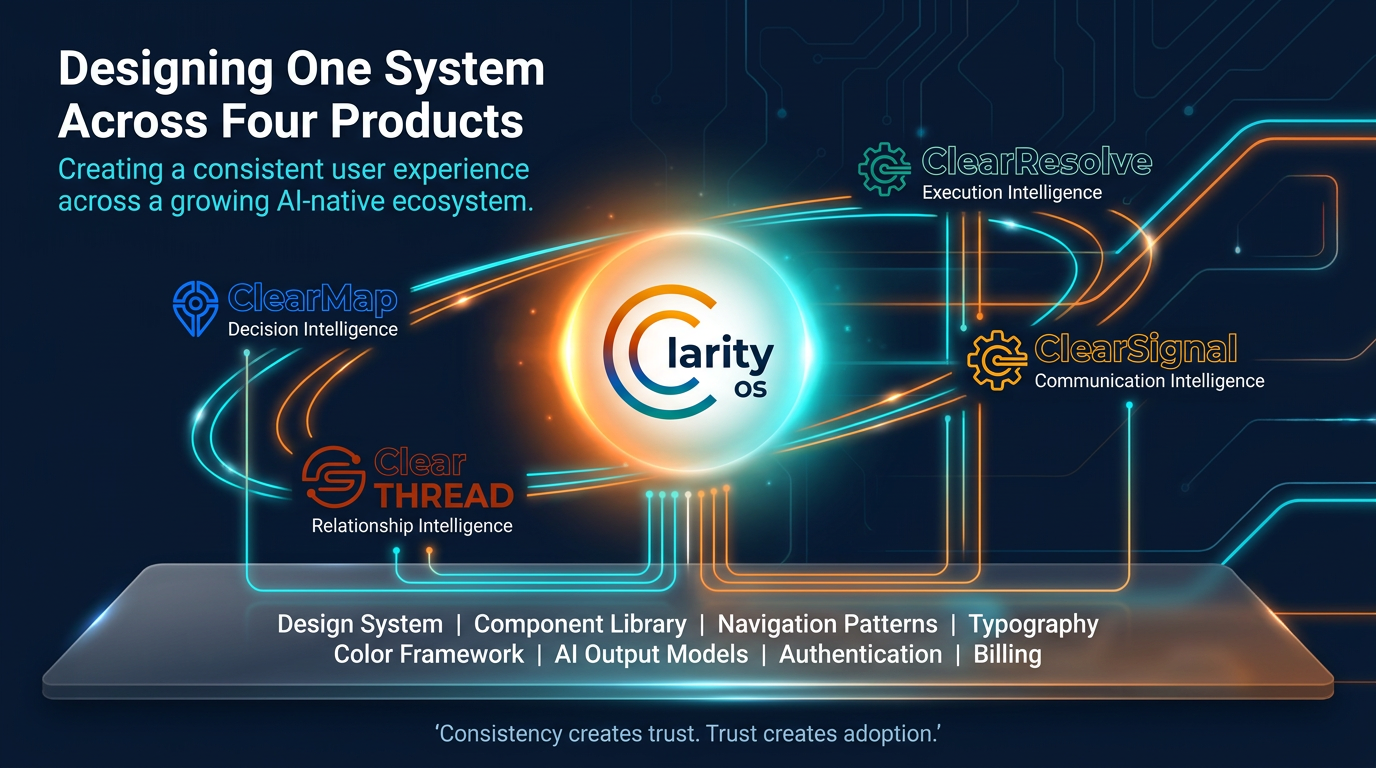
As the ecosystem expanded, consistency became critical. I created a highly unified global design system across all products that governed core navigation, layout patterns, AI output states, interactive behaviors, and onboarding flows.
The first version shipped as four separate tools with four separate logins. Watching how early subscribers actually used them, I rebuilt the suite into one hub with a single sign-in.
- Shared Authentication & Account Creation Models
- Shared Stripe Billing & Subscription Infrastructure
- Shared AI Infrastructure Pipelines & Context Layers
- Consistent Workspace Navigation & Component Patterns
- Cross-Product Logic: Actions in one app instantly update the shared state
From Concept to Live, Working Product
ClarityOS successfully moved beyond Figma mockups and theoretical design structures into a fully working, multi-app production SaaS platform with verified user profiles, Stripe payment routing, and real-time AI API connections.
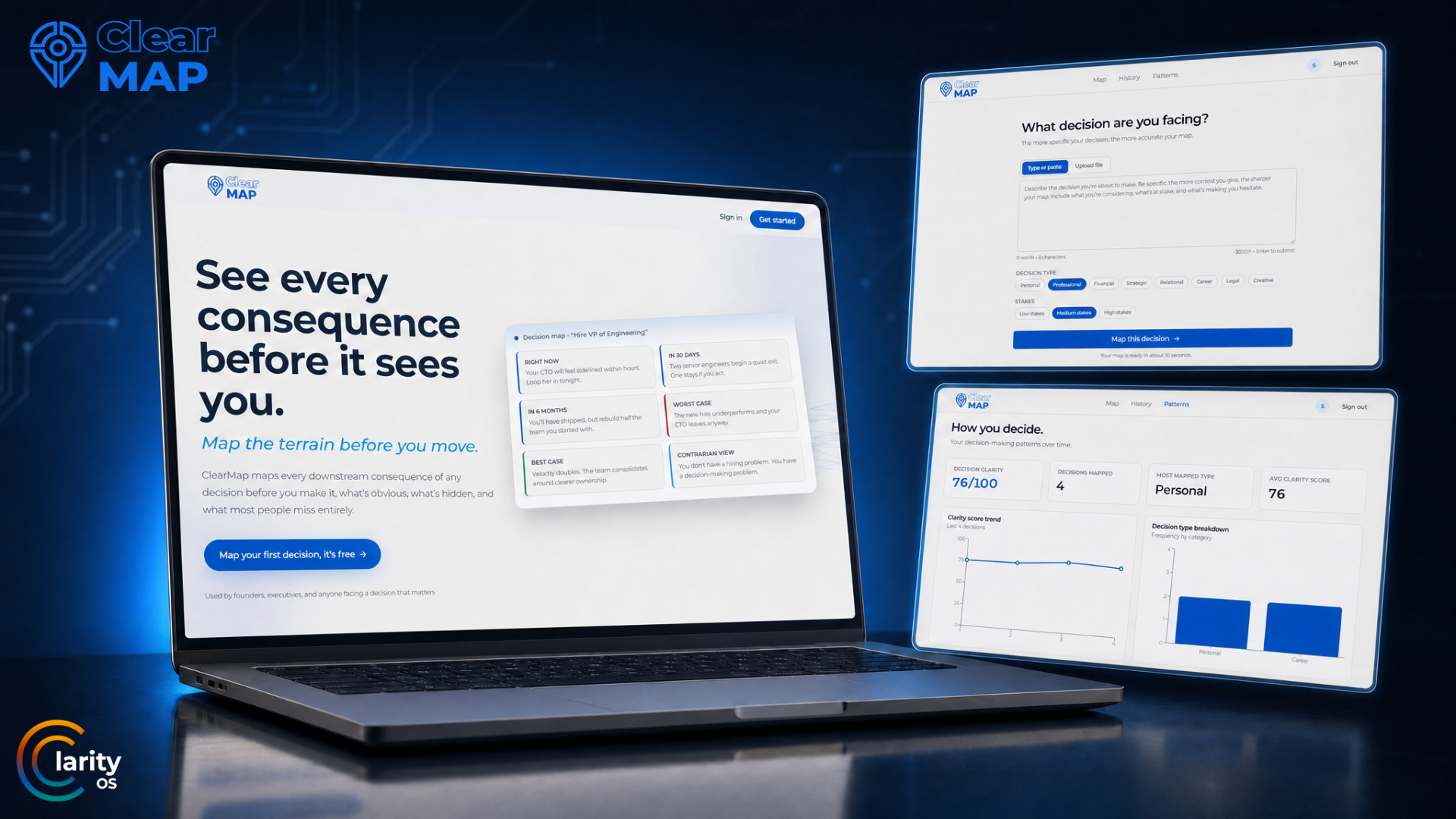
ClearMap Product Environment, Decision Mapping Interface
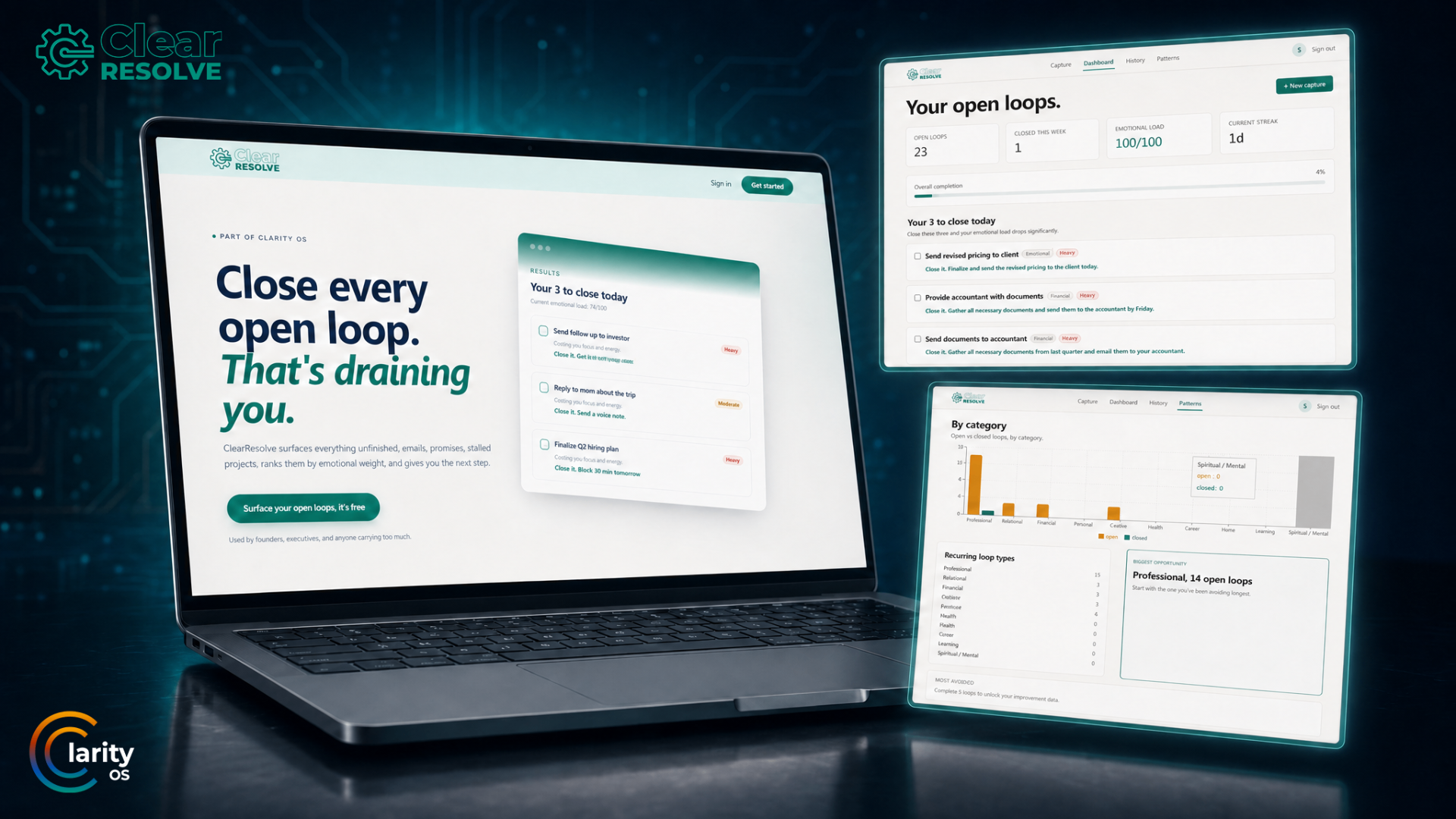
ClearResolve Product Environment, Open Loop Resolution Dashboard
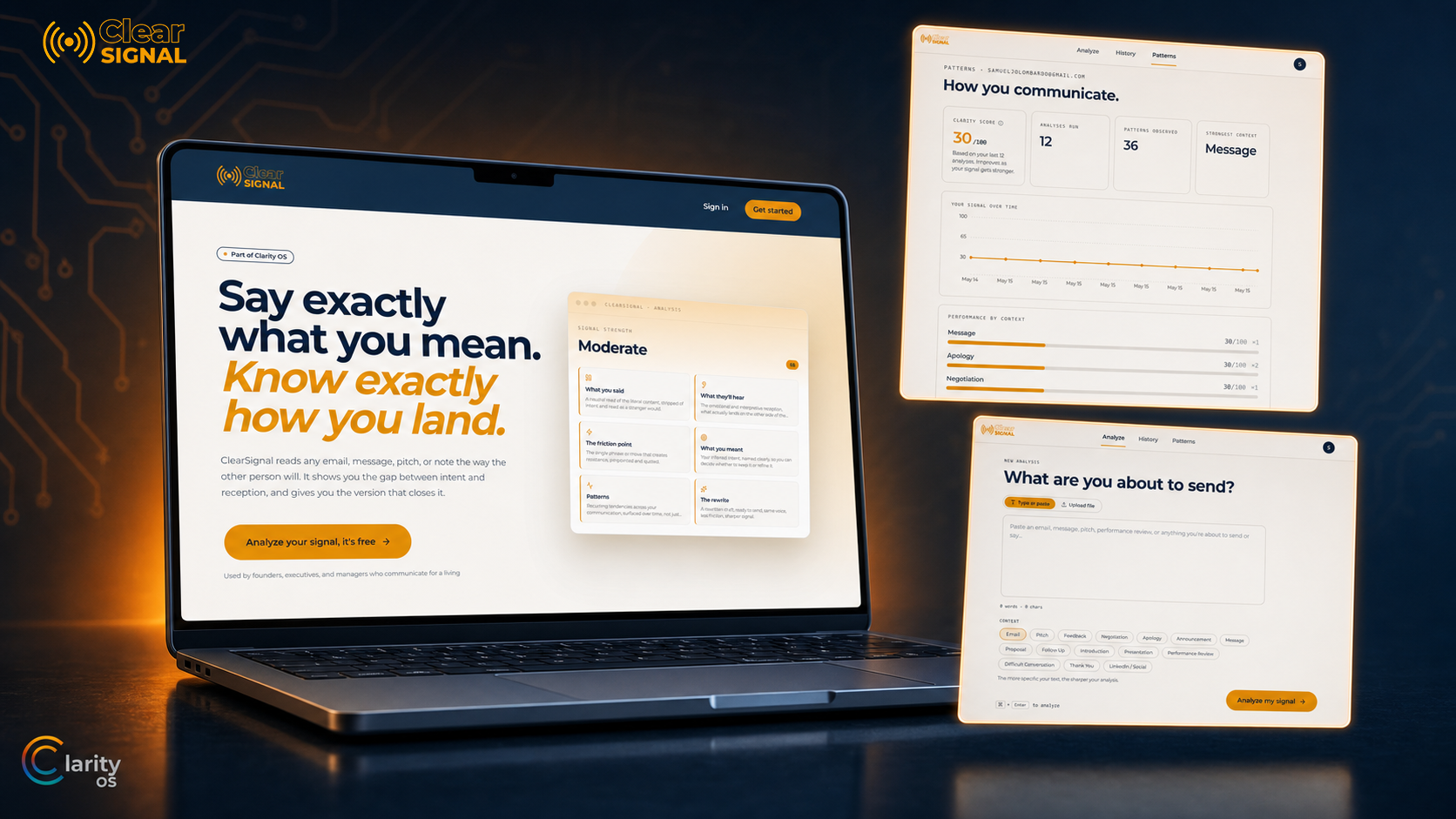
ClearSignal Product Environment, Communication Analysis Workspace
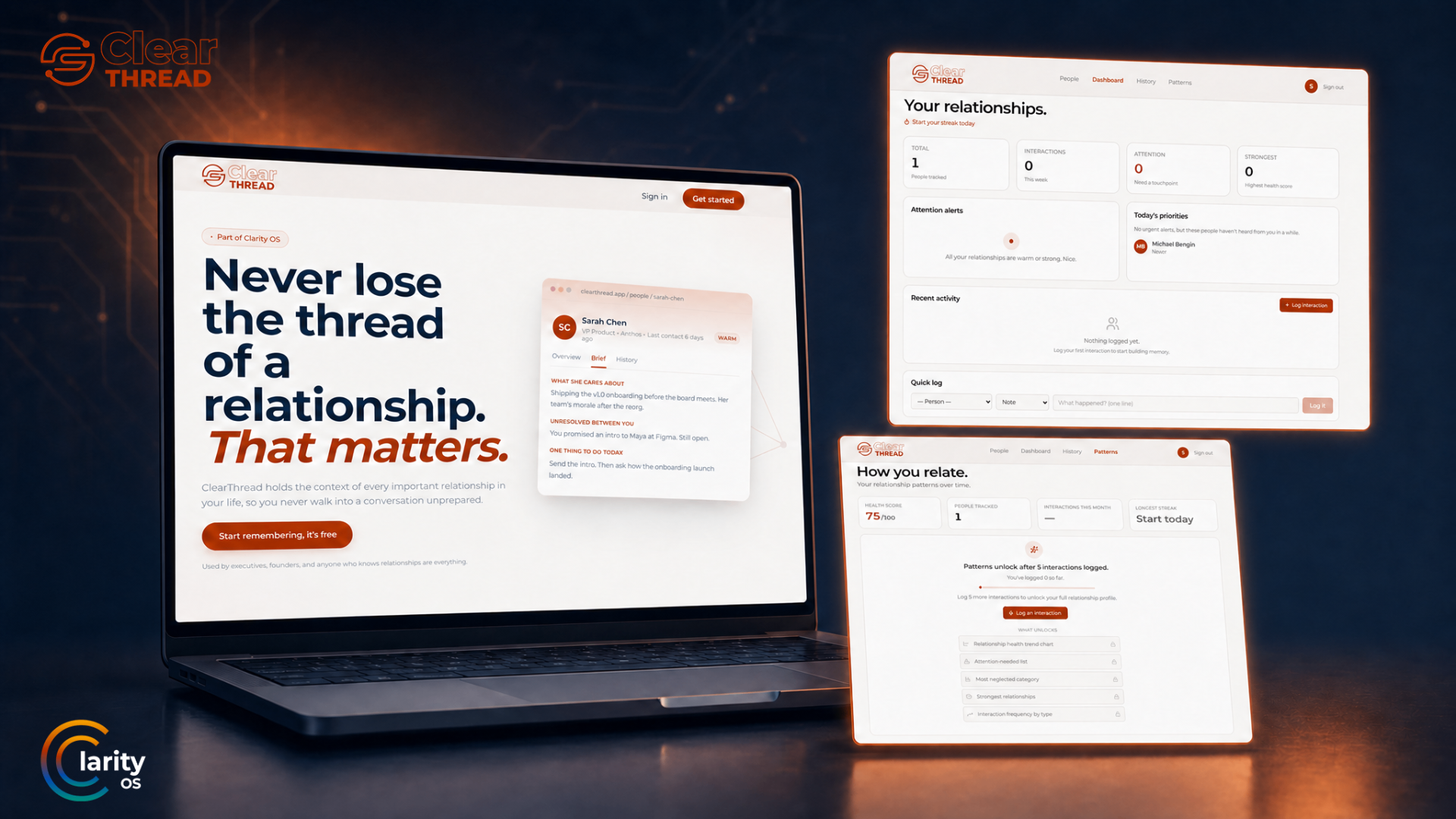
ClearThread Product Environment, Relationship Intelligence Suite
Real Subscribers, Working Product
ClarityOS went from a blank page to a live, paid subscription product that I designed and built myself.

Lessons Learned: What ClarityOS Taught Me
Building ClarityOS reinforced that successful AI products are not defined by the complexity of their language models. They are defined by how clearly they help everyday humans understand operational complexity, make confident decisions, and take immediate action.
Throughout the project lifecycle, I discovered that the greatest opportunities were rarely pure engineering hurdles, they came from reducing cognitive load, creating explainable and visible interactions, and keeping people in control of the decisions.
See It Live
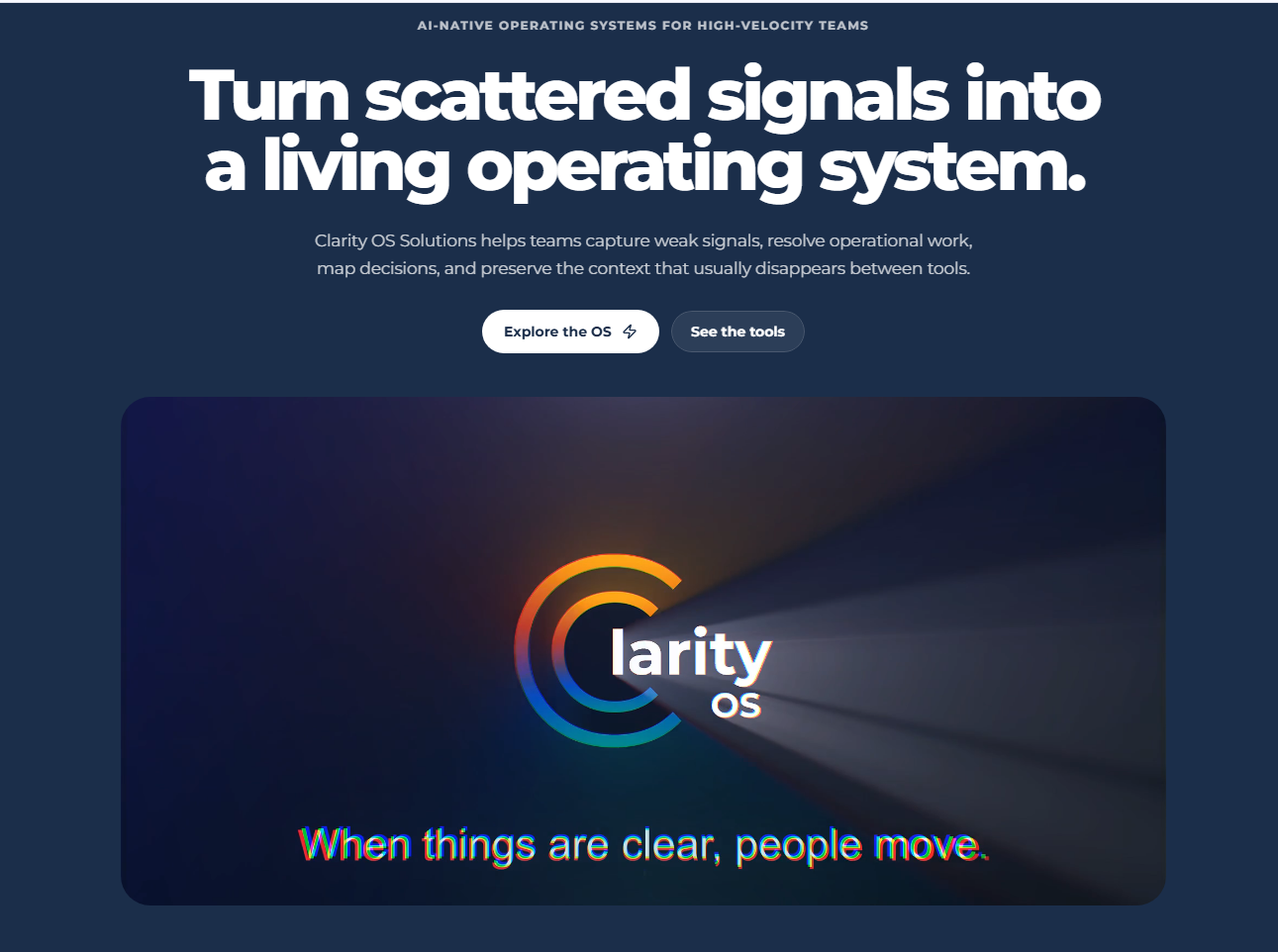
ClarityOS is live at clarityossolutions.com. This is the real product site, designed and built by me.
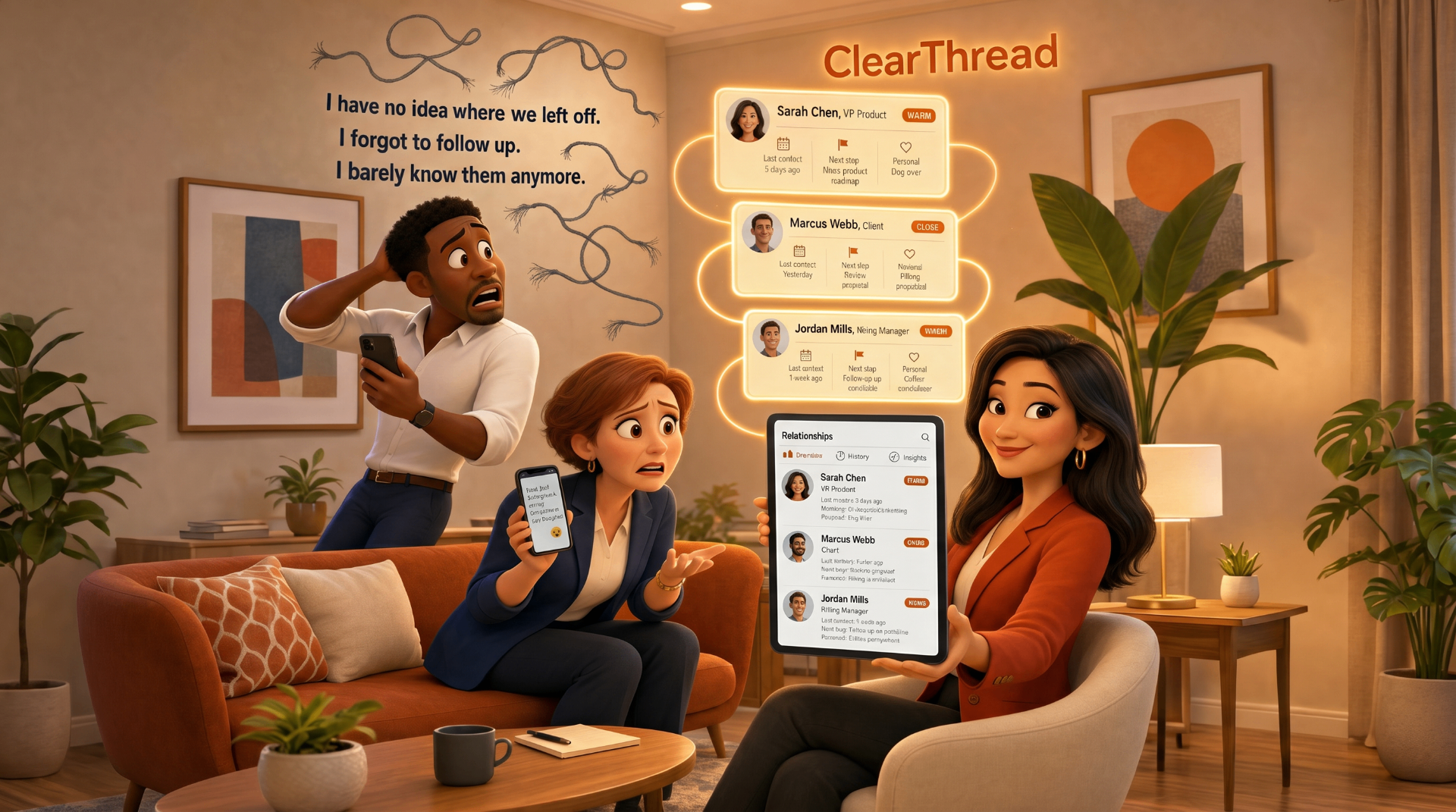
Transforming Complexity Into Intuitive Human Action
ClarityOS began with a simple observation: people are rarely limited by a lack of information, they are limited by the difficulty of turning information into confident action.
That insight became the foundation for an ecosystem of products designed to help people think more clearly, make better decisions, communicate with greater precision, execute more effectively, and build stronger relationships.