Designing the Clarity Engine: The Operational Steering Wheel
How an AI Copilot Pipeline Translates Complex, Non-Deterministic Data Logs into Instant, Real-Time Executive UI Actions.
The strategy layer of ClarityOS. A high-performance visualization suite engineered to help founders, operators, and cross-functional teams steer AI agents, monitor logical reasoning pipelines, and analyze complex network states with absolute confidence.
- Role
- Principal AI Interaction Designer & Systems Architect
- Scope
- 0-to-1 Copilot Framework & Interface Engine
- Focus
- Pipeline steering controls, data state visualization, non-deterministic system indicators
- Primary Outcome
- Production-ready React interface displaying real-time agent execution logic
My Role: Engineering Transparent Machine Reasoning
I directed the layout logic, system status frameworks, and feedback loops for this advanced copilot engine. The primary design challenge was translating raw JSON stream responses, agent state shifts, and long-term background reasoning logs into visual interface changes that a non-technical manager could analyze and redirect in under 3 seconds.
Designing for the Black Box: Demystifying AI Reasoning
In traditional software, behavior is deterministic, it is hardcoded to output Y when a user triggers X. With AI agents, the pipeline is non-deterministic. The model takes a loose query, plans an execution path, and performs multi-stage reasoning steps in the background. Without an interactive steering wheel, users feel anxious, helpless, and completely unable to trust the system's output.
Users need to see how an agent reached a conclusion, not just the final result.
Users must be able to pause, correct, or redirect an agent mid-stream before computational resources are wasted.
Platforms Generate More Signals Than Humans Can Process
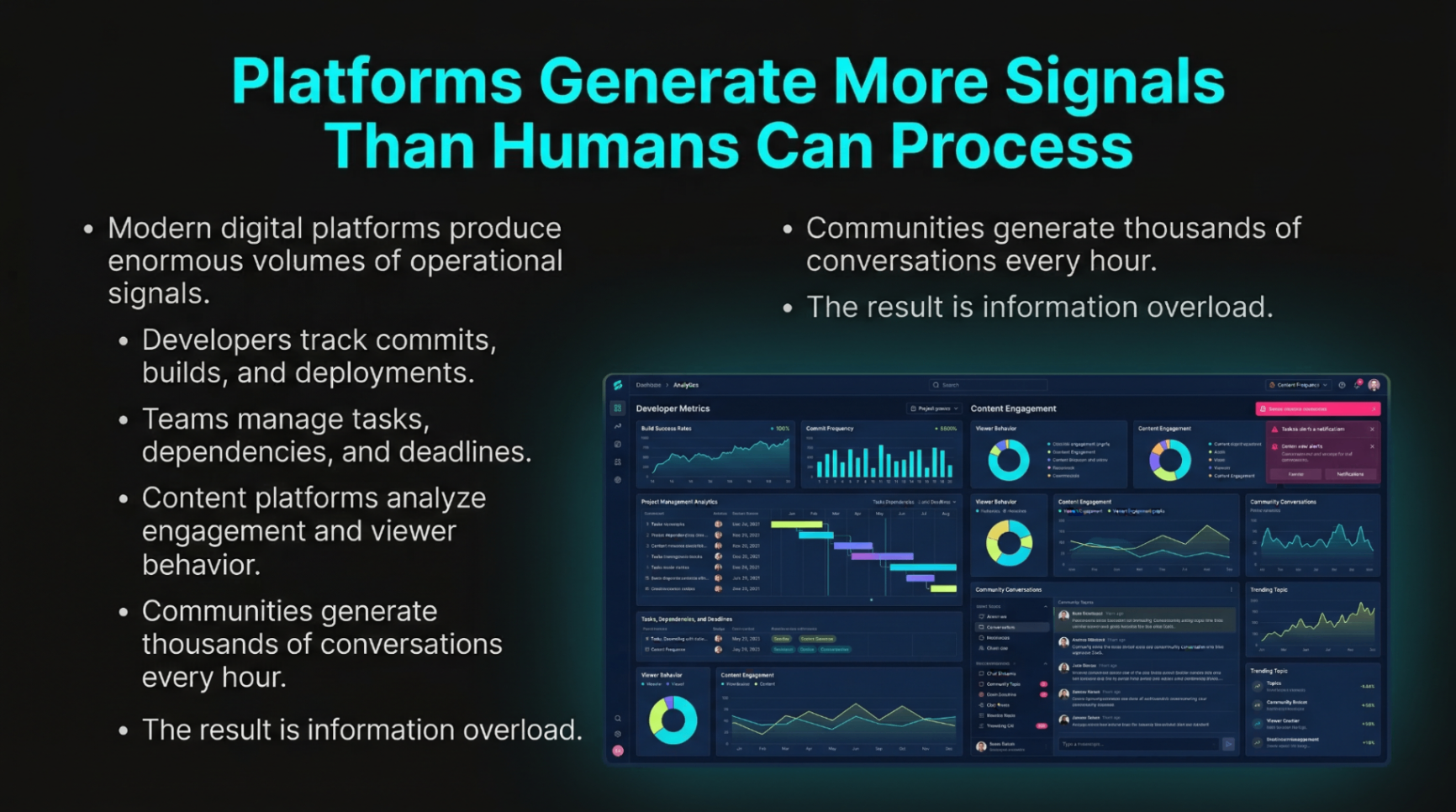
Modern digital platforms produce enormous volumes of operational signals: developers track commits, builds, and deployments. Teams manage tasks, dependencies, and deadlines. Content platforms analyze engagement and viewer behavior. Communities generate thousands of conversations every hour. The result is information overload, and dashboards alone cannot direct action.
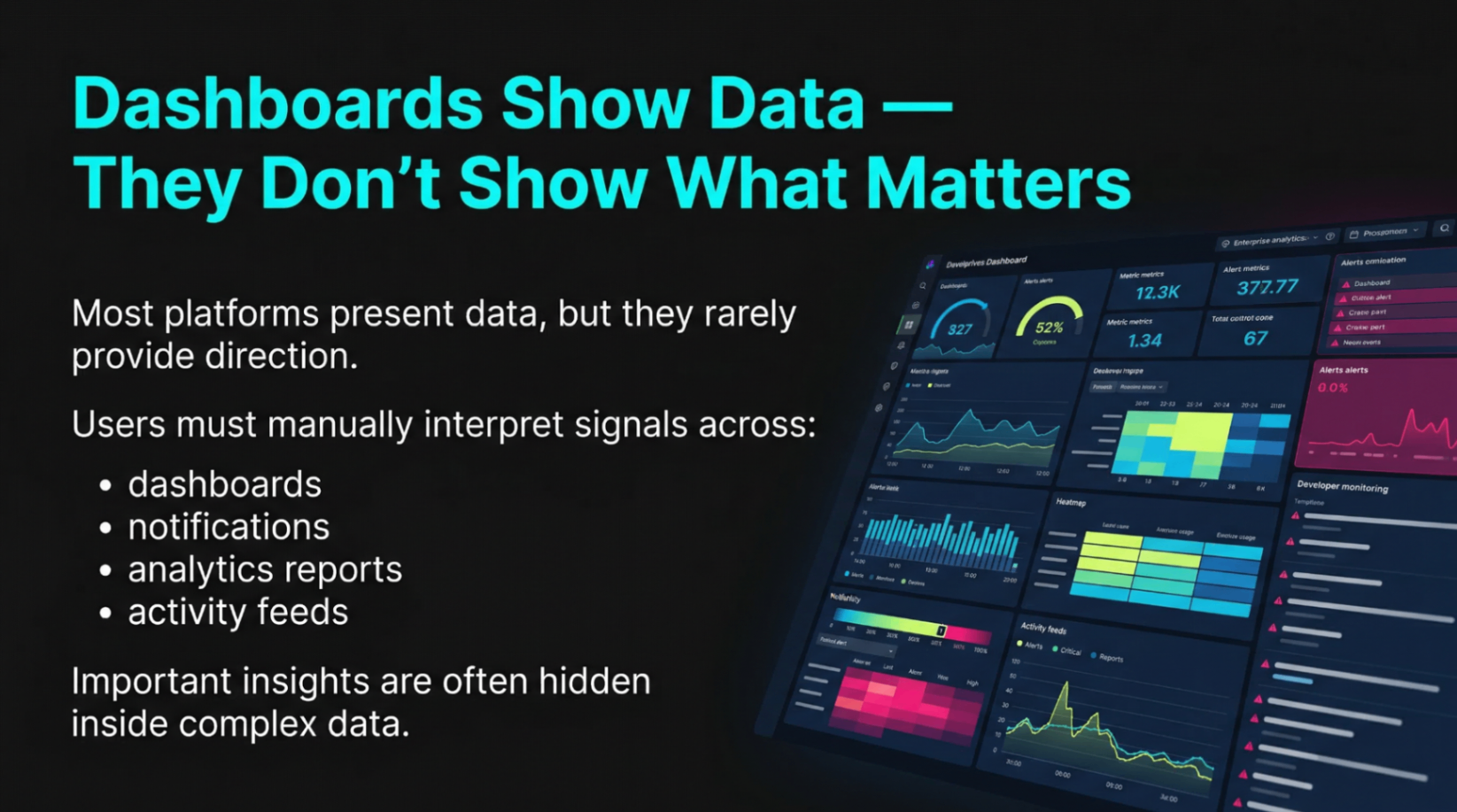
Dashboards Show Data, They Don't Show What Matters
Most platforms present data, but they rarely provide direction. Users must manually interpret signals across dashboards, notifications, analytics reports, and activity feeds. Important insights are often hidden inside complex data, waiting for a human to string them together.
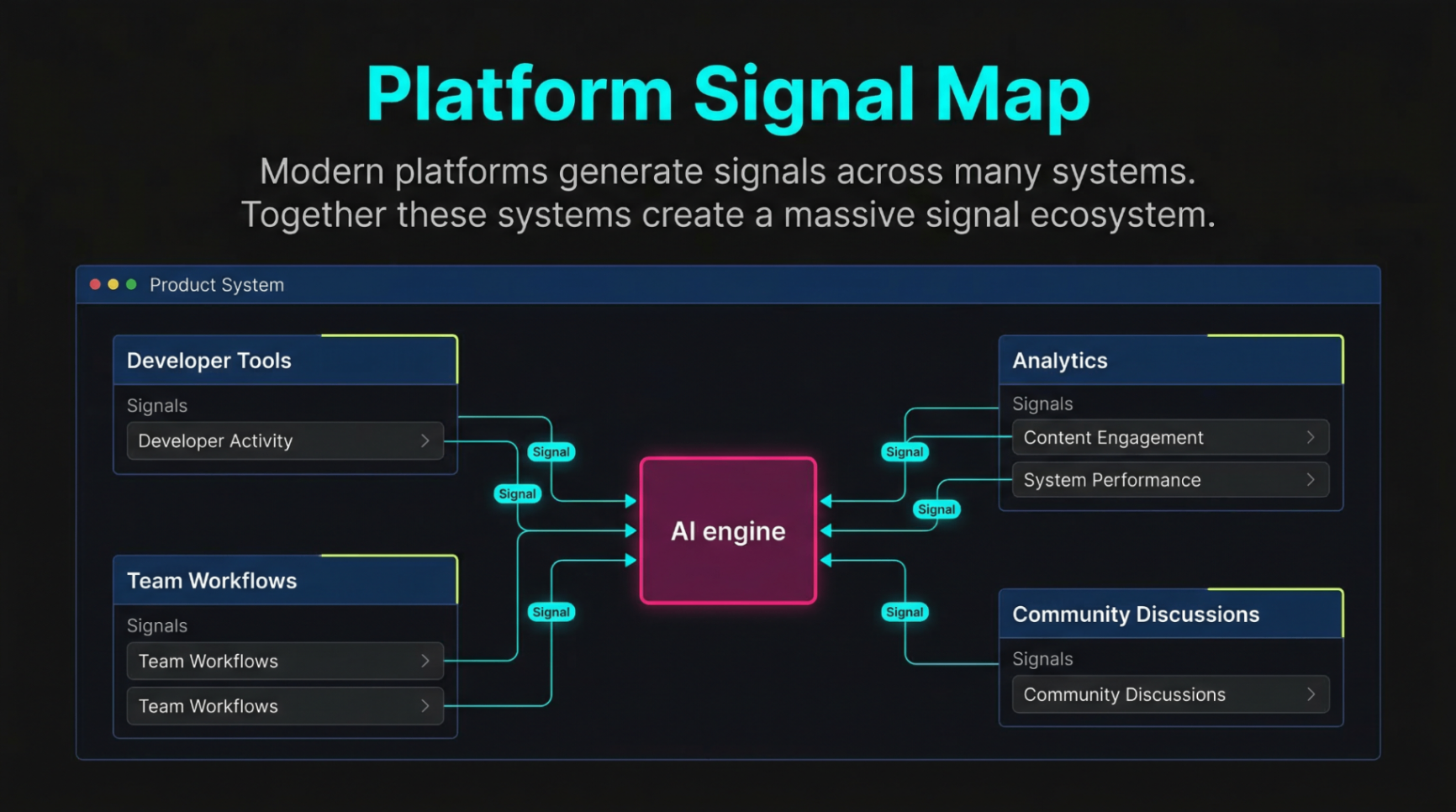
A Massive Signal Ecosystem, Routed Through One AI Engine
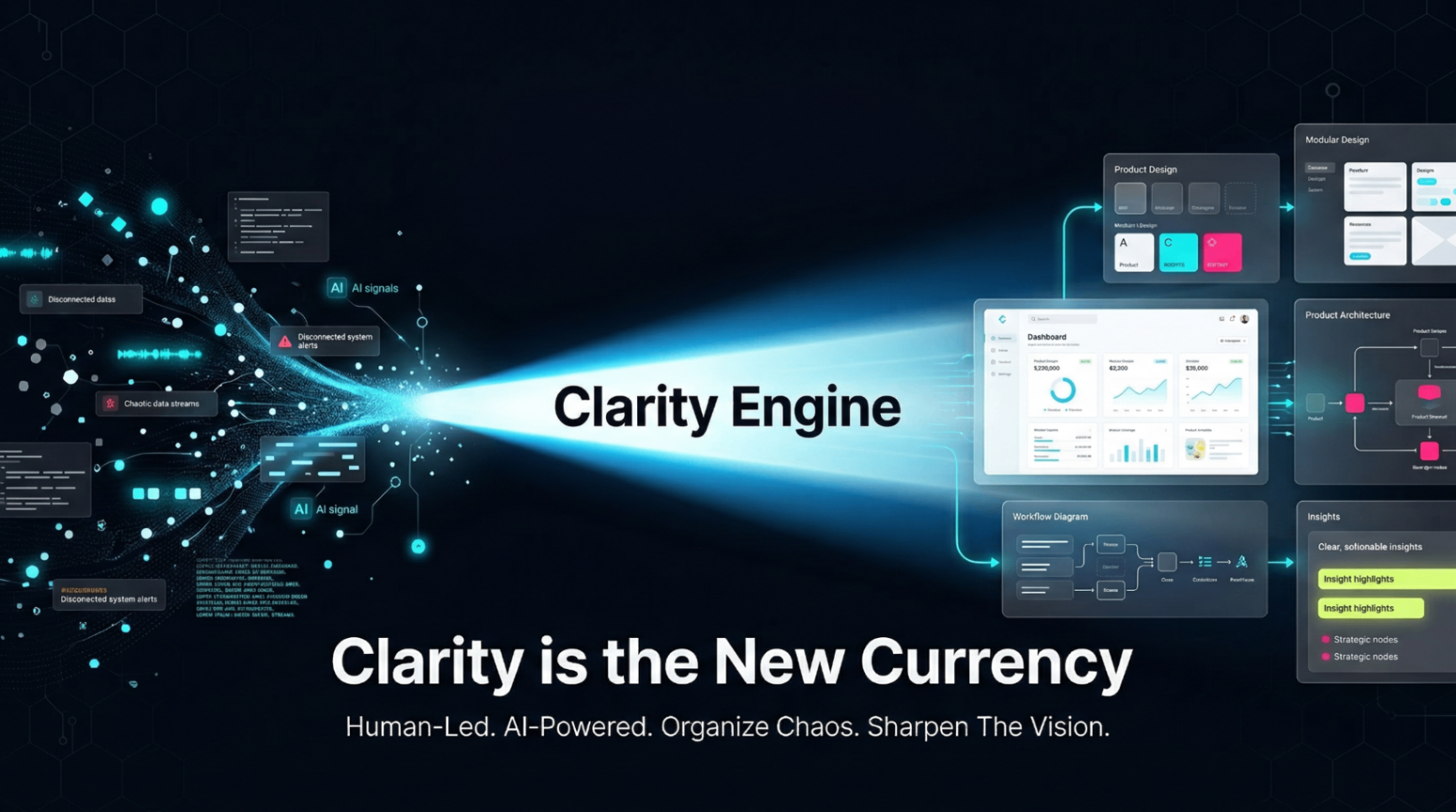
Modern platforms generate signals across many systems. Together they create a massive signal ecosystem that the Clarity Engine routes, ranks, and translates into decisions.
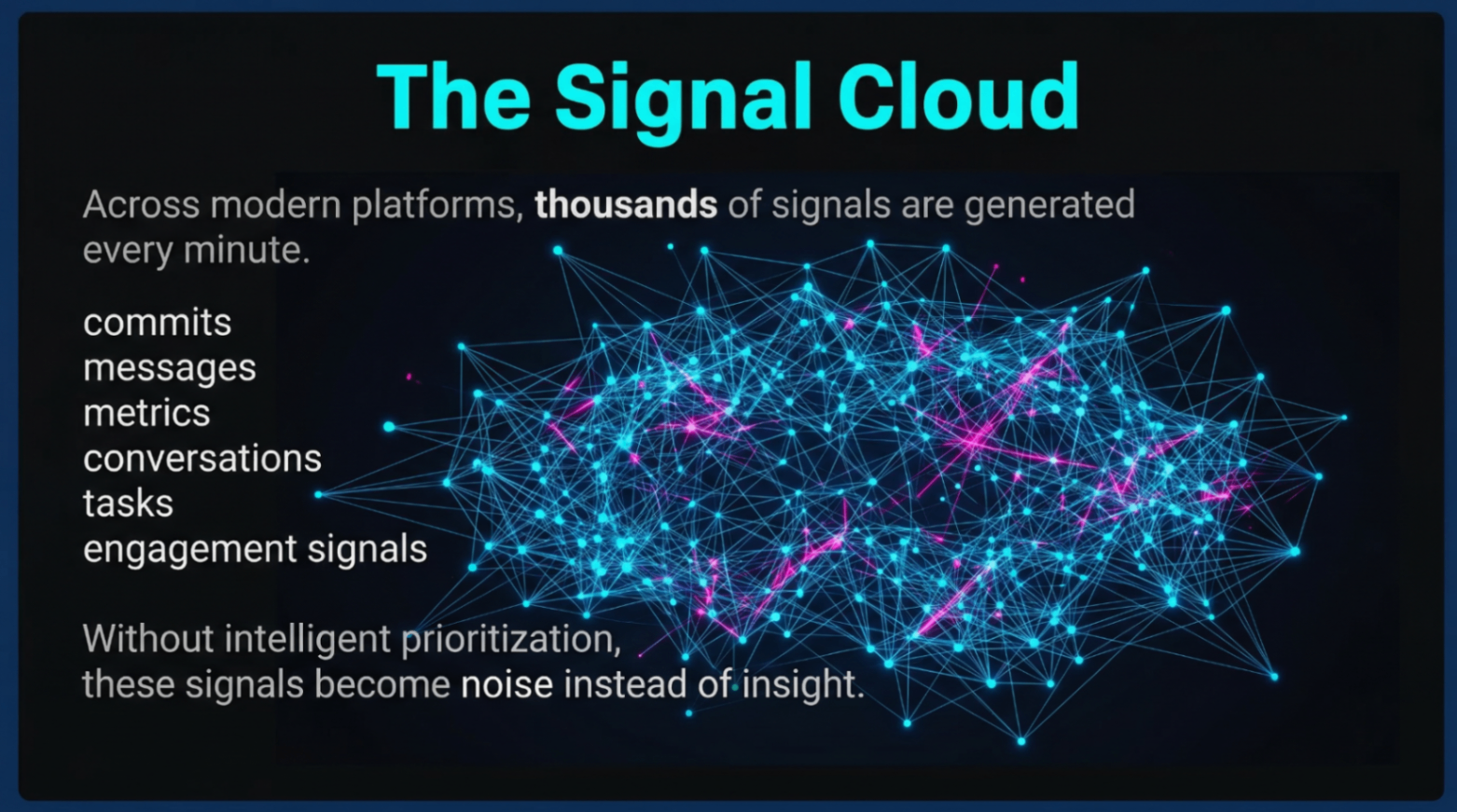
Thousands of Signals, Every Minute
Across modern platforms, thousands of signals are generated every minute: commits, messages, metrics, conversations, tasks, and engagement signals. Without intelligent prioritization, these signals become noise instead of insight.
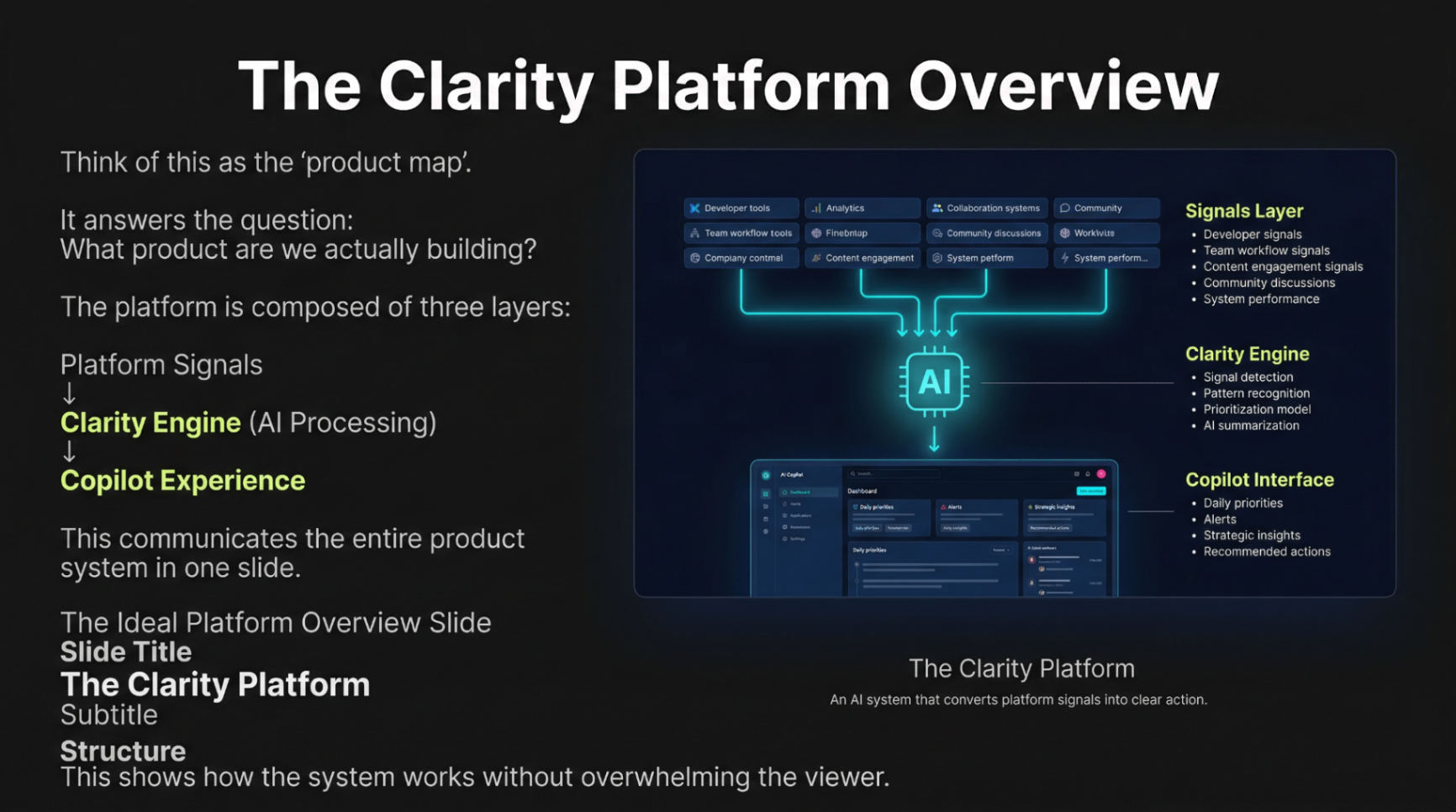
An AI System That Converts Platform Signals Into Clear Action
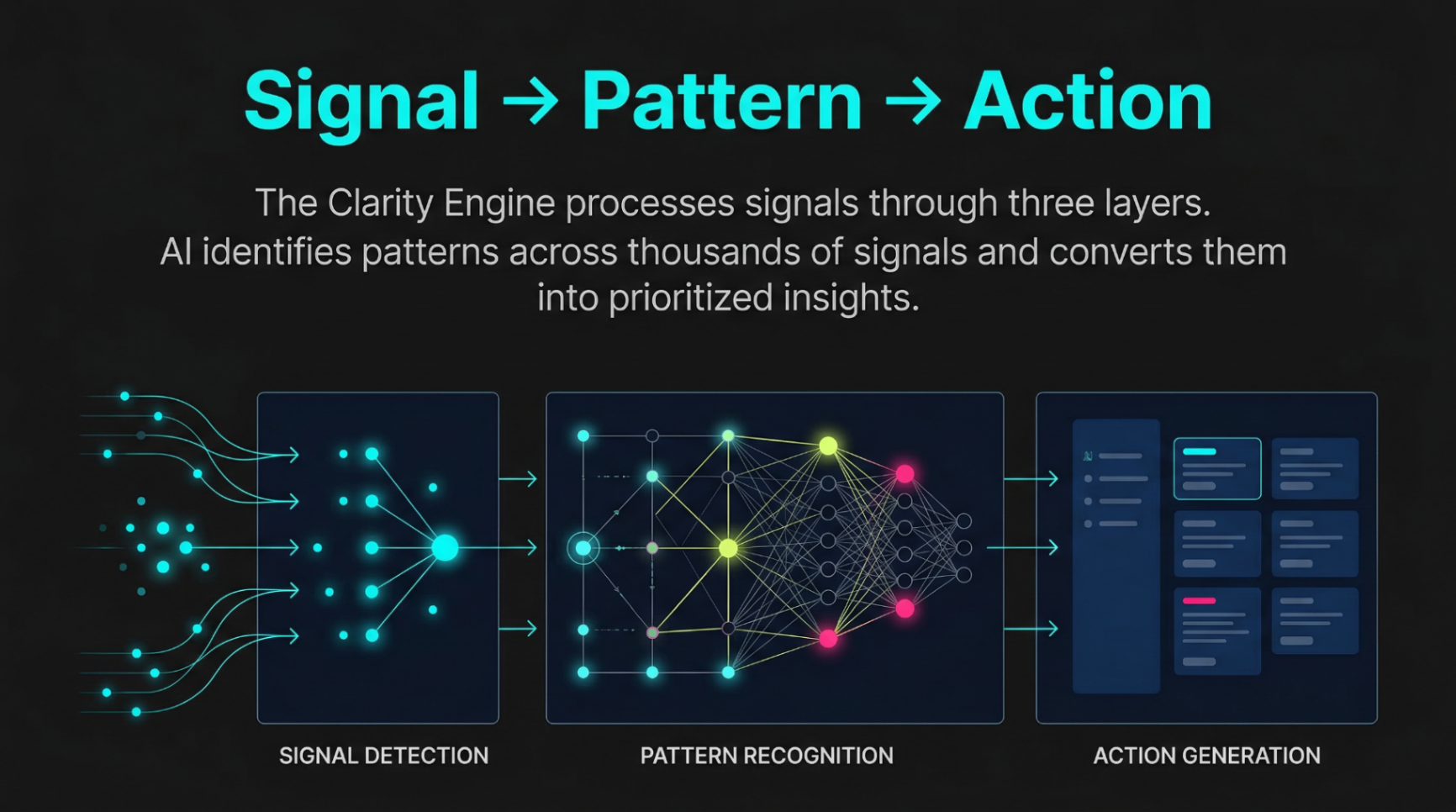
The platform is composed of three layers: a Signals Layer that ingests raw platform activity, the Clarity Engine that detects patterns and prioritizes them, and a Copilot Interface that surfaces daily priorities, alerts, and recommended actions.
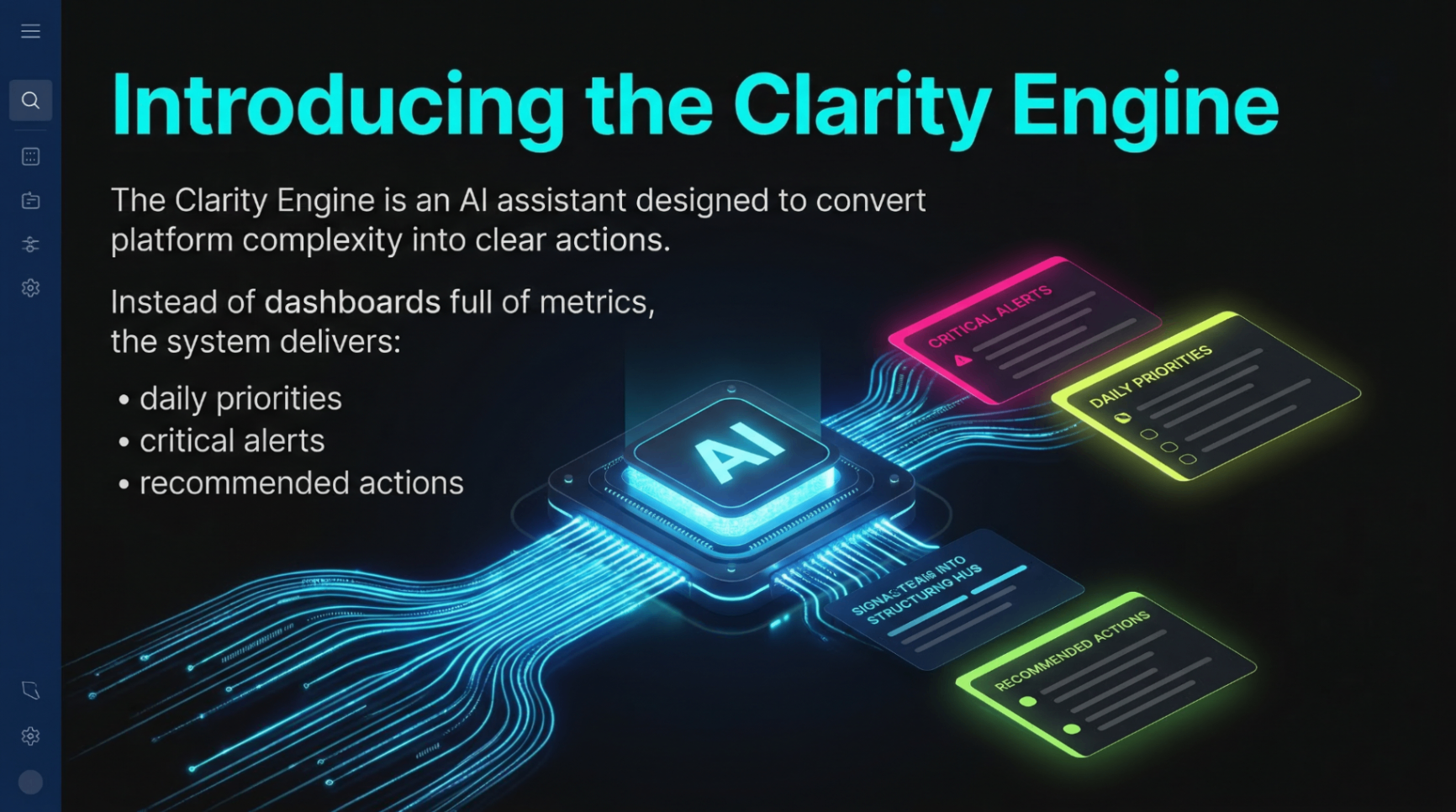
From Dashboards Full of Metrics, to Daily Priorities
The Clarity Engine is an AI assistant designed to convert platform complexity into clear actions. Instead of dashboards full of metrics, the system delivers daily priorities, critical alerts, and recommended actions, all structured for how operators actually work.
The Interactive Copilot Pipeline
The interactive canvas is organized around three synchronized zones, each mapping a distinct part of the reasoning loop.
Stream Log
Real-time text streams showing incoming logs parsed through custom vector databases.
The Reasoning Map
A graphical node network charting how the model is associating data points and identifying risk vectors.
Actionable Controls
Interactive panels allowing users to adjust agent velocity, correct model confidence thresholds, or click-to-edit variable weights.
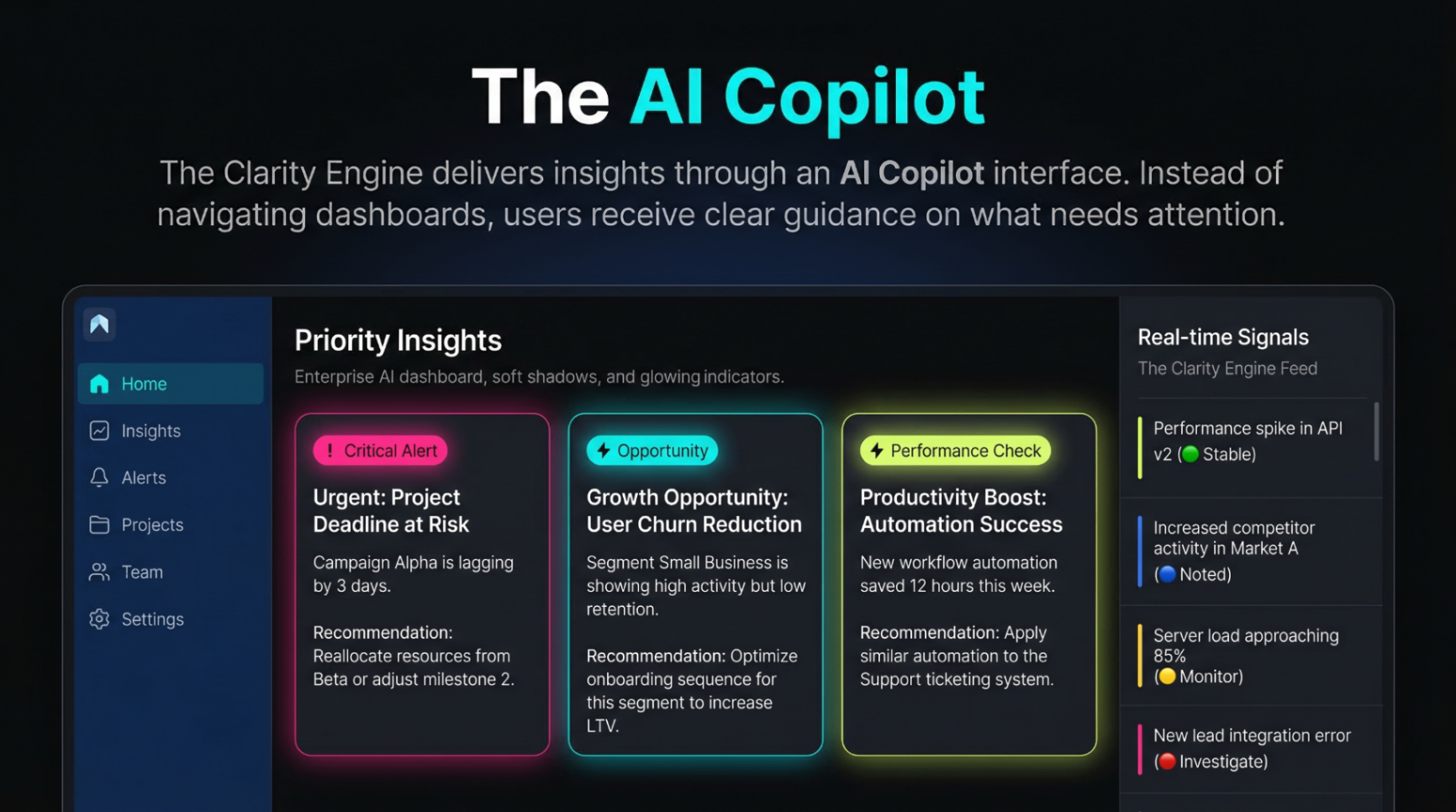
Insights Delivered Through a Real-Time Copilot Interface
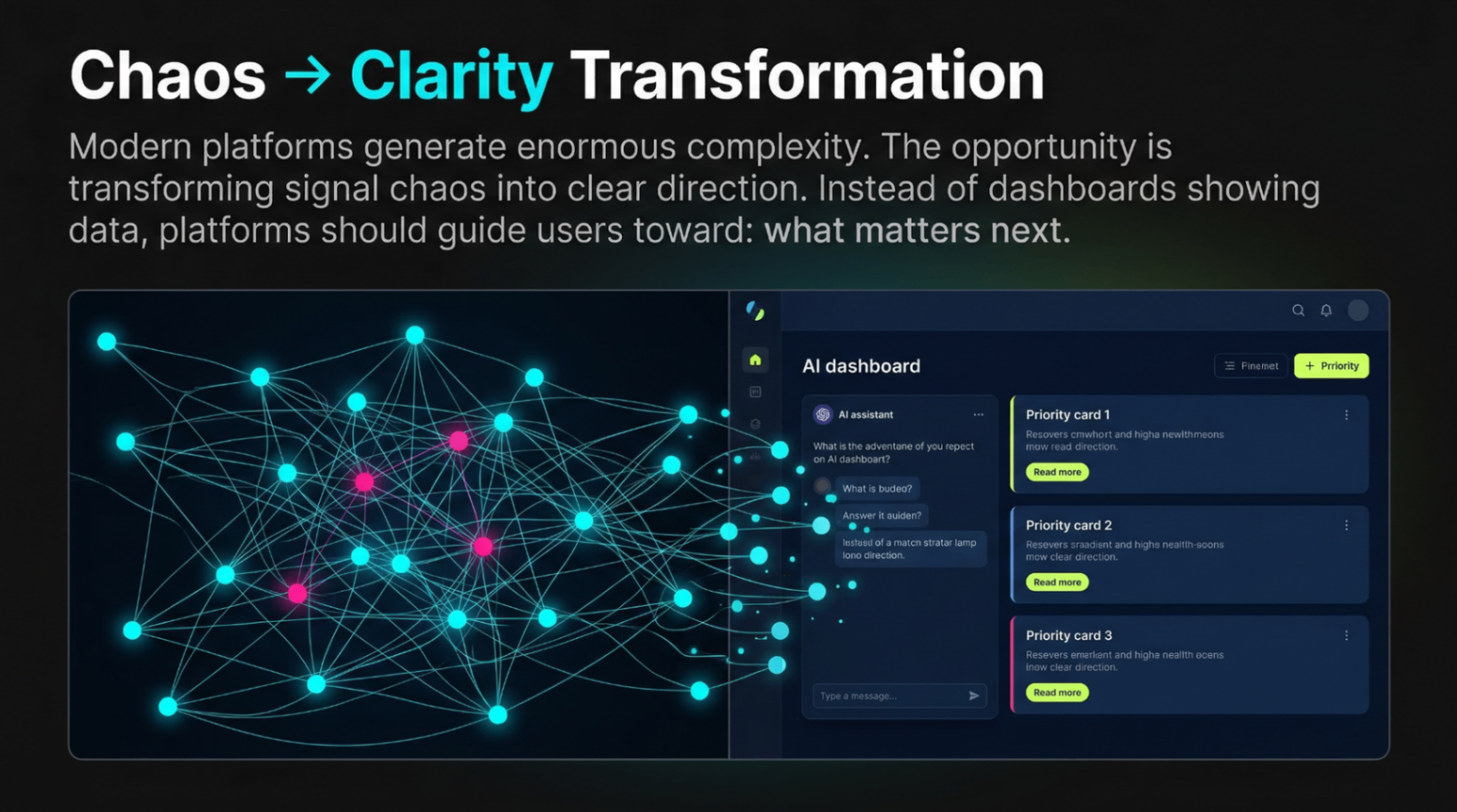
Instead of navigating dashboards, users receive clear guidance on what needs attention. The interface combines priority insights, live signal feeds, and recommendation cards into a single decision surface that turns monitoring into action.
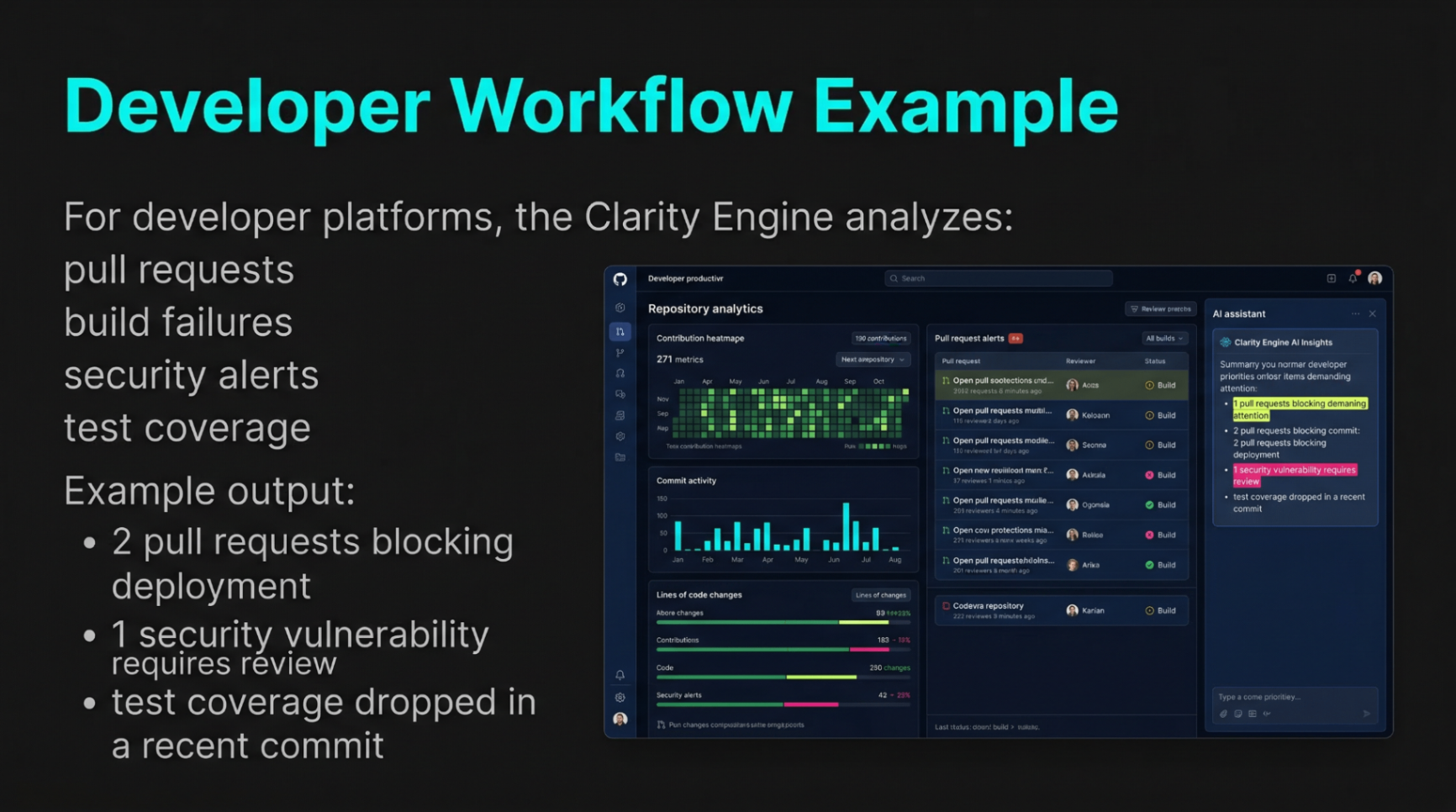
One Engine, Multiple Operating Contexts
The same reasoning framework flexes across developer operations, team coordination, content intelligence, and community systems, adapting the signal model to each domain without changing the core product language.
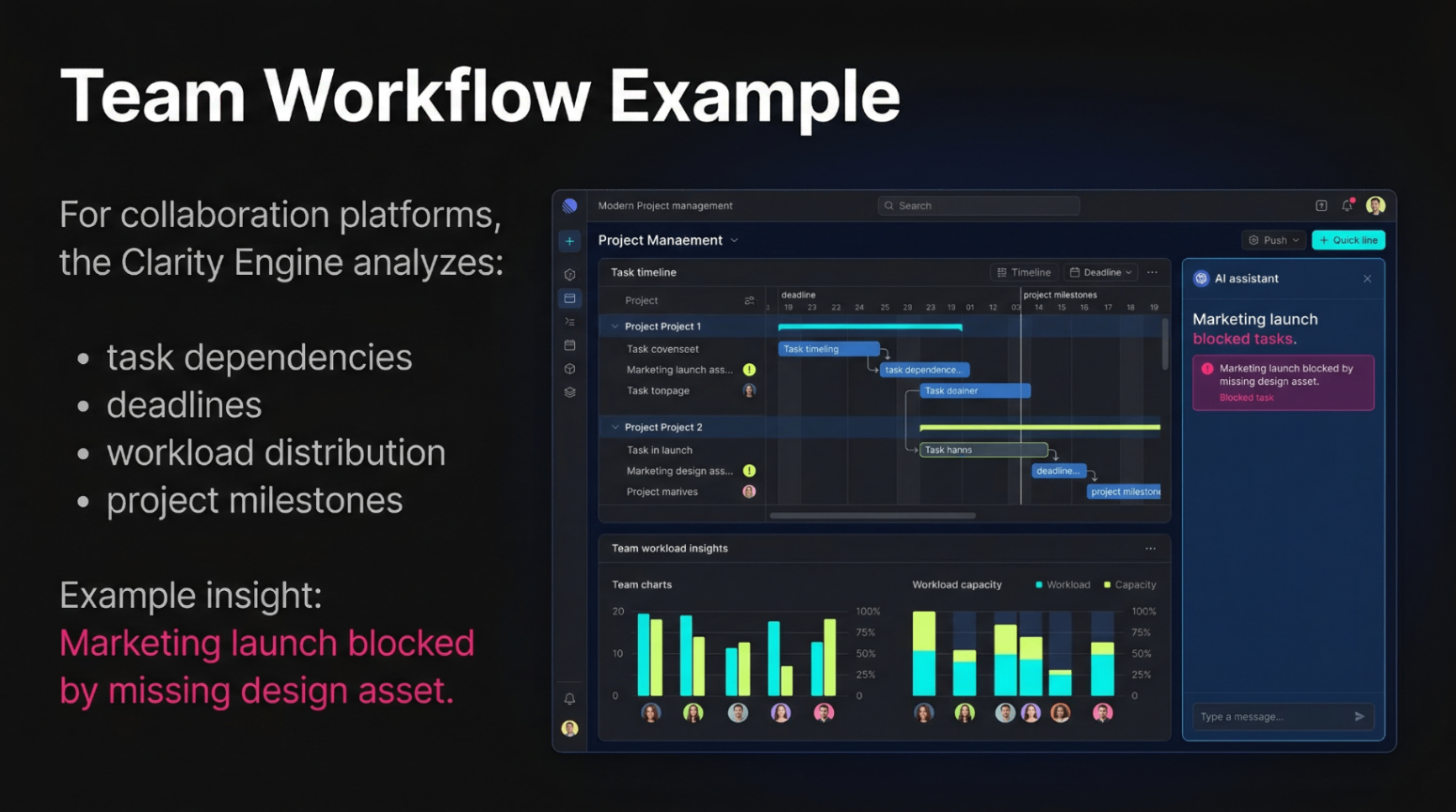
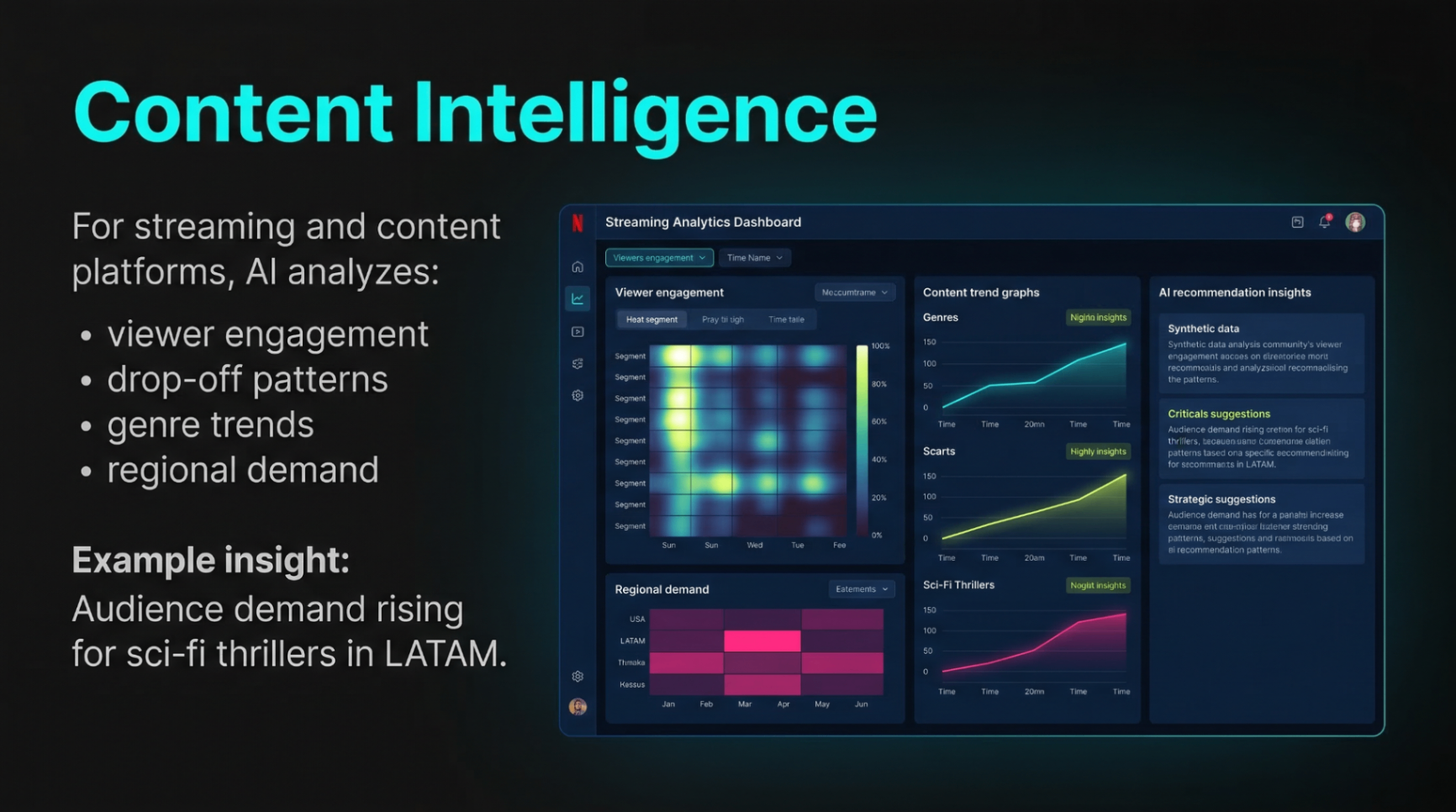
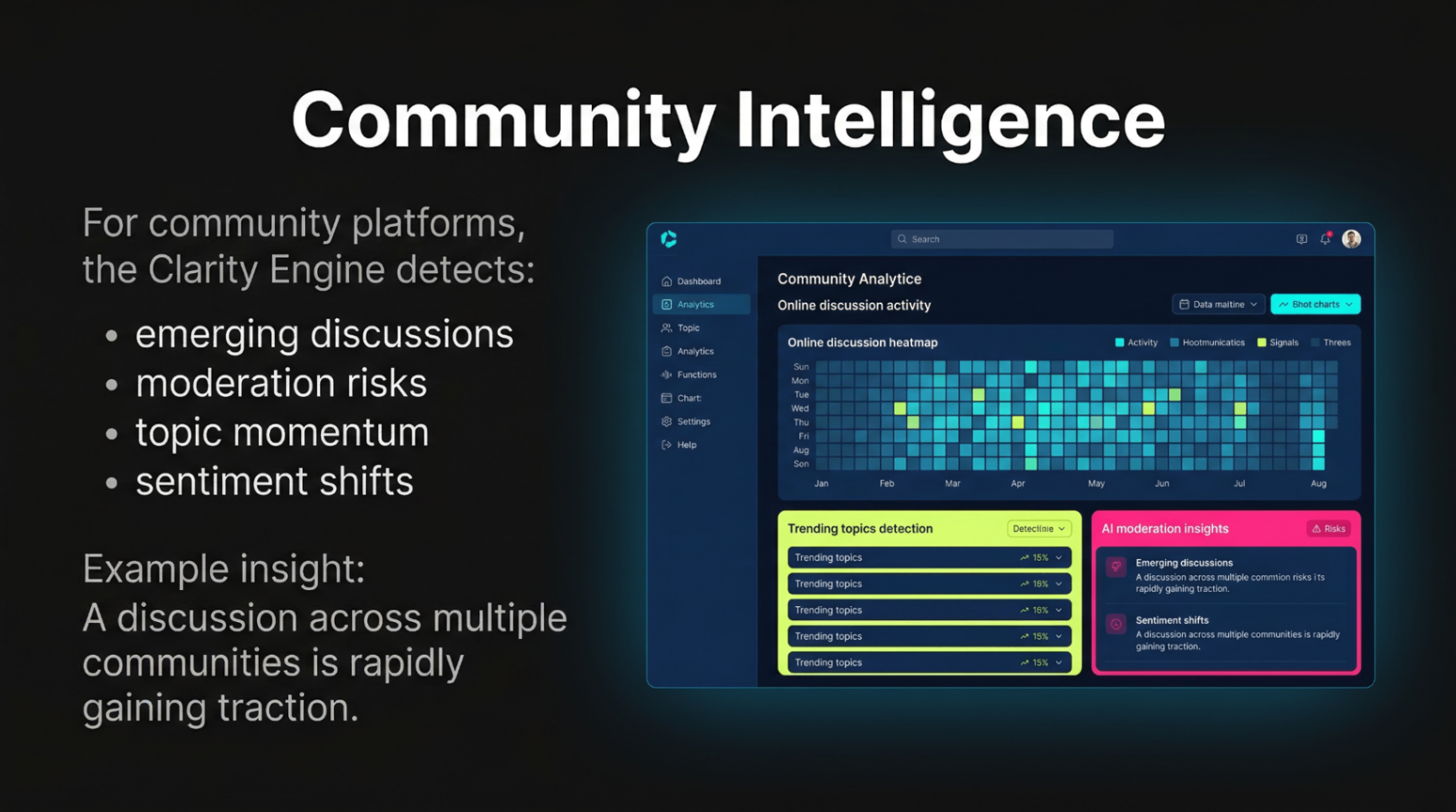
Turning Platform Complexity Into Direction
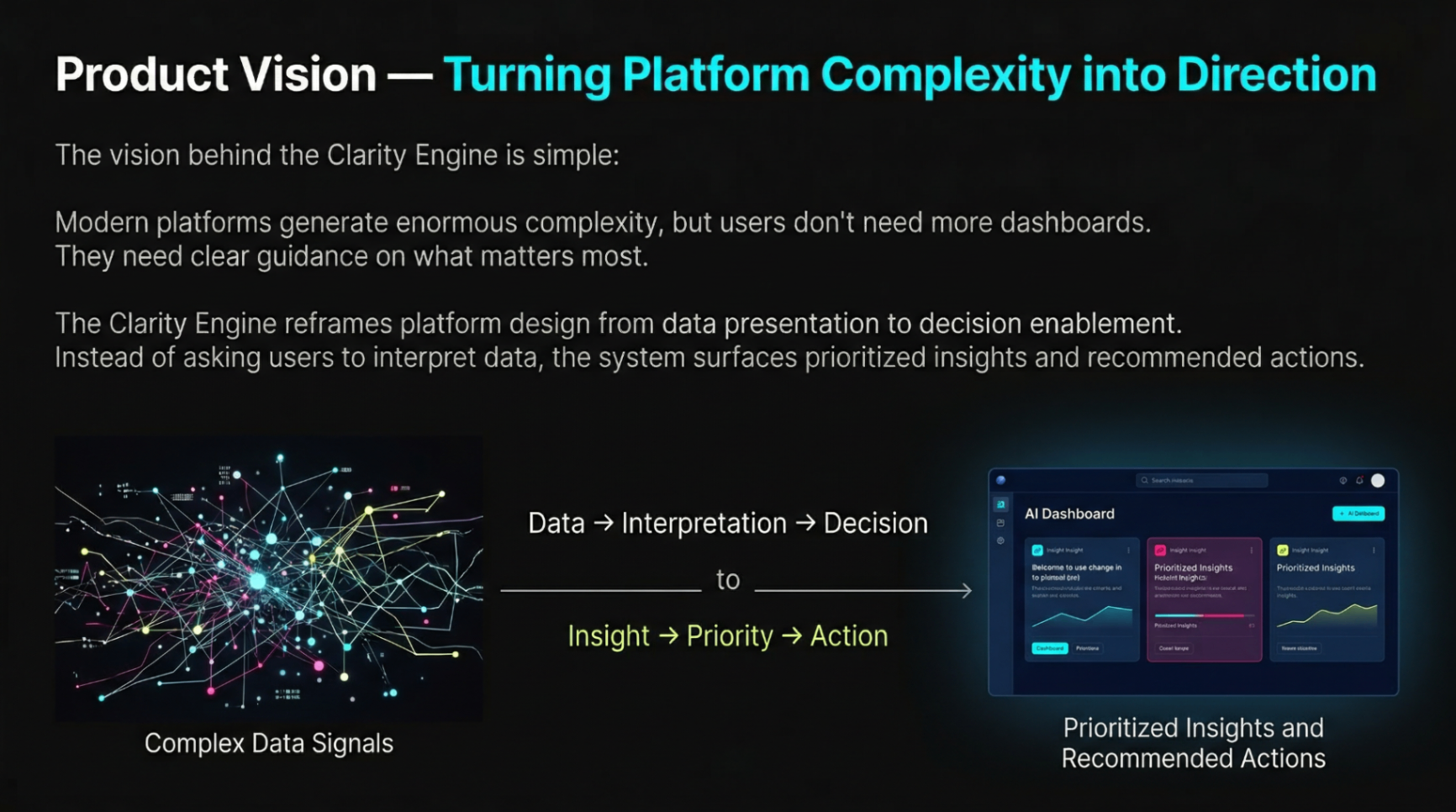
The vision behind the Clarity Engine is simple: modern platforms generate enormous complexity, but users do not need more dashboards. They need clear guidance on what matters most.
The product reframes platform design from data presentation to decision enablement, shifting the flow from data to interpretation to decision into a tighter loop of insight, priority, and action.
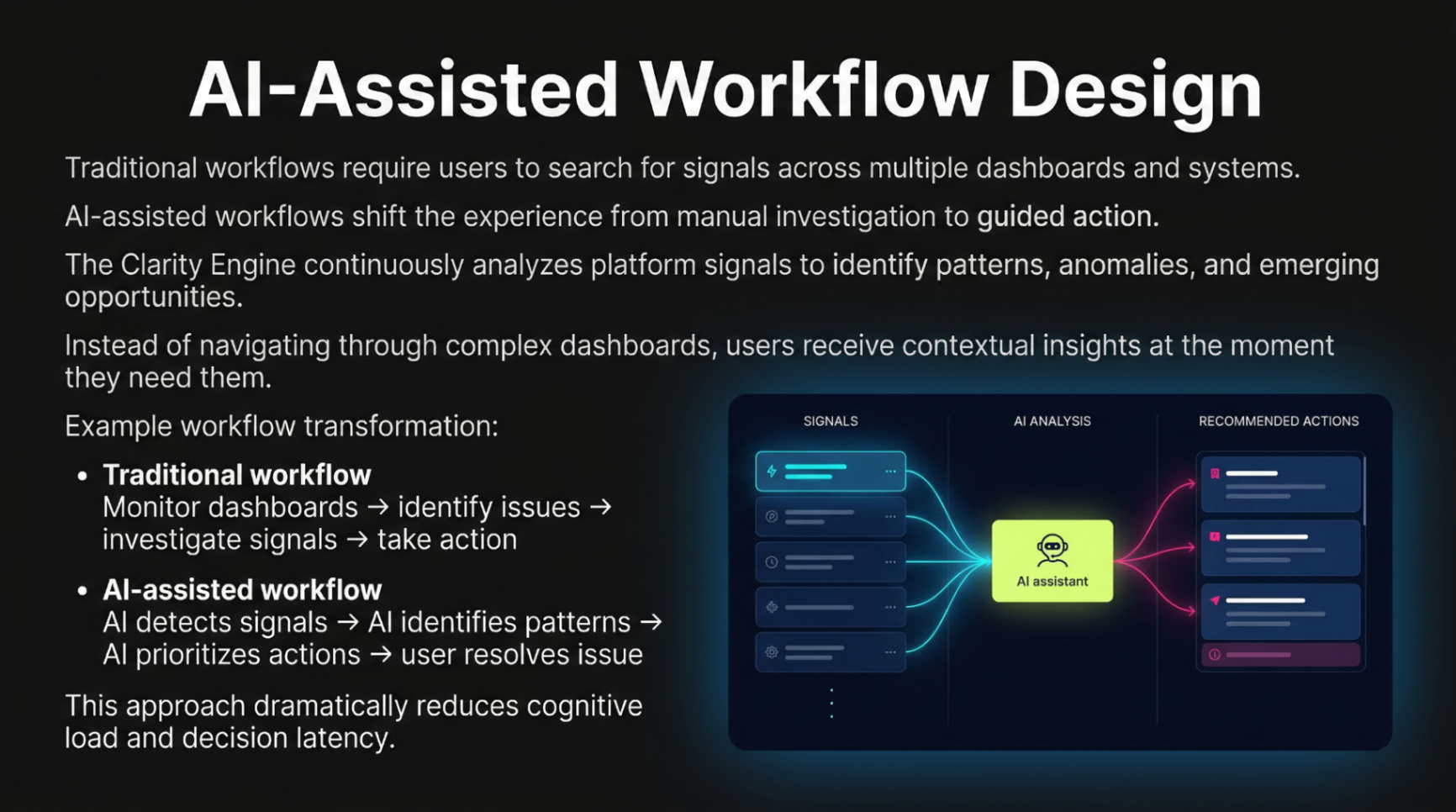
From Manual Investigation to Guided Action
Traditional workflows require users to search for signals across multiple dashboards and systems. AI-assisted workflows shift the experience from manual investigation to guided action, reducing cognitive load and decision latency.
Monitor dashboards, identify issues, investigate signals, then take action.
AI detects signals, identifies patterns, prioritizes actions, then the user resolves the issue with clarity.
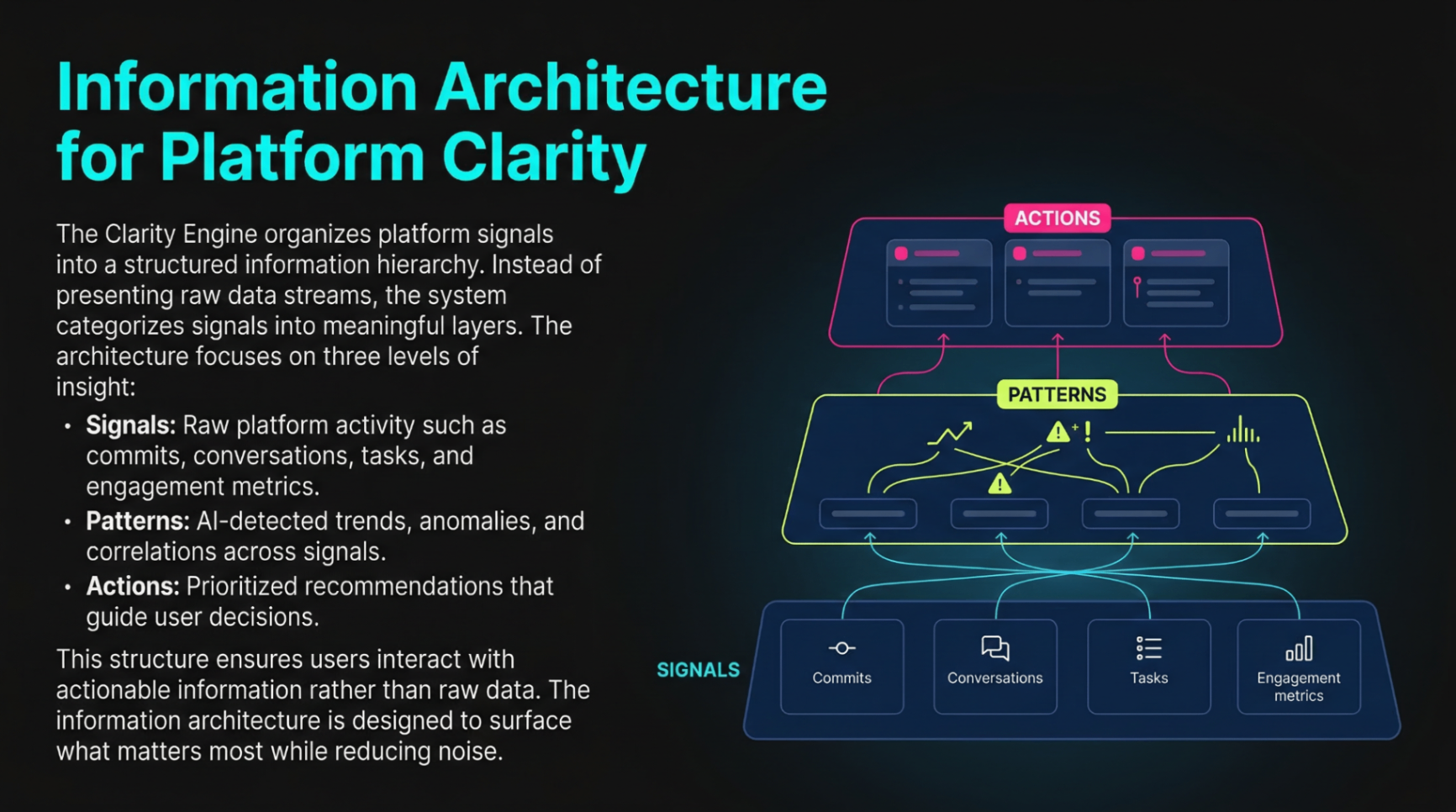
Organizing Signals Into Meaningful Layers
The Clarity Engine organizes platform signals into a structured information hierarchy. Instead of presenting raw data streams, the system categorizes signals into three levels of insight: signals, patterns, and actions.
This architecture ensures users interact with actionable information rather than raw data, surfacing what matters most while reducing noise.
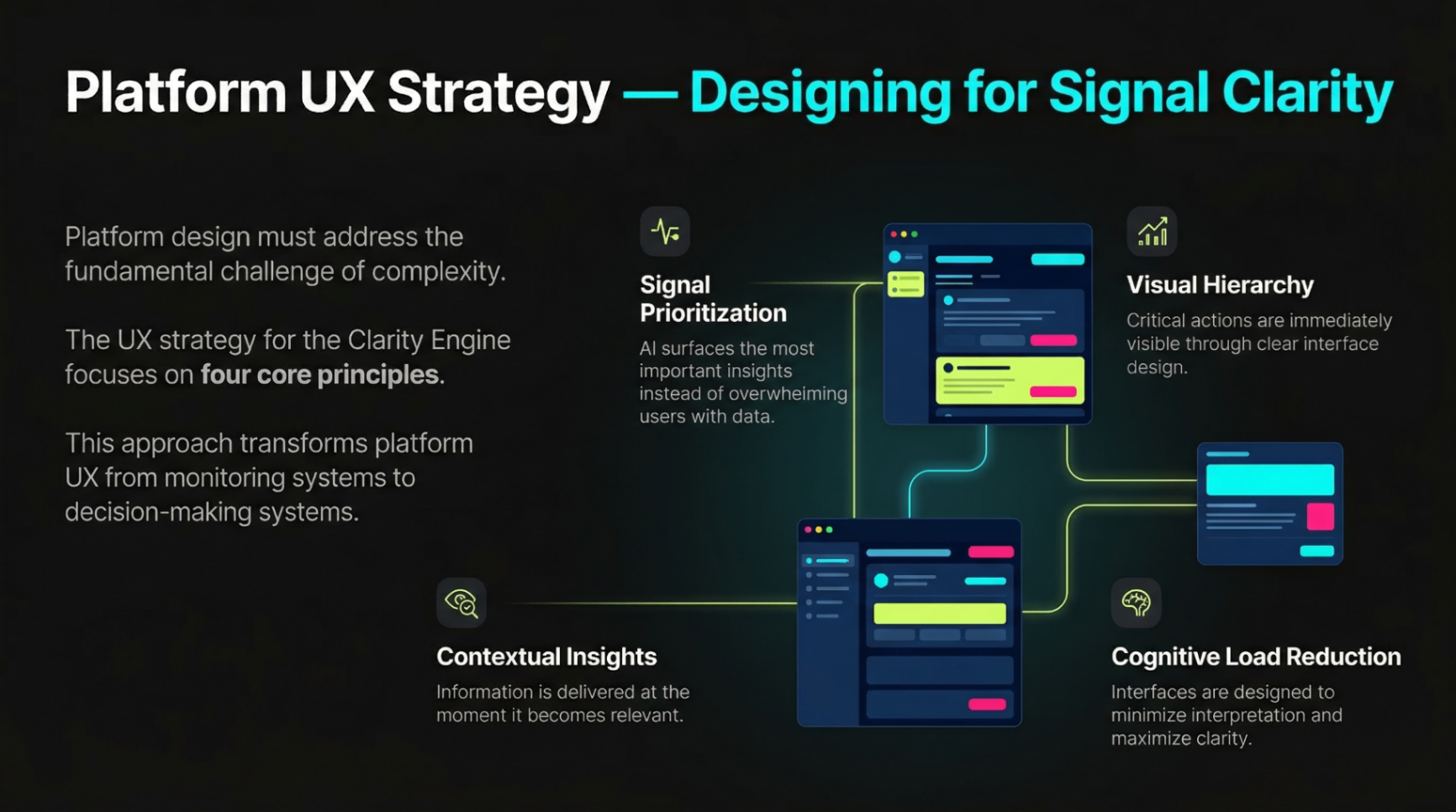
Designing for Signal Clarity
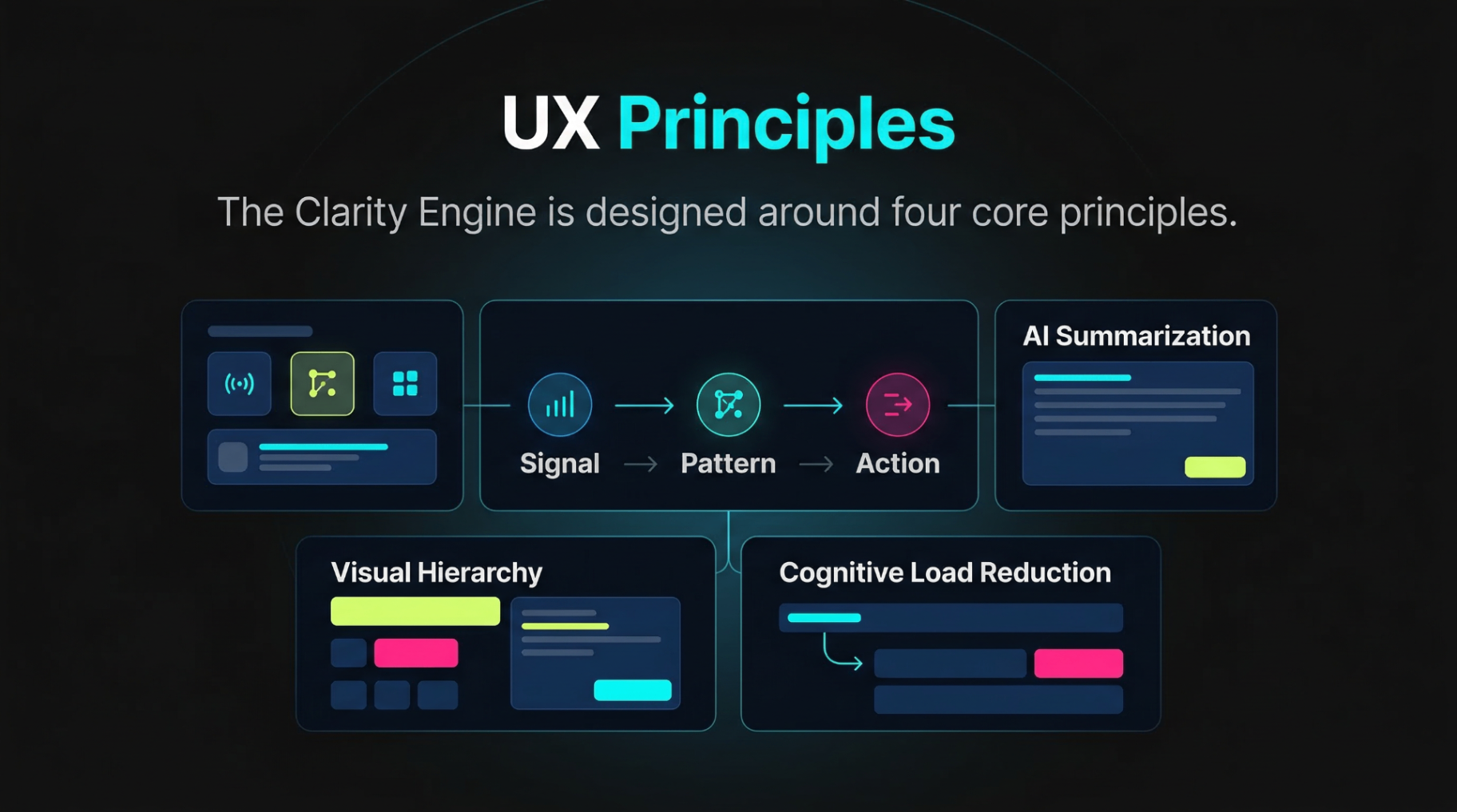
Platform design must address the fundamental challenge of complexity. The Clarity Engine turns monitoring systems into decision-making systems through four core principles: signal prioritization, contextual insights, visual hierarchy, and cognitive load reduction.
A Visual Language For Non-Deterministic Systems
We standardized state styling so users could feel, at a glance, what the machine was doing without reading a single label.
Active Thinking
A subtle breathing glow utilizing variable opacity turquoise transitions.
Data Processing
Rapid, low-friction micro-animations mapping active query runs.
Confidence Thresholds
High-contrast indicator bars shifting from amber to solid teal as certainty increases.
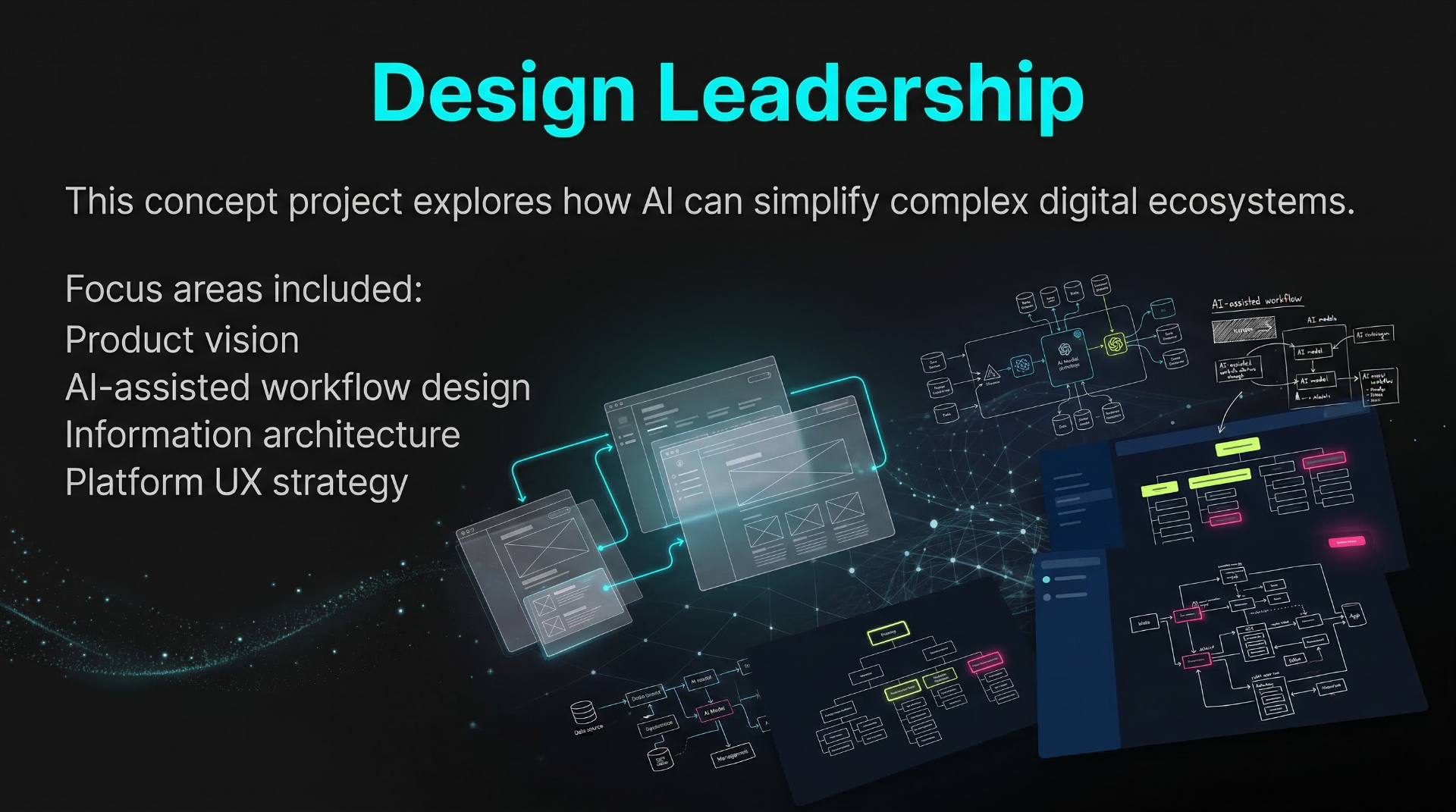
A Concept Project Exploring How AI Simplifies Complex Ecosystems
The Clarity Engine served as a strategic sandbox for exercising end-to-end design leadership across product vision, AI-assisted workflow design, information architecture, and platform UX strategy.
Framing the shift from raw data to guided action across the entire operating surface.
Choreographing how humans and models trade control across multi-step reasoning loops.
Structuring signals, entities, and decisions into a hierarchy operators can navigate under pressure.
Aligning teams around a shared language for surfaces, states, and system behavior.
Smarter Decisions, Accelerated Cycles
By designing an explainable reasoning interface, the engine successfully demystified agent execution patterns. Users are no longer passive observers of AI outputs, they are active directors of strategic systems.
Faster real-time execution times due to integrated hotkey controls and tighter operator guidance.
Lower error reporting as users catch misalignments earlier and intervene before resources are wasted.
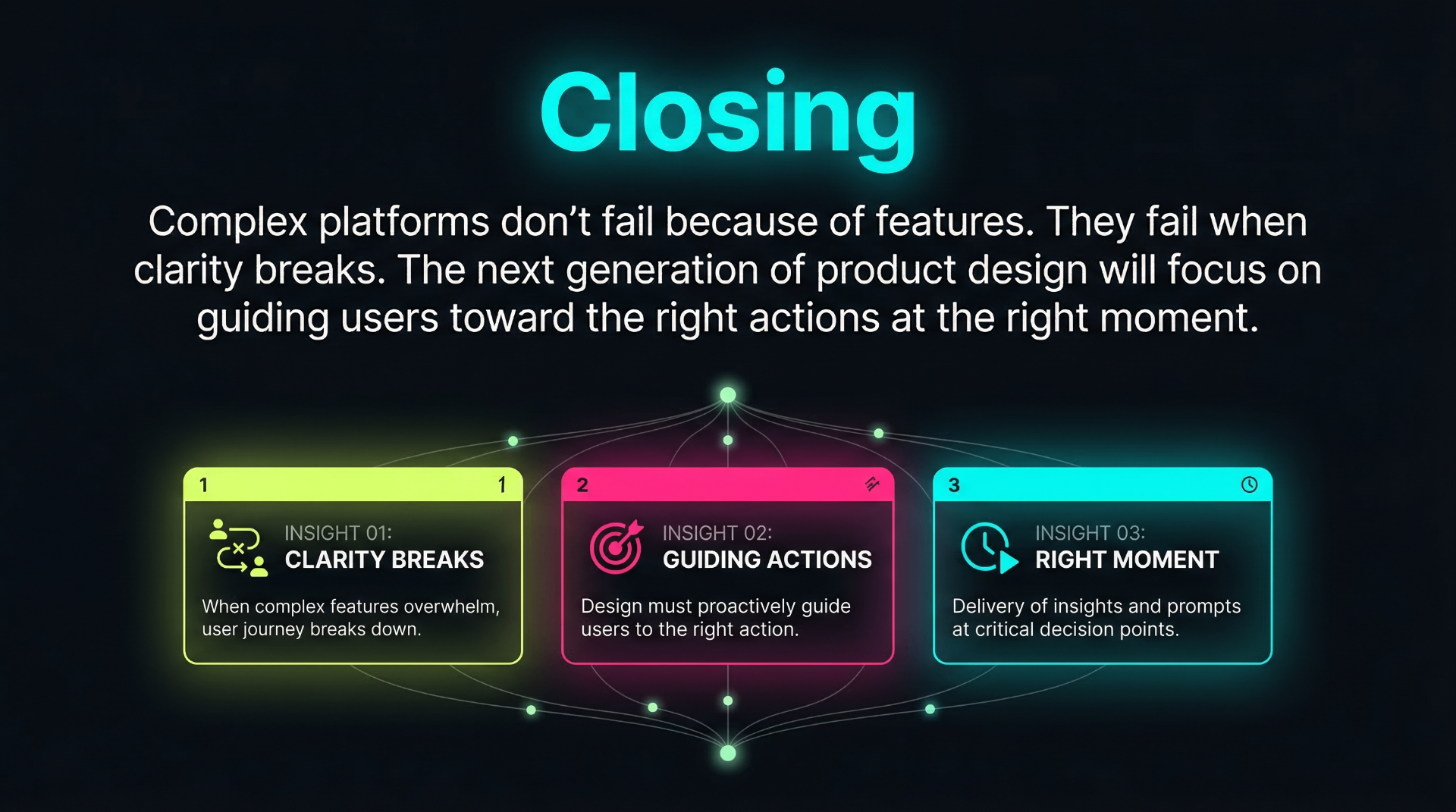
Complex Platforms Don't Fail Because of Features, They Fail When Clarity Breaks
The next generation of product design will focus on guiding users toward the right actions at the right moment, not stacking more surface area onto an already saturated screen.
Clarity Breaks
When complex features overwhelm, the user journey breaks down.
Guiding Actions
Design must proactively guide users to the right action, not just present data.
Right Moment
Delivery of insights and prompts at critical decision points is what compounds value.